
The last act of dignity: Sumira Roy on National Award-winning documentary Bhangaar
The Hindu — Health · 2 Oct 2026 · 3 min read
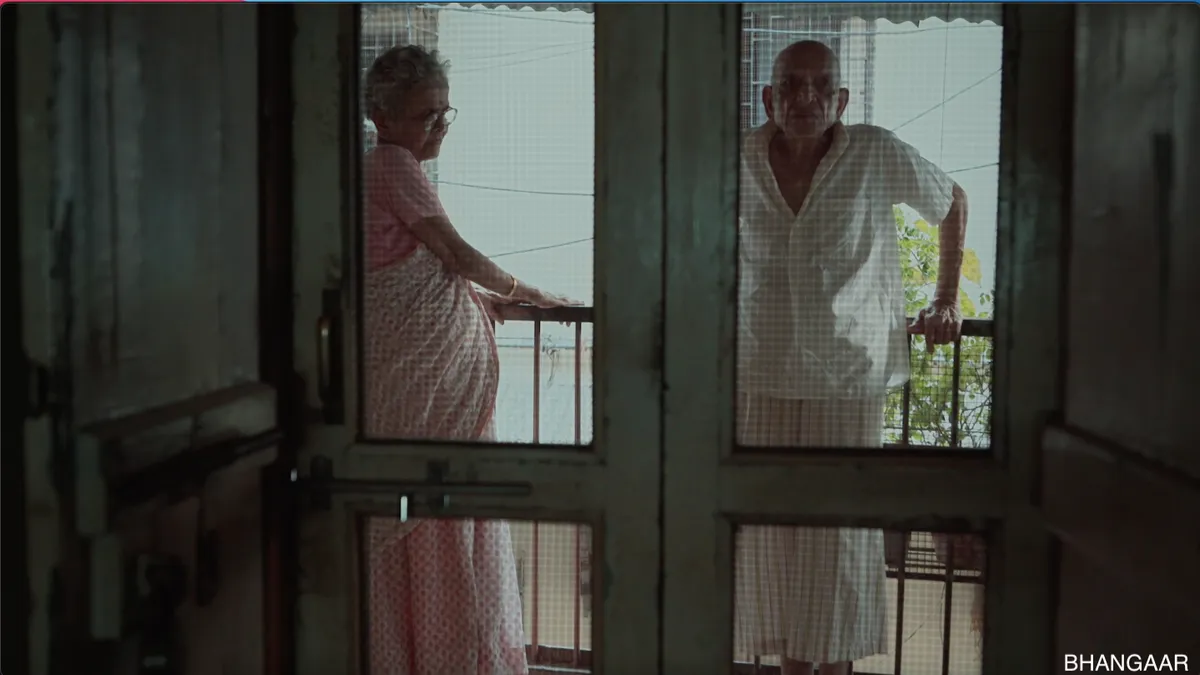
You are from an advertising background; how, when and why did you transition into filmmaking and documentary films at that?
Since I’ve been a student, I’ve been passionate about films and documentary films and had even sat for the FTII entrance examination. But the women in my family were against me going to Pune and feared the casting couch in the film industry. Years later, when I went to Japan for work, I did a postgraduate course in Japanese cinema, theatre and painting. I was just hooked on when I saw [films by Yasujirō] Ozu and all the greats there. So, I thought, there’s a roundabout way to do films through advertising films. There’s a great amount of discipline in ad films; you shoot minimally and you have only 30-40 seconds to tell your story. Ad films [at Ogilvy and JWT] also gave me a lot of exposure to a lot of things that you need in documentaries. For instance, understanding human behaviour. And then, in documentaries, I learnt how to listen… to people’s stories. I went on foreign location shoots and for post-production. All that’s helped me now. In 2011, I left advertising and started two agencies, mainly for production. I was a little bit jaded and cynical, trying to do these falsehoods to make people buy things they didn’t need.
Did the Central Board of Film Certification raise any objections in Bhangaar?
Only to the title. The censor board didn’t like the word bhangaar [obsolete] and called it insulting. I had to keep going back to explain to them that the word is what Narayan uses [in life and in the film]. It’s his, not mine. After some time, they agreed but asked me to carry a disclaimer in Marathi at the start of the film that this is the character’s interpretation of the title. That was fine by me.
There seems to be a thematic continuity between your documentaries Last DaysLast Shot (2017) and Bhangaar. Tell us about the earlier film.
I have an idea, and then I make a film. I don’t just go and make documentaries, because I’m not an activist or an investigative filmmaker. As Narayan says in the film [Bhangaar], the day you’re born is the beginning of death. He echoes the Myth of Sisyphus when he says there’s no purpose to life; it’s absurd. I am drawn to existentialism, and like diving into the interior of minds.
For my earlier film, I was interested in exploring the philosophy of moksha and nirvana. I went to Banaras [Hindu] University, and walked around in the gullies and ghats. People would pop out from the woods to say, ‘Come listen to my poem.’ There, I found a Bengali poet-artist who had gone to Japan and become famous. He returned to Varanasi with his Japanese wife [they ran the Kumiko Guest House]. By the time I shot him, he looked like Rabindranath Tagore. He was about 80 or 81. He told me his idea of moksha: to dissolve the ego. Then I met a 26-year-old Dom in Harishchandra Ghat cremation ground, who [told me he] hardly got a chance to light the fire, and couldn’t make money with it. So, he bought a camera and started shooting the relatives of the dead. He said from his experience that a good person’s corpse burns faster than a sinner’s.
Related articles
 India · The Hindu — Health · 8 hours ago
MGM Healthcare held walkathon to mark World Stroke Day
The walkathon aimed to raise awareness about stroke prevention, early recognition of symptoms and timely medical intervention
Read full article India · The Hindu — Health · 8 hours ago
Kauvery Hospital treats complex aortic valve disease using HANCHOR technology
Aortic regurgitation is a condition in which the heart’s aortic valve fails to close properly, causing blood to flow backwards into the heart
Read full article India · The Hindu — Health · 12 hours ago
Experts warn of wider spread as Ebola outbreak reaches plateau
A major challenge in Congo is limited contact tracing and collaboration with affected communities; health workers sometimes spend more time trying to convince locals…
Read full article