
How FMGE is said to be ‘tougher’ than domestic MBBS exams
The Hindu — Health · 4 Oct 2026 · 8 min read
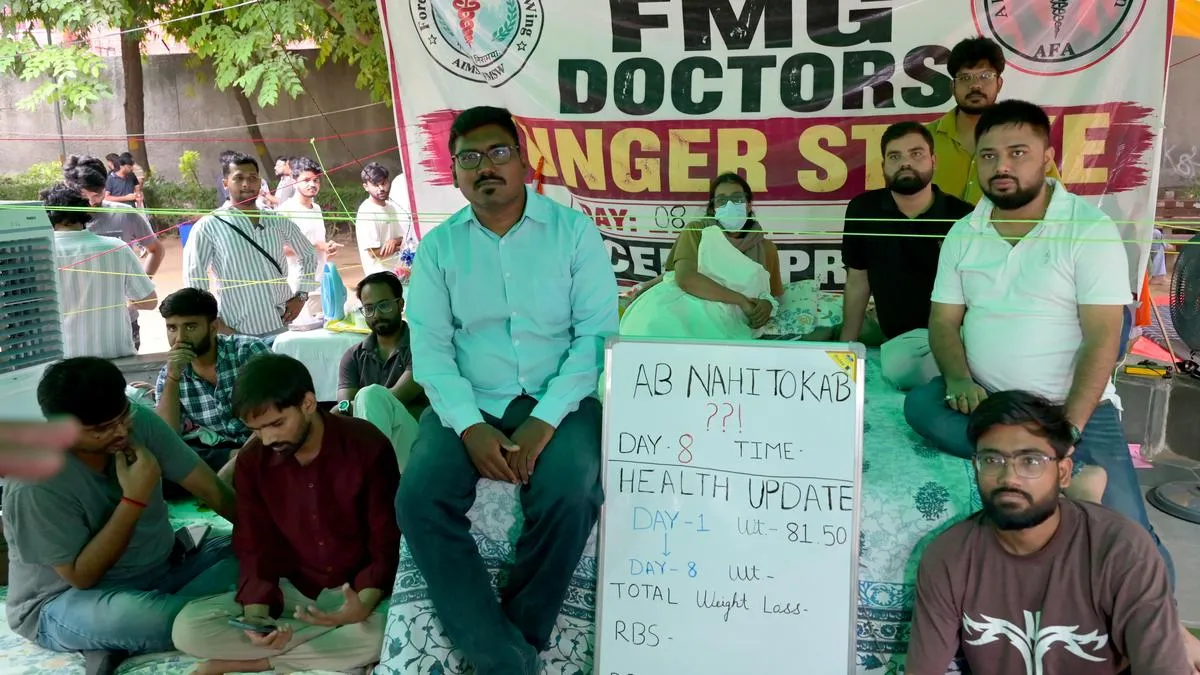
While thousands of Indian students head overseas annually for medical degrees, comprising a heavily monitored segment under the National Medical Commission (NMC) and the National Board of Examinations in Medical Sciences (NBEMS), parliamentary disclosures indicate that centralised tracking of specific discipline-wise student outflows remains complex.
But for many, the journey culminates in a grueling, high-stakes afternoon inside an Indian examination hall. When the National Board of Examinations in Medical Sciences (NBEMS) released the results for the Foreign Medical Graduate Examination (FMGE) June 2026, the pass rate had plummeted sharply to just 12.4%, triggering nationwide discussions, student protests, and scrutiny over what is locking foreign medical graduates out of medical practice.
(Sign up for THEdge, The Hindu’s weekly education newsletter.)
The panic after the paper
Dr. Chaynika Soni, a medical intern in a Government Hospital in Rajasthan who cleared the exam in her second attempt after graduating from Belarus in 2024, recalls, “Every single year after the exam, you’ll see the same thing. Students come out saying, ‘The paper was impossible.’ ‘It was too hard.’ ‘Nobody could solve it.’ Coaching centers will upload videos saying, ‘The paper was unexpected.’ Telegram groups will be filled with panic.”
This panic was visible during the June session, where candidates faced sudden structural shifts. Describing his experience with the exam pattern, Dr. Kshitij Anand said, “The questions were relatively long and time-consuming. I felt the questions were completely unrelated to what I studied. There were some questions I could get direct answers for, but it wasn’t much. They give you questions and options in a way that you take time to figure out answers but not enough time to think.”
He adds that the introduction of unfamiliar video modules caught aspirants off guard: “The Board gave us video questions which I agreed were manageable, but it was a new pattern. The FMGE conducted last January was way more image-based, and the options were comparatively easier to tap than this one. Also, the diagrams I have never seen before.”
Acknowledging these pressures, Professor Dr. Karan Juneja, National Convenor of IMA Junior Doctors’ Network, points out that “More video-based questions (this time), clinical-based questions will be tough for FMG’s [as they are] not exposed to Indian setting and less time make the exam tough.”
Inside the recall analysis
As the National Board of Examinations does not release official FMGE question papers, student-reconstructed “recall” papers serve as the baseline for preparation. A look at the high-weightage sections — Community Medicine (PSM), Internal Medicine, and Obstetrics and Gynaecology — reveals distinct hurdles.
Community Medicine heavily tests India-specific public health administration, including domestic health committees like the Bhore or Kartar Singh committees, local staffing norms at Primary Health Centres, and administrative schemes that foreign universities naturally omit. For a student trained overseas, this often translates to unfamiliar civic administration rather than core medicine.
Conversely, Internal Medicine acts as a control case focused on universal clinical reasoning, ranging from ABG analysis to emergency cardiac protocols. Meanwhile, Obstetrics and Gynaecology balances international diagnostic criteria with clinical application, though candidate performance frequently hinges on interpreting embedded clinical images, manoeuvres, or diagnostic scans.
Weighing these system dynamics, Dr. Samar Kumar, National FMG In-charge for the Federation of All India Medical Association (FAIMA), explains, “In departments such as Medicine, Surgery, and Obstetrics & Gynaecology, Indian hospitals generally see a very large number of patients. This gives doctors and students exposure to a wide variety of clinical presentations and allows them to learn how to manage patients even when resources are limited. I would particularly highlight Community Medicine... If an FMG studies Medicine, Surgery, Obstetrics & Gynaecology, and Community Medicine properly, focuses on clinical concepts, and practices clinical and image-based questions, they should find these areas much more manageable in the FMGE.”
Conceptual depth and the gap in coaching materials
Beyond traditional curriculum differences, candidates found that the depth of questioning defied standard coaching modules. Dr. Ruhi Kumari, who appeared in the June session, explains, “We weren’t trained that way. For example, there was a question on cholera; the answer was an increase in cAMP. I knew it was an increase in cAMP (cyclic Adenosine Monophosphate), but the options were given in biochemistry language. Like, you have to know what cAMP is in biochemistry; only then can you answer that. No coaching institute is teaching anyone like this. Only USMLE tutors do. Because USMLE has always asked in-depth questions. Many clinical questions expect you to have clinical experience. But that’s just unfair, because I will only get that experience after I visit the clinic.”
Dr. Kumari further notes the obsolescence of traditional prep material: “Marrow [an online platform) questions were considered the standard before this exam, but I can tell you they are not anymore. There were a lot of questions that weren’t even asked in many previous years' papers, that flustered everyone... Honestly, I am not sure which resource would give me the most apt training, because no institute is teaching you like that at present. Doing INICET papers is not going to help you, or even NEET-PG papers.”
Logistics, exam conditions, and the transparency debate
The academic difficulty was further compounded by severe logistical hurdles on test day. Dr. Samar Kumar outlines the physical toll: “The first issue was related to examination centres. Multiple centres had inadequate facilities. Some did not have coolers or fans, and in some cases, even drinking water was not adequately available. As you know, the FMG examination is five hours, and overall it takes eight hours. Maintaining concentration in such tough conditions, especially during extreme summer, is something beyond the capacity of many students and FMG doctors particularly when they are not provided with adequate facilities.”
He added regarding the sudden format changes, “The second and most important issue was the sudden introduction of video-based questions in the FMG June 2026 examination. FMGs opposed this later as well and conducted protests regarding this issue in Delhi, Gautam Nagar. The demand of the students was to provide compensation for the sudden introduction of video-based questions, but NBEMS denied the demand.”
Adding to student frustration is a perceived lack of institutional accountability. Dr. Kumar said, “Moreover, the FMG examination does not have any kind of transparency. The questions and answers have never been shown to FMGs. Thus, no one knows how they failed by just one mark, five marks, or ten marks... Then why does NBEMS say that they cannot show the questions and answers together? Why can’t the examination questions and their corresponding answers be disclosed?”
FMGE versus NEET-PG and the time crunch
Comparing the screening test to domestic evaluations, Professor Dr. Karan Juneja, National Convenor of IMA Junior Doctors’ Network, notes that “NEET PG exam standard is being given in FMGE exam as the board-making exam is the same NBE.”
While Indian MBBS graduates prepping for NEET-PG sit within a mature ecosystem of shared question banks and peer networks, foreign-trained graduates often experience thinner access to these informal pipelines.
Dr. Samar Kumar contrasts the two exams, “Recently, FMGE has also included video-based and lengthy clinically oriented questions, which adds another dimension to the examination... FMGE continues to have 300 questions, whereas NEET-PG has moved from the earlier 200-question format to 180 questions. Therefore, FMGE tests not only clinical knowledge and application but also a candidate’s ability to maintain concentration and consistency throughout a long examination. NEET-PG, on the other hand, has its own competitive dynamics, including negative marking and a highly competitive selection process. But if you remove these factors from NEET-PG, then it becomes easier than FMGE.”
This time crunch is intensified by structural scheduling. Dr. Anjali Ayappan from Kochi points out, “Two months is simply not enough preparation time for FMG students, especially considering the amount of syllabus and the situation most FMGs are already in. And bringing the next exam forward to October is especially bad for the June pass-outs. They barely get any time to prepare after the result, and then suddenly they’re expected to appear again in October.”
The long road to registration
Clearing the exam is only the first milestone; graduates face a complex administrative labyrinth before they can practice. Dr. Parvathy Sabu, who cleared the exam and works in a Government Hospital in Thiruvananthapuram, said, “Internship posts for FMGs are fewer across almost every State, and protests to increase seats are seen often... By the time you get PR [permanent registration], best-case scenario, approximately 8 years have gone by (including course duration) and a lot of money. Abroad MBBS is a very long-term investment that many don’t realise initially. I think the integration into Indian healthcare and internship issues are the biggest challenges faced by FMGs.”
Reflecting on these cumulative pressures, Dr. Madhavi Gurung, an FMG aspirant who studied in the U.K., concludes, “Many of my friends skipped FMGE and are now doing residency in the U.S., some are working non-training jobs in the U.K., and some are on track to settle in Australia. The struggle doesn’t end after NEET-UG. And with rising competition and reservation quotas, the system is tough. Every year wasted in endless NEET attempts can drain your mental health and confidence. I’m now planning to take AMC Part 1 by the end of this year and hopefully move abroad permanently.”
Related articles
 India · The Hindu — Health · 16 hours ago
Hark! It’s the season: for flu
On unheard-of pathogens, pollution and climate-related health risks, regulation in the healthcare sector, our diets, and more
Read full article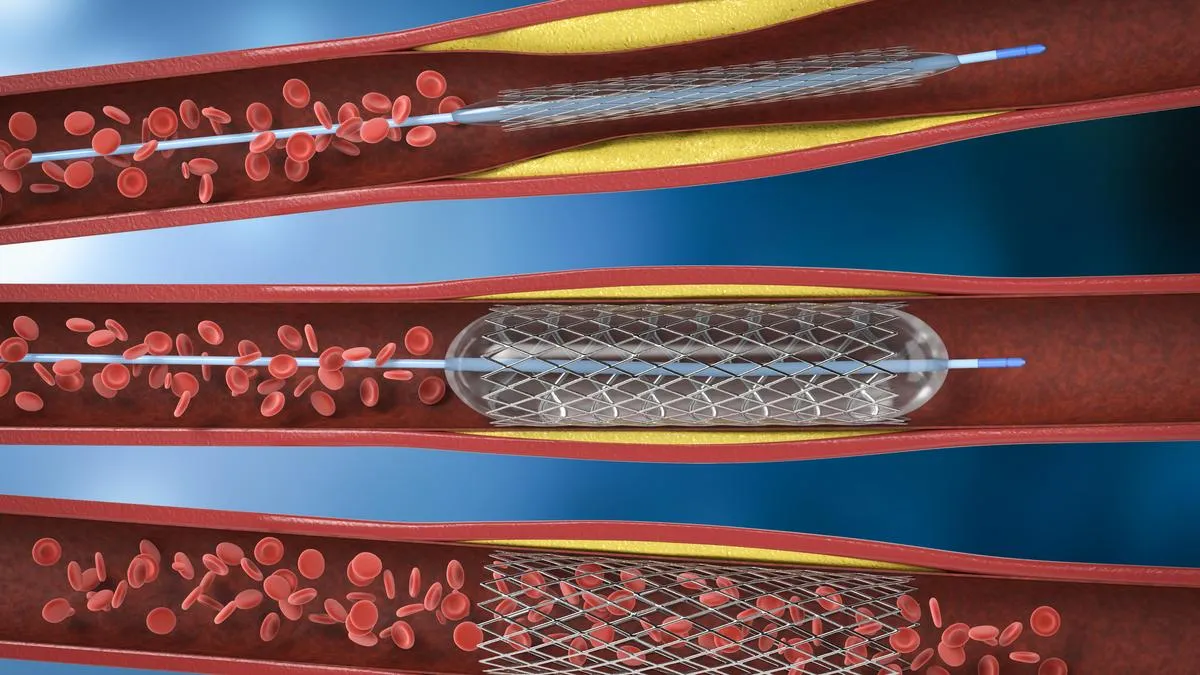 India · The Hindu — Health · 1 day ago
Are coronary stents necessary?
There is a crucial distinction between stenting as a life-saving measure to medical treatment via stenting because a narrowing of blood vessels is seen…
Read full article India · The Hindu — Health · 1 day ago
Merck drug extends survival in endometrial cancer trial, wins U.S. priority review
The drug delivers a cancer-killing payload to cells that carry a protein common in endometrial tumours
Read full article