
Early-onset Alzheimer's disease looks very different to late-onset version: study
The Hindu — Health · 16 Oct 2026 · 3 min read
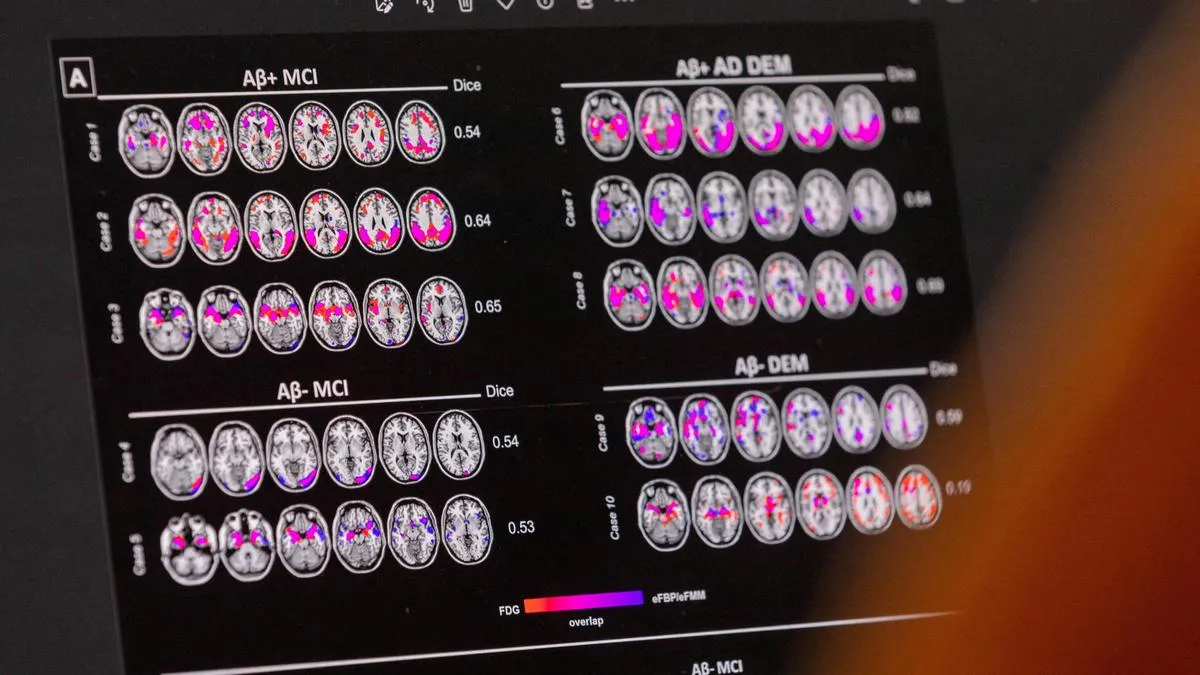
Early-onset Alzheimer's disease looks very different to late-onset version: study left The findings indicate that early-onset Alzheimer’s disease may involve mechanisms that differ, at least in part, from those underlying late-onset Alzheimer’s disease, they said |Image used for representational purpose only REUTERS REUTERS https://th-i.thgim.com/public/incoming/c7xfsg/article71592107.ece/alternates/FREE_1200/2025-11-25T171818Z_953337059_RC2ND1A5P2DS_RTRMADP_3_HEALTH-ALZHEIMERS-SCIENCE.
JPG DENIS BALIBOUSE FILE PHOTO: A scientist looks at hypometabolic and hypoperfusion patterns at the single-subject level from a patient suffering from Alzheimer's disease at the Memory Centre at the Department of Readaptation and Geriatrics of the University Hospital (HUG), in Geneva, Switzerland, June 6, 2023.
REUTERS/Denis Balibouse/File Photo Cardiovascular risk factors, alongside advanced age, are among the best-known risk factors for the neurodegenerative disease, the researchers said New Delhi, Oct 12 (PTI) People who developed an early onset of Alzheimer's disease -- before turning 65 -- displayed symptoms and conditions different to those in late-onset Alzheimer's, accumulating a wide range of health problems, particularly during the five years preceding diagnosis, a study has found.
Researchers from the University of Oulu and the University of Eastern Finland said the group is more likely to experience depression, dizziness, headaches, traumatic brain injuries, epilepsy, cerebrovascular disorders, thyroid diseases and problems related to heavy alcohol use.
Tinnitus (ringing in ears) and hearing loss were already more common six to ten years before diagnosis, findings published in the journal Alzheimer's and Dementia: The Journal of the Alzheimer's Association showed.
However, cardiovascular risk factors traditionally associated with Alzheimer's disease were found to be no more common among those diagnosed at working age, compared to age- and sex-matched healthy people.
Cardiovascular risk factors, alongside advanced age, are among the best-known risk factors for the neurodegenerative disease, the researchers said.
However, compared to late-onset Alzheimer's disease, high blood pressure and hyperlipidemia were not more common among people with early-onset Alzheimer's disease than among the control group, they said. "Our findings support the view that early-onset Alzheimer's disease is not simply a younger-age version of late-onset Alzheimer's disease.
Rather than the familiar cardiovascular risk factors, we observed a range of other health problems becoming more common as diagnosis approached," lead researcher Johanna Krüger, adjunct professor from the University of Oulu, said.
The researchers also found no significant differences in morbidity 11 to 15 years before diagnosis, suggesting that identifiable changes begin to emerge mainly closer to disease onset.
The findings indicate that early-onset Alzheimer's disease may involve mechanisms that differ, at least in part, from those underlying late-onset Alzheimer's disease, they said.
Healthcare utilisation was found to have increased markedly during the five years leading up to diagnosis, alongside a growing burden of health conditions.
The steepest increase in healthcare visits was seen to occur during the final year before Alzheimer's disease was diagnosed.
The study's findings are based on patient data from memory clinics at Oulu University Hospital and Kuopio University Hospital, combined with nationwide health register data.
The study included 407 people with early-onset Alzheimer's disease, whose health records were compared with those of more than 4,000 age- and sex-matched people without the neurodegenerative disease.
Diseases and health conditions were examined that occurred during the 15 years preceding an Alzheimer's disease diagnosis. "EOAD (early onset Alzheimer's disease) patients had higher prevalence of vertigo, depression, headache, delirium, brain injuries, thyroid disorders, alcohol-related disorders, epilepsy, strokes, and otorhinolaryngologic diseases 1-5 years before diagnosis," the authors wrote.
PTI KRS KRS KRS
Related articles
 India · The Hindu — Health · 20 hours ago
Webinar on modern-day tips for posture to be held on October 25
The webinar will explore how daily habits, workplace ergonomics and physical inactivity affect the spine, and discuss practical ways to prevent and manage common…
Read full article India · The Hindu — Health · 23 hours ago
Shamonda virus, the livestock pathogen detected in human for the first time | Explained
The virus, which mainly affects livestock, has been detected in humans for the first time, prompting investigations into its potential public health implications
Read full article India · The Hindu — Health · 1 day ago
Inadequate sleep increases the risk of fatty liver disease
With every one-hour decrease in sleep time from the recommended seven-eight hours, the risk of fat deposition in the liver increased by 24%
Read full article