
The burden of choice: when a plethora of options hinder both patients and doctors
The Hindu — Health · 19 Oct 2026 · 4 min read
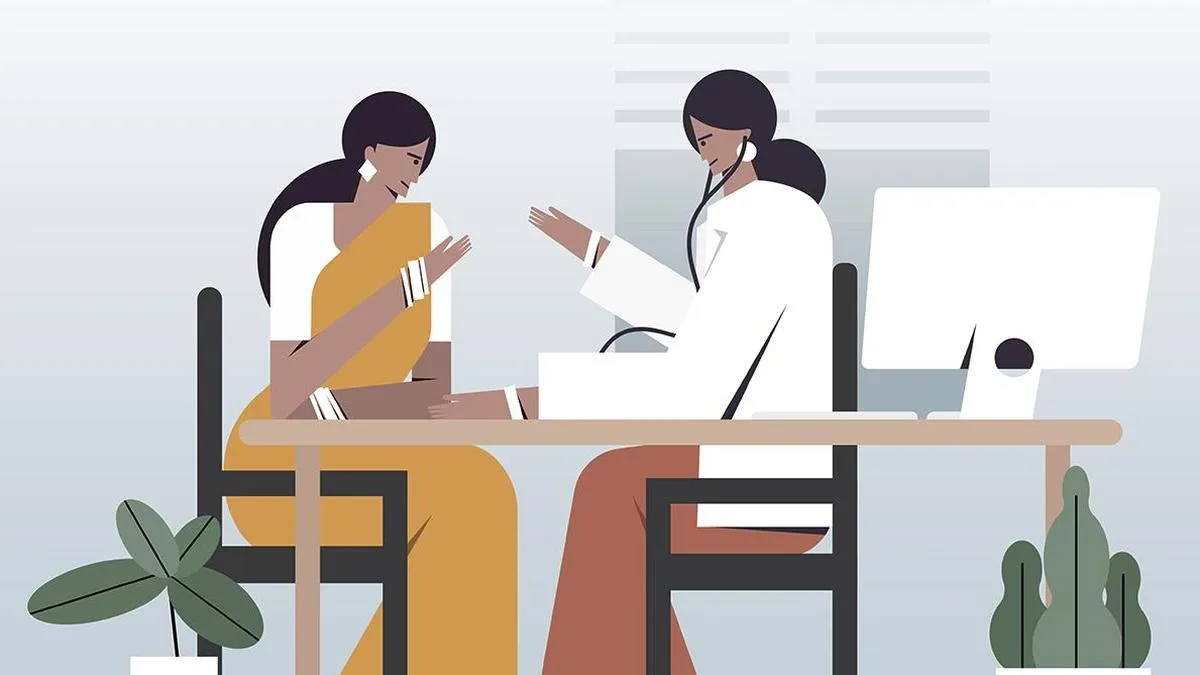
The burden of choice: when a plethora of options hinder both patients and doctors when patients and doctors carry the weight of modern medicine left To build a better healthcare system, we must support patients, but also support the doctors |Image used for representational purpose only Getty Images Getty Images https://th-i.thgim.com/public/incoming/r62u9u/article71596108.ece/alternates/FREE_1200/IMG_iStock-2188361329_2_1_7DDP50JG.jpg AJIJCHAN Illustration of an Indian doctor examining a woman patient More information doesn’t automatically empower.
True empowerment happens through shared decision-making, a genuine psychological partnership where clinical evidence meets a patient’s personal values and priorities There was a time when a patient simply asked, “Doctor, what should I do?” Consultations today, however, However, consultations today, sound remarkably wildly different.
Patients enquire if they should get surgery or take medication?
Would a second opinion be recommended?
What about side effects?
Modern medicine has handed us something extraordinary: choice.
But it comes with a psychological paradox.
Choosing an option becomes harder when there are more options.
Suddenly, This heavy burden of choice now sits on both sides of the desk.
Choice overload Choice overload More of them mean better outcomes, but in reality, they can lead to uncertainty Choice overload storyline 1 The patient’s dilemma Illness already brings fear, anxiety, and uncertainty.
Stack endless choices on top of that: which specialist, which test, which path, and decision fatigue sets in.
It isn’t helpless collapse when an overwhelmed patient finally says, “Just tell me what to do.” It is pure emotional exhaustion.
Many people endlessly search for the ‘perfect’ choice, hoping to eliminate risk entirely.
When there is a difficult outcome regardless, happens anyway, counterfactual thinking takes over: Did I choose wrong?
But a crucial truth gets lost here: a good decision can still have a bad outcome.
Choices should be judged by the information available at the time, not by what happens down the road.
Why does your doctor seem so rushed and dismissive?
That bedside manner may be the result of the health care system Why does your doctor seem so rushed and dismissive?
That bedside manner may be the result of the health care system Health systems need structured, transparent mechanisms that make it easy and safe for doctors and care team members to report when workloads, staffing or administrative decisions may be harming patients Why does your doctor seem so rushed and dismissive?
That bedside manner may be the result of the health care system storyline 1 The Doctor’s Burden It is also important to consider easy to champion patient autonomy without considering what happens across the table.
Modern healthcare asks doctors to be clinicians, risk managers, educators, and empathetic partners, often within a single 20-minute slot.
Doctors must navigate a delicate tightrope. corridor.
Be too directive, and you strip the patient of autonomy.
Offer every conceivable option without guidance, and you leave them abandoned in a maze.
Add in the ‘second-opinion paradox’, where different clinicians legitimately weigh probabilities differently and doctors must explain not just the disease, but why medicine isn’t simple arithmetic.
Patients understandably crave certainty, but ethically, a doctor cannot promise it.
Trust isn’t believing a physician knows the future; it’s knowing they will be honest about what is known, what is uncertain, and how to adapt if things change.
Why you get better care when you stop nodding and start asking why Why you get better care when you stop nodding and start asking why Doctors are trained to approach illness in a particular way — whereas what you want out of treatment may be vastly different.
When this is not discussed, a large mismatch in expectations can develop, resulting in a trust deficit, and ultimately, disappointment Why you get better care when you stop nodding and start asking why storyline 1 Carrying the weight together More information doesn’t automatically empower.
Raw data without interpretation only breeds distress.
True empowerment happens through shared decision-making, a genuine psychological partnership where clinical evidence meets a patient’s personal values and priorities.
Sometimes, the most relieving words a doctor can say are: “Let us go through this together.” To build a better healthcare system, we must support patients, but also support the doctors.
The emotional labour of medicine is invisible on a prescription, yet physicians regularly carry one patient’s fear straight into the next room while remaining clinically precise.
Empowerment doesn’t mean offering the maximum number of choices; it means offering the right options, clearly explained, with enough support to make uncertainty bearable.
The best healthcare never asks one person to carry the weight alone—it builds a partnership strong enough to carry it together. (Dr.
Sushma Gopalan is lead consultant – child life services (psychology), Manipal Hospital Yelahanka, sushma.gopalan@manipalhospitals.com)
Related articles
 India · The Hindu — Health · 20 hours ago
Webinar on modern-day tips for posture to be held on October 25
The webinar will explore how daily habits, workplace ergonomics and physical inactivity affect the spine, and discuss practical ways to prevent and manage common…
Read full article India · The Hindu — Health · 22 hours ago
Shamonda virus, the livestock pathogen detected in human for the first time | Explained
The virus, which mainly affects livestock, has been detected in humans for the first time, prompting investigations into its potential public health implications
Read full article India · The Hindu — Health · 24 hours ago
Inadequate sleep increases the risk of fatty liver disease
With every one-hour decrease in sleep time from the recommended seven-eight hours, the risk of fat deposition in the liver increased by 24%
Read full article