
For parents of adults with autism, planning for future with little State support, takes a toll
The Hindu — Health · 19 Oct 2026 · 8 min read
For parents of adults with autism, planning for future with little State support, takes a toll How caregivers make long-term future plans for persons with autism left The World Health Organization estimates that as of 2021, 1 in 127 people globally had autism.
Exact numbers for India are hard to come by, but up to 1.8-2 million children in India are thought to have ASD, as per figures cited in a paper published in Cureus in 2024.
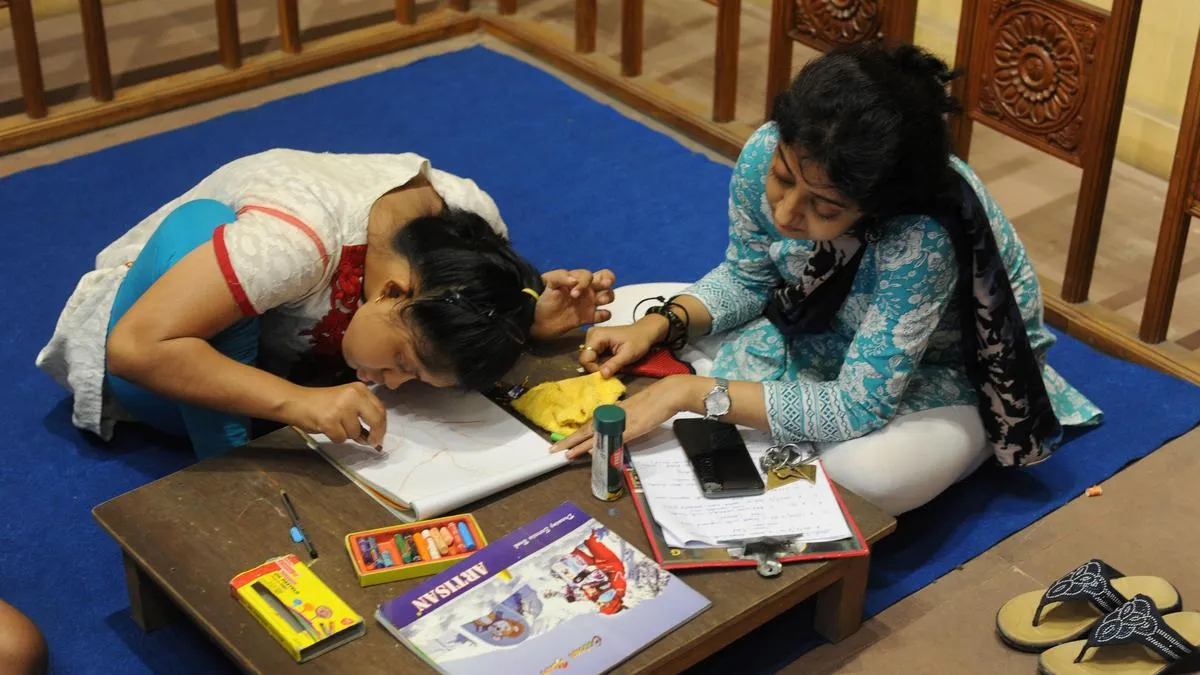
File photograph used for representational purposes only https://th-i.thgim.com/public/incoming/19yc07/article71596067.ece/alternates/FREE_1200/80717_27_8_2022_12_47_9_3_AUTISMINDIANMESEUM3.
JPG DEBASISH BHADURI Kolkata, West Bengal, Children and young adults at Indian Museum learning to paint and sketch at the gallery of Indian Museum.
Every Monday, when the museum is closed for visitors the painting gallery and textile and decorative art gallery is opened for children and young adults with autism.
Along with children parents and trainers are allowed in the Museum.
Photo DEBASISH BHADURI In thousands of families with special needs children, parents are haunted by the question: ‘who after me?’.
There is an urgent need for better support for caregivers and facilities for those with special needs, say parents and experts For Mugdha Kalra, a parent of a special needs adult, financial planning has consumed the past few years.
The question for her is, who will take care of her son when she is no longer there?
She is planning to set up a trust fund that will help him reside at a support home.
Ms.
Kalra is not alone: for parents of children of special needs, the question of ‘who after me?’ is constantly at the back of their minds, a question made difficult by the fact that there is very little in the way of State-funded support services in the country.
Braving the odds: Parents of differently abled children in Keralam search for a bright spot storyline 1 “Even the basic facilities cost ₹50,000/month.
A parent must make a lifetime plan for their child to be able to have this support once they are old or too incapacitated to take care of their child.
Many people with autism also have comorbidities or other health conditions and money is needed for this too. and major health issues that also need money.
Parents need to start planning early and set up trust funds for the child,” says Ms.
Kalra, who is also an autism advocate.
Mugdha Kalra, Journalist, Special Needs Parent and Autism Advocate said. Why Indian parents are looking at assisted living facilities for autistic adult children Why Indian parents are looking at assisted living facilities for autistic adult children As autistic children grow into adulthood, affluent parents concerned about their children’s future and independence are building or booking flats at assisted-living facilities Autism Awareness Month Why Indian parents are looking at assisted living facilities for autistic adult children storyline Understanding autism Autism is a diverse group of conditions related to development of the brain.
The World Health Organization estimates that as of 2021, 1 in 127 people globally had autism.
Exact numbers for India are hard to come by, but up to 1.8-2 million children in India are thought to have ASD, as per figures cited in a paper published in Cureus in 2024. https://pmc.ncbi.nlm.nih.gov/articles/PMC11260197/ Not everyone who is on the autism spectrum has the same level of needs or abilities.
Some people with autism may face spectrum have several difficulties in their day-to-day normal lives, while others may only need help with specific tasks. and the degree of those issues also differs from person to person.
Those with higher needs may requireMost who have a higher degree of autism need assistance from a caregiver to function and live a life of dignity.
In India, as in many other countries, caregiving responsibilities fall on the parents, and predominantly on mothers.
But this then raises the question of long-term planning: how to ensure their child is provided for, and care for, after they are gone or unable to care for them anymore.
However, due to natural circumstances, most primary caregivers are parents, and in most cases they may pass away before their child, so they have to make long-term plans to for their offspring after they pass or are not young and agile enough to offer the best care. “My son will outlive me; a facility for neurodivergent individuals is the only option,” says Sutapa Bose, senior special educator, India Autism Center (IAC), a non-profit organisation based in Kolkata.
Her son has just turned 19 and she is planning to set up a trust fund for him soon to help in his future care and living. “Financial stress is always there; care has become expensive.
But his health and safety are also major concerns for us,” she adds.
Disability insurance for autism still a dream for most storyline 1 Debilitating disability: struggles of families of children with chronic disabilities in Kerala Debilitating disability: struggles of families of children with chronic disabilities in Kerala Families of children with chronic diseases are struggling to manage their lives and the medical treatment of their wards, finds C.
Maya.
Experts in the field highlight the need to evolve a societal support system for the families Debilitating disability: struggles of families of children with chronic disabilities in Kerala storyline 1 Guilt, sibling and caregiver burnout Caregiving is no easy task.
It take a toll, both physically and mentally. “There is always guilt about not doing enough for our children even though our personal lives are affected,” says Ms.
Bose, adding that their parents’ mental health inevitably suffered, an aspect of caregiving that is not much attention is paid to.
An unfair amount of the burden of caring for a person with autism also falls on the sibling, if there is one, who is younger and more able more agile and younger than the parent, so an unsaid expectation lies on them to offer lifetime care, Ms Kalra added.
This is what happened in the case of the Chatterjees.
Jharna Chatterjee’s son lived and grew up during a time when she was the only breadwinner in the family and also took on caregiving responsibilities.
Her son, Sanjib Chatterjee, passed away 16 years ago due to comorbidities. She did not have the financial resources to send him to a care facility.
Neither did she know of a care facility for people with autism nor did she have the finances to send her son to one. parent who has twin boys with autism said. “It hurts my soul to think that my son passed away, but in a way, as a mother I can die in peace knowing that my son led a dignified life and was cared for.
How would I ensure that if he lived after I passed away?
My elder son had spent half his life caring for my younger son, who was autistic.
It drained our finances, we lost our house, and my elder son lost his business while taking care of his brother. Life felt unfair, but we had no choice,” said Ms.
Chatterjee, who is now 87. -year-old mother whose younger son was autistic, said. Why does mental health and disability support often end when you turn 18?
Why does mental health and disability support often end when you turn 18?
Experts discuss India’s lack of adult-focused support systems and call for a framework grounded in disability justice Why does mental health and disability support often end when you turn 18? storyline 1 Little support Parents, caregivers and experts point out that what makes their caregiving harder, is the lack of support from both the government and the society in caring for people with autism.
Ms.
Kalra notes that even when support homes are available, the She also added that the basic facilities at support homes are sometimes below average and may not always offer a dignified life. “Once we are not there, we hope to ensure our children are in a place where they have a dignified and structured life and are cared for.
However, the government does not do much: India has individuals and NGOs trying to make small changes.
That is not enough.
We need to have structural and policy-based change in the country to make the society more inclusive for people on the spectrum,” points out the parent of twin boys with autism.
Talking about this issue, The IAC, in this regard, recently brought out wrote a white paper to seek GST exemption for disability support services.
The institute argued that taxing therapy and rehabilitation increases the financial burden on families and sought a service-based approach instead of disability severity thresholds.
Representatives of IAC also recently met with the Union Finance Minister Nirmala Sitharaman and presented the paper to her and put forth their demands.
According to Sakhi Singhi, a governing board member of IAC, the Finance Minister acknowledged the issue and assured them that they would look into the matter. and plan for positive change. Ms Bose added that parents’ mental health suffers a lot, and there is added guilt about not doing enough for their child, even though the parents’ personal lives suffer massively. According to data published by the National Centre of Autism India and clinical estimates, there are over 18 million people in the country who are in the Autism Spectrum Disorder (ASD).
However, caregivers and parents highlight that there is not enough societal and administrative support in caring for people with autism. “Even the basic facilities cost Rs 50,000/month; a parent must make a lifetime plan for their child to have this support once they are old or are incapacitated to take care of their child.
Many people with autism also have comorbidities and major health issues that also need money.
Parents need to start planning early and set up trust funds for the child,” Mugdha Kalra, Journalist, Special Needs Parent and Autism Advocate said. She also added that the basic facilities at support homes are sometimes below average and may not always offer a dignified life.
An unfair amount of the burden of caring for a person with autism also falls on the sibling, who is more agile and younger than the parent, so an unsaid expectation lies on them to offer lifetime care, Ms Kalra added. EOM
Related articles
 India · The Hindu — Health · 15 hours ago
NMC withdraws 2023 rules on medical education standards, raising accountability concerns
MSMER-2023 withdrawal removes overlapping procedures, eliminates duplication, says NMC; medical activists say the move dilutes regulatory oversight, will ultimately put patients at risk
Read full article India · The Hindu — Health · 15 hours ago
Advocacy group questions Medanta MD Naresh Trehan’s inclusion in panel on pharma marketing practices
In a representation to the Department of Pharmaceuticals, the group urges the government to replace Medanta chairman with a member free of potential conflicts…
Read full article India · The Hindu — Health · 22 hours ago
What is the controversy over the spinal muscular atrophy drug in Keralam? Explained
After the government switched the drug in its SMA programme from branded to generic, parents of children living with SMA have been asking for…
Read full article