
₹8,447 crore in medicine overcharging claims remain outstanding as SC seeks wider price controls
The Hindu — Health · 21 Oct 2026 · 5 min read
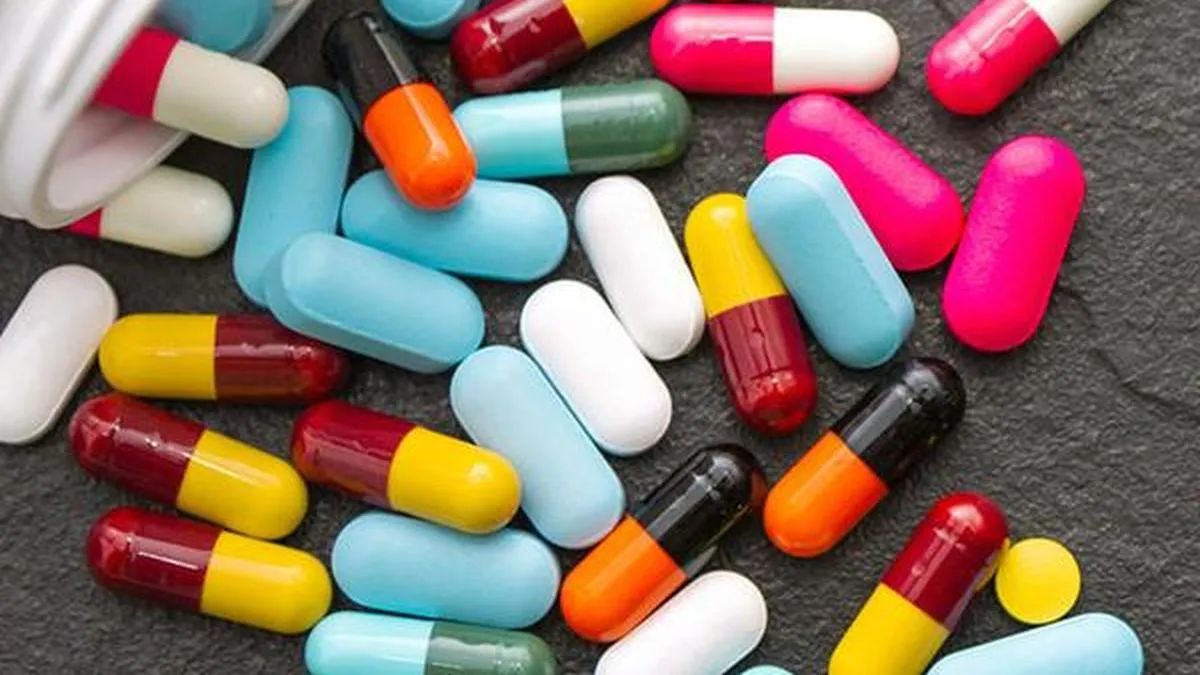
₹8,447 crore in medicine overcharging claims remain outstanding as SC seeks wider price controls left Overcharging beyond regulated prices violates the Drugs (Prices Control) Orders (DPCO), which govern medicine pricing in India JK1991 Getty Images/iStockphoto https://th-i.thgim.com/public/todays-paper/tp-national/tp-karnataka/x2f5ok/article71526210.ece/alternates/FREE_1200/Bengaluru-fake-GQIGJMC1H.3.jpg.jpg JK1991 The SIT has also turned its focus towards hospitals that purchased medicines from the accused.
The outstanding amount is more than five times the amount realised and accounts for about 84% of the cumulative demand On October 12, the Centre informed the Supreme Court that it had decided to cap trade margins at 30% for anti-cancer medicines.
The Bench of Justices Vikram Nath and Sandeep Mehta questioned why similar restrictions could not be extended to other medicines and medical products.
Citing steep differences between the prices at which products were supplied and those charged to patients, the court asked the government to work out broader measures for regulating medicine prices.
The matter is scheduled to be heard again on October 27. Supreme Court wants cap on trade margin for all essential medicines and medical products storyline 1 Govt. caps trade margins on 137 anti-cancer drugs Govt. caps trade margins on 137 anti-cancer drugs The revised prices will become effective from November 9 Govt. caps trade margins on 137 anti-cancer drugs storyline 1 While high trade margins are not necessarily illegal, overcharging beyond regulated prices violates the Drugs (Prices Control) Orders (DPCO), which govern medicine pricing in India.
Both, however, raise questions about the costs borne by patients.
The National Pharmaceutical Pricing Authority (NPPA), the government’s drug-price regulator, continues to pursue companies over past cases of overcharging.
Although established in 1997, the NPPA’s records cover cases dating back to 1979.
As of March 31, 2026, ₹10,029.8 crore had been demanded, including interest.
Under the 2013 Order, certain pricing violations can also attract penalties.
Of the total demanded, ₹1,582.4 crore had been realised, leaving ₹8,447.4 crore outstanding.
The NPPA notes that the figures are subject to reconciliation.
The scale of the issue matters because medicines make up a significant share of household hospitalisation costs.
According to the National Statistics Office’s Household Social Consumption: Health survey, conducted in 2025, medicine expenditure averaged ₹6,368 per hospitalisation case in rural areas, out of a total of ₹32,884.
This accounted for 19.4% of the total.
In urban areas, medicine expenditure averaged ₹6,948 out of ₹46,774 per hospitalisation case, accounting for 14.9%. left https://th-i.thgim.com/public/data/fw5waa/article71607907.ece/alternates/FREE_1200/Overcharging%20medicines%20chart%2012x%201.png However, when hospitals charged a single package price and households could not specify expenditure on individual items, the amount was recorded as a lump sum under the ‘package component’.
Since these packages may include medicines, the actual share of hospitalisation costs spent on medicines could be higher than the separately reported figures of nearly 20% in rural areas and 15% in urban areas.
NPPA’s recovery record The outstanding amount is more than five times the amount realised and accounts for about 84% of the cumulative demand.
Moreover, these figures cover only cases in which the NPPA has raised demands against companies for overcharging.
They do not include cases that may have gone undetected or have not been pursued by the regulator.
Health Department issues circular on maintaining medicine stocks in hospitals Health Department issues circular on maintaining medicine stocks in hospitals The circular directs that an updated list of the medicine stocks in hospitals be provided to doctors in the OP (outpatient) departments.
This will help doctors have a clear idea about the medicines available in the hospital and to prescribe the same to patients.
Health Department issues circular on maintaining medicine stocks in hospitals storyline 1 The NPPA’s year-wise data show that the number of cases has varied considerably between 2009-10 and 2025-26.
The highest count in this period was 268 cases in 2015-16, followed by 224 in 2017-18.
The number fell to 38 in 2020-21 before rising to 148 in 2022-23.
In 2025-26, the regulator recorded 133 cases. left https://th-i.thgim.com/public/data/ozaojv/article71607914.ece/alternates/FREE_1200/Overcharging%20medicines%20chart%2022x.png The annual entries add up to approximately ₹5,265 crore in demands, including interest, of which about ₹4,460 crore remained outstanding and ₹805 crore had been realised.
For the period before 2009, the NPPA recorded 731 cases, with ₹4,764.75 crore demanded and ₹3,987.5 crore outstanding.
The amount realised refers to recoveries against demands raised in these financial-year cohorts, not necessarily money collected during the respective years, as recoveries may take place later.
Outstanding amounts were highest in 2015-16, at ₹1,003.3 crore, followed by ₹576 crore in 2017-18.
In 2025-26, ₹45.1 crore remained outstanding against a demand of ₹72.2 crore. left https://th-i.thgim.com/public/data/g5zz5j/article71607938.ece/alternates/FREE_1200/Overcharging%20medicines%20chart%2032x.png Of the total outstanding amount, More than ₹5,800 crore is tied up in litigation, including cases referred to Collectors and contested by companies in court.
Another ₹200 crore relates to cases referred to Collectors for recovery, while ₹2,369.3 crore remains under process. left https://th-i.thgim.com/public/data/dx0lcq/article71607978.ece/alternates/FREE_1200/Overcharging%20medicines%20chart%2042x%201.png Importantly, recovering money from pharmaceutical companies is distinct from compensating patients who paid higher prices.
In a Lok Sabha reply on July 23, 2019, the Department of Pharmaceuticals stated that “there is no mechanism to compensate the consumers for the amount overcharged.” However, the NPPA accepts complaints from consumers and other stakeholders through its Pharma Jan Samadhan portal and the Pharma Sahi Daam app.
Complaints can relate to medicine overpricing, shortages or non-availability, new drugs being sold without prior price approval, and refusal to supply or sell medicines.
The regulator examines complaints and takes appropriate action where warranted.
Source: The National Pharmaceutical Pricing Authority (NPPA) and NSS Report no. 596: Household Social Consumption: Health (2025) When care falls short When care falls short On the cost and safety of medicines, research, ageing, the questions around healthcare rights, medical evidence and more Health Matters When care falls short storyline 1
Related articles
 India · The Hindu — Health · 14 hours ago
Webinar on modern-day tips for posture to be held on October 25
The webinar will explore how daily habits, workplace ergonomics and physical inactivity affect the spine, and discuss practical ways to prevent and manage common…
Read full article India · The Hindu — Health · 17 hours ago
Shamonda virus, the livestock pathogen detected in human for the first time | Explained
The virus, which mainly affects livestock, has been detected in humans for the first time, prompting investigations into its potential public health implications
Read full article India · The Hindu — Health · 18 hours ago
Inadequate sleep increases the risk of fatty liver disease
With every one-hour decrease in sleep time from the recommended seven-eight hours, the risk of fat deposition in the liver increased by 24%
Read full article