
What happens inside the brain during a stroke?
The Hindu — Health · 24 Oct 2026 · 8 min read
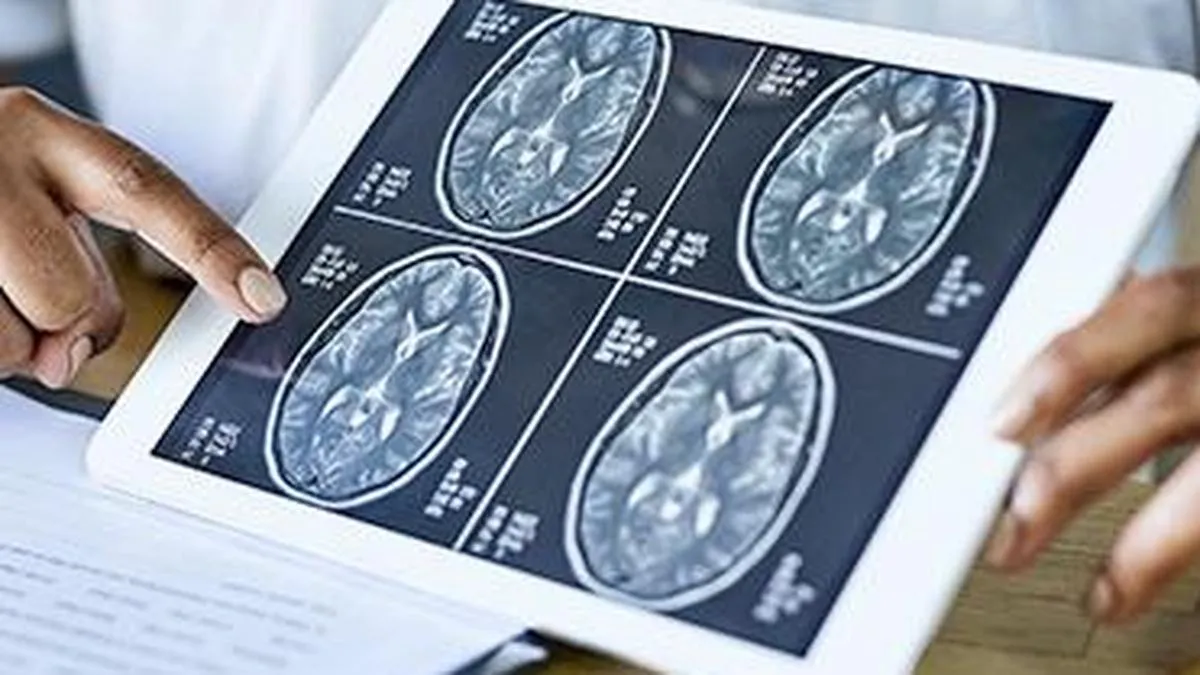
What happens inside the brain during a stroke? left The effects of a stroke vary, depending on the site and degree of damage within the brain.
Image used for representational purposes only Getty Images Getty Images https://th-i.thgim.com/public/incoming/9sjac1/article71619265.ece/alternates/FREE_1200/IMG_BL2010_Pulse_from_th_2_1_S9F1S0DE.jpg Charday Penn Shot of a doctor using a digital tablet to discuss a brain scan during a consultation in her office The first few hours of a stroke determine how damaged the brain can become.
Knowing the signs and seeking timely medical help is crucial A stroke is an urgent situation where either the flow of blood to the brain is either cut off, or where there is a rupture of the blood vessels in the brain.
Oxygen and glucose are the two elements essential for brain activity.
Interruption of their supply results in impairment of brain activity activities and eventual damage of brain tissues -- and this damage which occurs in takes only minutes.
The first few hours of a stroke, therefore, determine how damaged the brain can become.
Understanding the FAST Rule — how to spot a stroke in seconds Understanding the FAST Rule — how to spot a stroke in seconds When it comes to a stroke, time is brain: being able to spot warning signs and getting help immediately could mean the difference between recovery and lifelong disability October 29: World Stroke Day Understanding the FAST Rule — how to spot a stroke in seconds storyline 1 Types of strokes Strokes can be categorised divided into ischemic strokes and haemorrhagic strokes.
In ischemic strokes, the first case, the stroke occurs due to the blocking of an the artery by a blood clot.
In haemorrhagic strokes, the second case, there is a rupture of the blood vessel, which leads to blood in the brain tissue.
Regardless of the type of stroke, the result is damage to the brain tissue, which can result in brain tissues are damaged and vital body functions including speaking, movement, vision, memory and coordination becoming impaired.
An ischemic stroke is accompanied by oxygen starvation of the affected brain tissue.
Due to insufficient energy resources, brain cells cannot function normally. function.
The chemical composition of the brain cells, therefore, changes, which results in the accumulation of toxic substances that cause harm to brain cells and other structures.
With continued oxygen starvation, cells continue to deteriorate.
The damage, however, does not occur uniformly.
At the same time, the damage may vary.
Thus, In the central area of the brain (core) where oxygen starvation is critical, damage can occurs rapidly and irreversibly.
Around this area, there is a zone called the of the so-called ischemic penumbra.
Here, even if blood flow is low, yet brain cells can survive for a certain period of time.
They can be saved if blood flow is restored promptly. timely.
The effect of bleeding in a haemorrhagic stroke is brought about by the leaking of blood into the brain when there is a rupture of a blood vessel.
This may lead to injury of brain cells, and also interfere as well as interfering with proper blood and cerebral spinal fluid flow in the brain.
When the Brain Sends a Warning: How India’s Young Professionals Are Facing a Silent Stroke Crisis When the Brain Sends a Warning: How India’s Young Professionals Are Facing a Silent Stroke Crisis SPONSORED CONTENT When the Brain Sends a Warning: How India’s Young Professionals Are Facing a Silent Stroke Crisis storyline 1 The first few hours Why are the first few hours so important?
There are only so many minutes that the brain can withstand interrupted blood flow.
Brain cells (neurons) begins to undergo irreversible damage within 3 to 5 minutes of interrupted blood flow. With each minute that goes by, 1.9 million neurons, i.e. 32 neurons per second, die due to lack of oxygenation, which is why we emphasise that ‘time is brain’. if the blockage goes untreated.
This idea is captured by the notion ‘time is brain.’ The first few hours are critical since at this point, one needs to assess what kind of stroke it is and start appropriate treatment.
In some cases of ischemic stroke, intravenous thrombolysis, the meaning administration of drugs that dissolve the clot within the blood vessels, might be given in the first 4.5 hours after symptoms develop. since the symptoms have developed.
In some patients with large vessel blockage, there might be indications for mechanical thrombectomy.
In simple terms, a mechanical thrombectomy involves the removal of the clot using special equipment, and it might be done up to 24 hours after the patient was last seen without symptoms. last seen normal.
In cases of haemorrhagic strokes, others strategies must be employed: this includes blood pressure control, correction of the consequences of taking blood thinners, management of intracranial pressure, and surgical procedures, where necessary.
Not all patients automatically qualify for all interventions.
They do not automatically guarantee qualification for the treatment because There are other issues that have to be taken into account, including the patient’s medical status, imaging studies, timing of stroke symptoms, and dangers involved in the therapy.
Even some of those who come after these time windows, can still be eligible for certain treatment procedures after imaging is done. through imaging.
Stroke care is most effective within 4.5 hours, experts stress on World Stroke Day Stroke care is most effective within 4.5 hours, experts stress on World Stroke Day Stroke care is most effective within 4.5 hours, experts stress on World Stroke Day storyline 1 How brain function is affected How does a stroke affect different brain functions?
The effects of a stroke will vary, depending on the site and degree of damage within the brain.
Movement centres can be damaged leading to weakness or paralysis that usually affects one side of the body.
Speech centres could be damaged causing speech problems and comprehension difficulties or trouble reading and writing.
A stroke involving the visual pathways leads to a sudden loss of vision or partial visual fields.
If the cerebellum or the brainstem is involved, there could be a problem with dizziness, poor coordination, problems swallowing, double vision or loss of balance.
There could also be memory, attention and decision-making problems and problems with emotional regulation.
It is important to know and understand these symptoms since sometimes a stroke occurs without the characteristic facial drooping or arm weakness of the disease.
Identification of symptoms, timely intervention crucial for stroke, say neurologists in Coimbatore Identification of symptoms, timely intervention crucial for stroke, say neurologists in Coimbatore Identification of symptoms, timely intervention crucial for stroke, say neurologists in Coimbatore storyline 1 Recognising warning signs Recognising the warning signs and acting quickly The BE FAST method is an effective means of identifying the symptoms of a stroke: B – Balance: Sudden loss of balance, dizziness or difficulty walking E – Eyes: Sudden blurred vision, double vision or loss of vision F – Face: One side of the face is drooping or numb A – Arms: One arm is weak or dropping down S – Speech: Slurred speech T – Time: Call for help immediately Sudden changes in vision, lack of balance, confusion or even a severe headache without apparent reason might be symptoms of a stroke as well.
Disappearing symptoms within a minute or two shouldn’t be considered as harmless and require immediate medical examination. of a person.
Golden hour is vital in treating stroke, say neuro experts at The Hindu wellness webinar Golden hour is vital in treating stroke, say neuro experts at The Hindu wellness webinar Sudden and severe headache, stiffness or neck pain, speech slur, arm weakness and imbalanced walk could be symptoms Golden hour is vital in treating stroke, say neuro experts at The Hindu wellness webinar storyline 1 After the golden hour What will happen after golden hours The ‘golden hour’ is significant to preserve as much of brain function as possible and to ensure best possible outcomes, but this does not mean However, despite the significance of those early hours, medical professionals cease working after this window is over.
Medical teams will continue do not cease working even after those periods are over, because we continue monitoring the condition of the patient, controlling blood pressure and preventing additional harm to him or her.
In case the condition of the patient becomes satisfactory, it is likely that he or she will be offered physiotherapy, speech and language therapy, occupational therapy and cognitive therapy.
It is worth noting that every stroke patient has his or her own path to recovery, which depends greatly on the level of injuries, the affected area of the brain, timely assistance and the patient’s health in general.
For all individuals, however, it is important to understand how the brain functions, remember the signs of a stroke and seek timely help for oneself or a loved one.
In any case, understanding of brain processes that take place during the stroke highlights one important fact.
Understanding of brain processes that take place during the stroke highlights one important fact. (Dr.
B.
K.
Madhusudhan is lead consultant – neurology, Aster RV Hospital, Bengaluru. madhusudhan.bk@asterhospital.in) B – Balance: Sudden loss of balance, dizziness or difficulty walking E – Eyes: Sudden blurred vision, double vision or loss of vision F – Face: One side of the face is drooping or numb A – Arms: One arm is weak or dropping down S – Speech: Slurred speech T – Time: Call for help immediately
Related articles
 India · The Hindu — Health · 16 hours ago
NMC withdraws 2023 rules on medical education standards, raising accountability concerns
MSMER-2023 withdrawal removes overlapping procedures, eliminates duplication, says NMC; medical activists say the move dilutes regulatory oversight, will ultimately put patients at risk
Read full article India · The Hindu — Health · 16 hours ago
Advocacy group questions Medanta MD Naresh Trehan’s inclusion in panel on pharma marketing practices
In a representation to the Department of Pharmaceuticals, the group urges the government to replace Medanta chairman with a member free of potential conflicts…
Read full article India · The Hindu — Health · 23 hours ago
What is the controversy over the spinal muscular atrophy drug in Keralam? Explained
After the government switched the drug in its SMA programme from branded to generic, parents of children living with SMA have been asking for…
Read full article