
How peripheral artery disease is treated as leg pain worsens
The Hindu — Health · 27 Oct 2026 · 6 min read
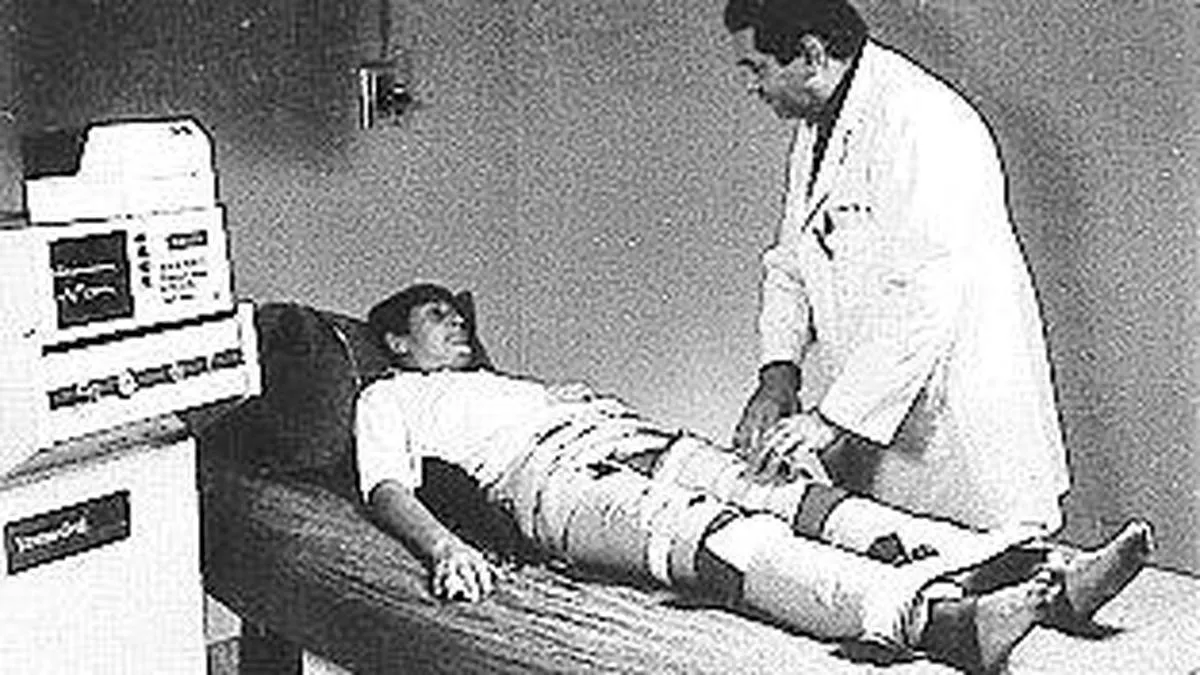
How peripheral artery disease is treated as leg pain worsens left Movement and structured exercises are core first-line treatment for peripheral artery disease, but pain makes the treatment difficult |Image used for representational purpose only File Photo File Photo https://th-i.thgim.com/public/incoming/atbuu/article71630345.ece/alternates/FREE_1200/344465.
II2 HEALTHSCAN: CORONARY ARTERY BYPASS AND BALLOON ANGIOPLASTY: A PATIENT WITH ADJUSTABLE CUFFS WRAPPED AROUND THE LEG.
THE NON-INVASIVE TREATMENT IS SAID TO IMPROVE CARDIAC PERFORMANCE BY MODIFYING HAEMODYNAMICS.
Treatment for PAD includes medicines, structured exercise and procedures to improve blood flow.
Experts advise patients not to push through severe pain during exercise and to seek medical advice if pain occurs For people living with peripheral artery disease (PAD), walking even short distances or doing routine household tasks can become difficult because of leg pain.
The condition develops when arteries supplying blood to the legs become narrow, usually because fatty deposits build up along their walls.
With less blood reaching the muscles, walking can cause pain, cramps or heaviness that ease with rest.
In advanced cases, pain may persist even when a person is sitting or lying down, and poor circulation can lead to wounds that do not heal.
Treatment can be challenging too because movement is an important part of managing PAD, while pain makes it difficult to stay active.
Structured exercise, medicines and control of risk factors such as smoking, diabetes and high blood pressure can help manage the condition.
When blood flow is severely reduced, procedures may be needed to prevent damage to the feet and legs.
PAD can also affect overall cardiovascular health, increasing the risk of heart attack and stroke.
Work-related stress may up risk for peripheral artery disease Work-related stress may up risk for peripheral artery disease The study is published in the Journal of the American Heart Association and researchers evaluated the records of 139,000 men and women for the findings story Work-related stress may up risk for peripheral artery disease Managing pain Pain, cramps, heaviness in the calf or thigh that develop during walking and ease with rest are known as intermittent claudication.
This happens when narrowed arteries cannot supply enough blood to meet the muscles’ increased needs during activity.
Venu S., consultant vascular surgeon, Prashanth Hospitals, Chennai, says structured walking programmes can help patients gradually increase the distance they can walk.
Patients are generally advised to walk until the discomfort becomes moderate, rest until it settles and then resume walking.
Sessions commonly last 30 to 45 minutes and take place several times a week, with supervision where possible.
He says patients who follow a structured programme for about three months may be able to walk twice as far, or more, before pain begins.
The pace and duration should suit each patient’s ability.
Those who find walking difficult may need an adapted exercise programme under medical supervision.
Balaji V., senior consultant, vascular surgery, Apollo Hospitals, Greams Road, Chennai, says quitting smoking, eating a healthy diet, staying physically active and controlling blood sugar, blood pressure and cholesterol are also important parts of treatment.
Exercise should not mean pushing through severe pain.
Pain that does not settle with rest needs medical assessment.
Pain in the feet or toes while resting, particularly at night, can indicate a serious reduction in blood flow and requires prompt medical attention.
All you need to know about: angioplasty All you need to know about: angioplasty Angioplasty is a minimally invasive, non-surgical procedure performed primarily in arteries supplying oxygenated blood to the heart, neck, legs or kidneys All you need to know about: angioplasty storyline 1 Diagnosis and treatment Diagnosis usually begins with a review of symptoms and medical history, followed by an examination of the legs and feet, including checking the pulses.
Doctors may measure the ankle-brachial index (ABI), which compares blood pressure at the ankle with that in the arm, to assess blood flow.
A Doppler ultrasound scan can help identify narrowed arteries and assess circulation.
In patients with severe symptoms or wounds that do not heal, a CT angiogram may be needed to locate the blockage and plan treatment.
Medicines aim to relieve symptoms, slow the progression of arterial disease and reduce the risk of heart attack and stroke.
Antiplatelet medicines such as aspirin or clopidogrel help prevent blood clots.
Statins lower cholesterol and help stabilise fatty deposits in artery walls.
Medicines to control blood pressure and diabetes are also important.
Cilostazol can help some patients with walking-related pain walk farther before symptoms begin, but it is not suitable for people with heart failure.
Select patients may need additional medicines to reduce cardiovascular and limb-related risks.
Experts say treatment often needs to continue long term, even when symptoms improve.
Patients should not stop or change prescribed medicines without consulting their doctor.
Diabetes can damage nerves and reduce sensation in the feet, allowing cuts and wounds to go unnoticed.
It can also affect smaller arteries, making some blockages harder to treat.
High blood pressure and cholesterol contribute to arterial damage and the build-up of fatty deposits.
Kidney disease can cause calcium to build up in artery walls and delay wound healing.
Heart disease can occur alongside PAD because both may result from the same underlying process.
During follow-up, doctors assess changes in walking distance and symptoms and may repeat ABI measurements or Doppler scans to check blood flow.
Blood tests can help monitor cholesterol, blood sugar and kidney function.
Stay active, keep dangerous blood clots at bay Stay active, keep dangerous blood clots at bay When a person is immobile, blood stagnates in the veins of the legs, and promotes clots formation at the valves present in those veins.
This is worsened by inactivity of the calf muscles.
Any form of mobility pumps venous blood from the lower limbs towards the heart, and hence should be vigorously encouraged World Thrombosis Day: October 13 Stay active, keep dangerous blood clots at bay storyline 1 Preventing complications When symptoms remain disabling despite medicines and exercise, doctors may consider a procedure to widen the narrowed artery.
The decision depends on the location and extent of the blockage, the severity of symptoms and the patient’s overall health.
Angioplasty uses a small balloon to widen a narrowed artery.
A stent may be placed to help keep it open.
Experts say newer techniques can also help treat complex blockages.
Intravascular lithotripsy uses shock waves delivered through a specialised balloon to modify heavy calcium deposits in the artery, making it easier to widen the vessel.
Atherectomy devices can remove fatty deposits in selected cases, while thrombectomy devices are used to remove blood clots.
The appropriate method depends on the type and location of the blockage.
For extensive disease, bypass surgery creates an alternative route for blood to reach the affected part of the leg.
The choice between a procedure performed through a blood vessel and surgery depends on the blockage, the patient’s condition and the likely benefits and risks.
Pain at rest, wounds that do not heal or gangrene can indicate that the leg is at risk and require urgent medical assessment.
A wound that has not healed within two weeks, a cold or discoloured foot, or a black patch on a toe or heel should not be ignored.
Sudden, severe leg pain accompanied by paleness, coldness, numbness or weakness is a medical emergency because it may indicate a sudden blockage of an artery.
Regular foot checks are particularly important for people with diabetes, who may not feel an injury developing.
Recognising worsening symptoms and seeking timely care can help preserve mobility and prevent serious damage to the feet and legs.
EOM
Related articles
 India · The Hindu — Health · 9 hours ago
The Hindu, Kauvery Hospital to host stroke care webinar on October 28
The webinar will discuss early diagnosis, symptom recognition, and the importance of timely access to specialised care
Read full article India · The Hindu — Health · 9 hours ago
UK approves J&J's oral psoriasis pill
In all four studies, patients who took the drug saw better results after 16 weeks than those given a placebo, the regulator said
Read full article India · The Hindu — Health · 15 hours ago
Cancer 360: Overview of Detection, Treatment, Palliation
This e-book brings together the many dimensions of cancer care.
Read full article