
29-year-old regains limb movement after emergency stroke treatment at two govt. hospitals
The Hindu — Health · 16 Nov 2026 · 2 min read
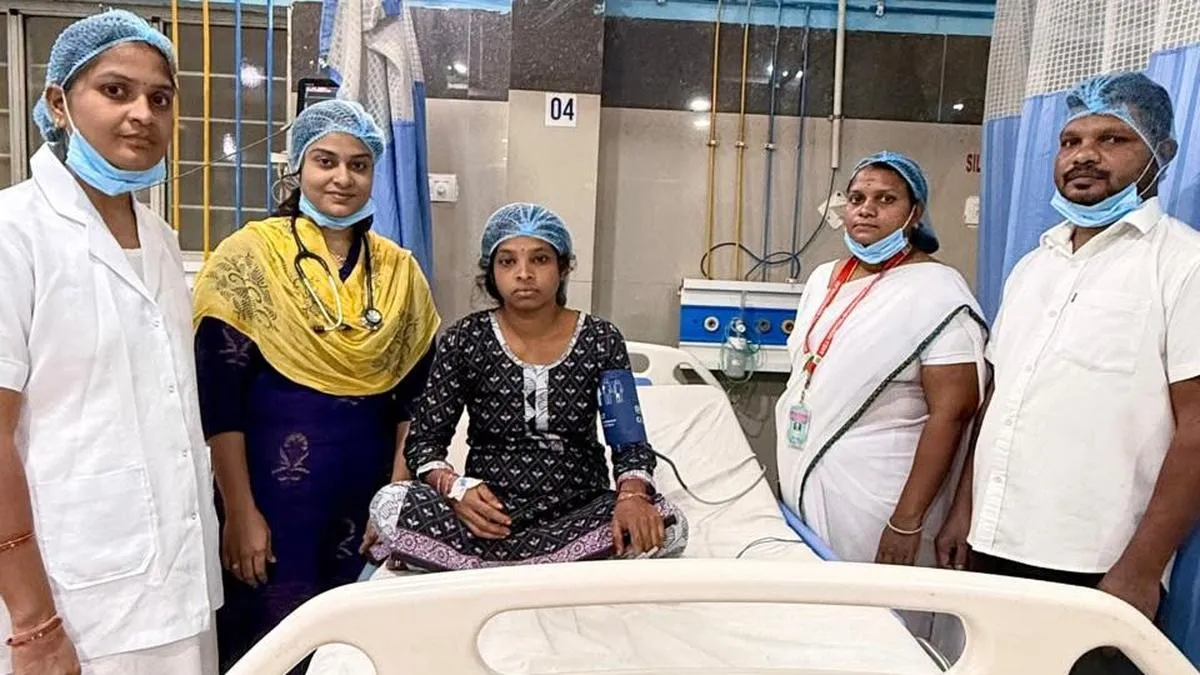
HYDERABAD A 29-year-old woman from Manuguru, who was rushed to hospital after suddenly losing movement in her right arm and leg, regained significant mobility within hours after doctors at two government hospitals coordinated to administer emergency stroke treatment within the critical window.
Rajani’s ordeal began on an ordinary morning when she suddenly developed slurred speech and complete weakness on her right side.
Recognising the signs of an acute stroke, doctors acted swiftly to prevent permanent brain damage.
She was first taken to Area Hospital, Manuguru, where Sai Kumar, a General Medicine specialist, identified the symptoms and arranged an urgent referral to Area Hospital, Bhadrachalam, nearly 60 km away, for emergency treatment.
Recognising the narrow window for intervention, M.
Ramakrishna, medical superintendent of Area Hospital, Manuguru, coordinated directly with Tejaswi Gadde, physician at Area Hospital, Bhadrachalam, to facilitate her transfer.
At Bhadrachalam, doctors immediately conducted a CT scan to rule out bleeding in the brain before administering clot-dissolving medication.
With Rajani still within the recommended 4.5-hour treatment window, doctors administered intravenous Tenecteplase at 2 p.m., around 3.5 hours after the symptoms began, said G.
Ravi Babu, District Coordinator of Hospital Services (DCHS), Bhadradri Kothagudem.
The response to treatment was encouraging.
Before the intervention, Rajani had no detectable movement in her right arm or leg, with her muscle power recorded at 0/5.
Following thrombolysis, her muscle strength improved, and she regained the ability to move the affected limbs against resistance, though full strength is yet to return.
She remains under close neurological observation.
The case also highlights the availability of advanced emergency treatment in government hospitals serving remote and tribal areas.
The thrombolytic medication, which costs around ₹45,000 in the market, was administered to Rajani free of cost.
Dr.
Ravi Babu appreciated the doctors, nurses and supporting staff at both hospitals for their prompt decisions and coordination. “Such interventions demonstrate how teamwork between government healthcare institutions can help deliver advanced, life-saving treatment even in geographically remote areas,” he said.
Related articles
 India · The Hindu — Health · 15 hours ago
AIIMS Delhi performs a life-changing spinal repair in utero, before the patient’s first breath
This is India’s first open foetal repair for myelomeningocele, a defect in which the spinal cord and its coverings protrude through an opening in…
Read full article India · The Hindu — Health · 16 hours ago
Matrescence: when motherhood needs mental health support
At least one in five women will experience mental health problems during pregnancy until till the first year after childbirth. This cannot be ignored…
Read full article India · The Hindu — Health · 20 hours ago
India scrutinises Red Bull’s sugar levels as ‘energy drink’ dispute escalates
The basis and nature of the energy-related positioning of the product require scientific and regulatory substantiation, the FSSAI said in the document
Read full article