
Acamprosate Calcium
11 DESCRIPTION Acamprosate calcium, USP is supplied in an enteric-coated tablet for oral administration. Acamprosate calcium, USP is a synthetic compound with a chemical structure similar to that of the endogenous amino acid homotaurine, which is a structural analogue of the amino acid neurotransmitter γ-aminobutyric acid and the amino acid neuromodulator taurine. Its chemical name is calcium acetylaminopropane sulfonate. Its chemical formula is C 10 H 20 N 2 O 8 S 2 Ca and molecular weight is 400.5. Its structural formula is: Acamprosate calcium, USP is a white or almost white powder. It is freely soluble in water, practically insoluble in alcohol and in methylene chloride. Each acamprosate calcium delayed-release tablet intended for oral administration contains 333 mg of acamprosate calcium, USP equivalent to 300 mg of acamprosate. In addition, each tablet contains the following inactive ingredients: colloidal anhydrous silica, methacrylic acid copolymer type c, magnesium stearate, microcrystalline cellulose, polyethylene glycol, povidone, sodium bicarbonate, sodium lauryl sulfate, sodium starch glycolate and talc. Sulfites were used in the synthesis of the drug substance and tra
Information page. Not necessarily available for purchase.
What is Acamprosate Calcium?
11 DESCRIPTION Acamprosate calcium, USP is supplied in an enteric-coated tablet for oral administration. Acamprosate calcium, USP is a synthetic compound with a chemical structure similar to that of the endogenous amino acid homotaurine, which is a structural analogue of the amino acid neurotransmitter γ-aminobutyric acid and the amino acid neuromodulator taurine. Its chemical name is calcium acetylaminopropane sulfonate. Its chemical formula is C 10 H 20 N 2 O 8 S 2 Ca and molecular weight is 400.5. Its structural formula is: Acamprosate calcium, USP is a white or almost white powder. It is freely soluble in water, practically insoluble in alcohol and in methylene chloride. Each acamprosate calcium delayed-release tablet intended for oral administration contains 333 mg of acamprosate calcium, USP equivalent to 300 mg of acamprosate. In addition, each tablet contains the following inactive ingredients: colloidal anhydrous silica, methacrylic acid copolymer type c, magnesium stearate, microcrystalline cellulose, polyethylene glycol, povidone, sodium bicarbonate, sodium lauryl sulfate, sodium starch glycolate and talc. Sulfites were used in the synthesis of the drug substance and tra
Uses of Acamprosate Calcium
Established uses
- 1 INDICATIONS AND USAGE Acamprosate calcium delayed-release tablets are indicated for the maintenance of abstinence from alcohol in patients with alcohol dependence who are abstinent at treatment initiation ( 1 , 14 ).
- Treatment with acamprosate calcium delayed-release tablets should be part of a comprehensive management program that includes psychosocial support ( 1 ).
- Acamprosate calcium delayed-release tablets are indicated for the maintenance of abstinence from alcohol in patients with alcohol dependence who are abstinent at treatment initiation.
- Treatment with acamprosate calcium delayed-release tablets should be part of a comprehensive management program that includes psychosocial support.
- The efficacy of acamprosate calcium delayed-release tablets in promoting abstinence has not been demonstrated in subjects who have not undergone detoxification and not achieved alcohol abstinence prior to beginning acamprosate calcium delayed-release tablets treatment.
- The efficacy of acamprosate calcium delayed-release tablets in promoting abstinence from alcohol in polysubstance abusers has not been adequately assessed.
How Acamprosate Calcium works
In more detail: 12.1 Mechanism of Action The mechanism of action of acamprosate in maintenance of alcohol abstinence is not completely understood. Chronic alcohol exposure is hypothesized to alter the normal balance between neuronal excitation and inhibition. In vitro and in vivo studies in animals have provided evidence to suggest acamprosate may interact with glutamate and GABA neurotransmitter systems centrally, and has led to the hypothesis that acamprosate restores this balance.
How to take Acamprosate Calcium
2 DOSAGE AND ADMINISTRATION Recommended dose: 666 mg (two 333 mg tablets) taken three times daily ( 2 ). Dose reduction to one 333 mg tablet taken three times daily for patients with moderate renal impairment (creatinine clearance 30 to 50 mL/min) ( 2.1 ). Acamprosate calcium delayed-release tablets are contraindicated in patients with severe renal impairment (creatinine clearance of ≤30 mL/min) ( 2.1 , 4.2 , 5.1 , 8.6 , 12.3 ). The recommended dose of acamprosate calcium delayed-release tablets is two 333 mg tablets (each dose should total 666 mg) taken three times daily. A lower dose may be effective in some patients. Although dosing may be done without regard to meals, dosing with meals was employed during clinical trials and is suggested in those patients who regularly eat three meals daily. Treatment with acamprosate calcium delayed-release tablets should be initiated as soon as possible after the period of alcohol withdrawal, when the patient has achieved abstinence, and should be maintained if the patient relapses. Acamprosate calcium delayed-release tablets should be used as part of a comprehensive psychosocial treatment program. 2.1 Dosage in Renal Impairment For patients
Dosage
Follow the dose prescribed by your doctor or pharmacist. The ranges below are general information, not a personal prescription.
- Adults
- 2 DOSAGE AND ADMINISTRATION Recommended dose: 666 mg (two 333 mg tablets) taken three times daily ( 2 ). Dose reduction to one 333 mg tablet taken three times daily for patients with moderate renal impairment (creatinine clearance 30 to 50 mL/min) ( 2.1 ). Acamprosate calcium delayed-release tablets are contraindicated in patients with severe renal impairment (creatinine clearance of ≤30 mL/min) ( 2.1 , 4.2 , 5.1 , 8.6 , 12.3 ). The recommended dose of acamprosate calcium delayed-release tablets is two 333 mg tablets (each dose should total 666 mg) taken three times daily. A lower dose may be effective in some patients. Although dosing may be done without regard to meals, dosing with meals was employed during clinical trials and is suggested in those patients who regularly eat three meals daily. Treatment with acamprosate calcium delayed-release tablets should be initiated as soon as possible after the period of alcohol withdrawal, when the patient has achieved abstinence, and should be maintained if the patient relapses. Acamprosate calcium delayed-release tablets should be used as part of a comprehensive psychosocial treatment program. 2.1 Dosage in Renal Impairment For patients
Side effects of Acamprosate Calcium
Common
- 6 ADVERSE REACTIONS Common adverse events that occurred in any acamprosate calcium treatment group at a rate of 3% or greater and greater than the placebo group in controlled clinical trials with spontaneously reported adverse events are: accidental injury, asthenia, pain, anorexia, diarrhea, flatulence, nausea, anxiety, depression, dizziness, dry mouth, insomnia, paresthesia, pruritus and sweating ( 6.1 ).
- To report SUSPECTED ADVERSE REACTIONS, contact Zydus Pharmaceuticals USA Inc.
- at 1-877-993-8779 or FDA at 1-800-FDA-1088 or www.fda.gov/medwatch.
- 6.1 Clinical Trials Experience Because clinical trials are conducted under widely varying conditions, adverse reaction rates observed in the clinical trials of a drug cannot be directly compared to rates in the clinical trials of another drug and may not reflect the rates observed in clinical practice.
- Clinically significant serious adverse reactions associated with acamprosate calcium described elsewhere in labeling include suicidality and depression and acute kidney failure [ see Warnings and Precautions (5.2), and Adverse Reactions (6.2) ].
- The adverse event data described below reflect the safety experience in over 7000 patients ex
Warnings and who should not take it
Who should NOT take Acamprosate Calcium?
- 4 CONTRAINDICATIONS Acamprosate calcium is contraindicated in patients who previously have exhibited hypersensitivity to acamprosate calcium or any of its components ( 4.1 ).
- Acamprosate calcium is contraindicated in patients with severe renal impairment ( 4.2 ).
- 4.1 Hypersensitivity to Acamprosate Calcium Acamprosate calcium is contraindicated in patients who previously have exhibited hypersensitivity to acamprosate calcium or any of its components.
- 4.2 Severe Renal Impairment Acamprosate calcium is contraindicated in patients with severe renal impairment (creatinine clearance of ≤30 mL/min) [ see Dosage and Administration (2.1) , Warnings and Precautions (5.1) , Use in Specific Populations (8.6) , and Clinical Pharmacology (12.3) ].
Overdose
10 OVERDOSAGE In all reported cases of acute overdosage with acamprosate calcium (total reported doses of up to 56 grams of acamprosate calcium), the only symptom that could be reasonably associated with acamprosate calcium was diarrhea. Hypercalcemia has not been reported in cases of acute overdose. A risk of hypercalcemia should be considered in chronic overdosage only. Treatment of overdose should be symptomatic and supportive.
Safety at a glance
8.1 Pregnancy Teratogenic effects: Acamprosate calcium has been shown to be teratogenic in rats when given in doses that are approximately equal to the human dose (on a mg/m 2 basis) and in rabbits when given in doses that are approximately 3 times the human dose (on a mg/m 2 basis). Acamprosate calcium produced a dose-related increase in the number of fetuses with malformations in rats at oral doses of 300 mg/kg/day or greater (approximately equal to the maximum recommended human daily (MRHD) oral dose on a mg/m 2 basis). The malformations included hydronephrosis, malformed iris, retinal dysplasia, and retroesophageal subclavian artery. No findings were observed at an oral dose of 50 mg/kg/day (approximately one-fifth the MRHD oral dose on a mg/m 2 basis). An increased incidence of hydronephrosis was also noted in Burgundy Tawny rabbits at oral doses of 400 mg/kg/day or greater (approximately 3 times the MRHD oral dose on a mg/m 2 basis). No developmental effects were observed in New Zealand white rabbits at oral doses up to 1000 mg/kg/day (approximately 8 times the MRHD oral dose on a mg/m 2 basis). The findings in animals should be considered in relation to known adverse develop
8.3 Nursing Mothers In animal studies, acamprosate was excreted in the milk of lactating rats dosed orally with acamprosate calcium. The concentration of acamprosate in milk compared to blood was 1.3:1. It is not known whether acamprosate is excreted in human milk. Because many drugs are excreted in human milk, caution should be exercised when acamprosate calcium is administered to a nursing woman.
Children and elderly
Children
8.4 Pediatric Use The safety and efficacy of acamprosate calcium have not been established in the pediatric population.
Elderly
8.5 Geriatric Use Forty-one of the 4234 patients in double-blind, placebo-controlled, clinical trials of acamprosate calcium were 65 years of age or older, while none were 75 years of age or over. There were too few patients in the ≥65 age group to evaluate any differences in safety or effectiveness for geriatric patients compared to younger patients. This drug is known to be substantially excreted by the kidney, and the risk of toxic reactions to this drug may be greater in patients with impaired renal function. Because elderly patients are more likely to have decreased renal function, care should be taken in dose selection, and it may be useful to monitor renal function [ see Clinical Pharmacology (12.3) , Adverse Reactions (6.1) , and Dosage and Administration (2.1) ].
Interactions
Medicine and medicine
- 7 DRUG INTERACTIONS Acamprosate does not affect the pharmacokinetics of alcohol.
- The pharmacokinetics of acamprosate are not affected by alcohol, diazepam, or disulfiram, and clinically important interactions between naltrexone and acamprosate were not observed [ see Clinical Pharmacology (12.3) ].
Frequently asked questions
What is Acamprosate Calcium used for?
1 INDICATIONS AND USAGE Acamprosate calcium delayed-release tablets are indicated for the maintenance of abstinence from alcohol in patients with alcohol dependence who are abstinent at treatment initiation ( 1 , 14 )., Treatment with acamprosate calcium delayed-release tablets should be part of a comprehensive management program that includes psychosocial support ( 1 )., Acamprosate calcium delayed-release tablets are indicated for the maintenance of abstinence from alcohol in patients with alcohol dependence who are abstinent at treatment initiation., Treatment with acamprosate calcium delayed-release tablets should be part of a comprehensive management program that includes psychosocial support., The efficacy of acamprosate calcium delayed-release tablets in promoting abstinence has not been demonstrated in subjects who have not undergone detoxification and not achieved alcohol abstinence prior to beginning acamprosate calcium delayed-release tablets treatment., The efficacy of acamprosate calcium delayed-release tablets in promoting abstinence from alcohol in polysubstance abusers has not been adequately assessed..
How should I take Acamprosate Calcium?
2 DOSAGE AND ADMINISTRATION Recommended dose: 666 mg (two 333 mg tablets) taken three times daily ( 2 ). Dose reduction to one 333 mg tablet taken three times daily for patients with moderate renal impairment (creatinine clearance 30 to 50 mL/min) ( 2.1 ). Acamprosate calcium delayed-release tablets are contraindicated in patients with severe renal impairment (creatinine clearance of ≤30 mL/min) ( 2.1 , 4.2 , 5.1 , 8.6 , 12.3 ). The recommended dose of acamprosate calcium delayed-release tablets is two 333 mg tablets (each dose should total 666 mg) taken three times daily. A lower dose may be effective in some patients. Although dosing may be done without regard to meals, dosing with meals was employed during clinical trials and is suggested in those patients who regularly eat three meals daily. Treatment with acamprosate calcium delayed-release tablets should be initiated as soon as possible after the period of alcohol withdrawal, when the patient has achieved abstinence, and should be maintained if the patient relapses. Acamprosate calcium delayed-release tablets should be used as part of a comprehensive psychosocial treatment program. 2.1 Dosage in Renal Impairment For patients
What are the common side effects?
6 ADVERSE REACTIONS Common adverse events that occurred in any acamprosate calcium treatment group at a rate of 3% or greater and greater than the placebo group in controlled clinical trials with spontaneously reported adverse events are: accidental injury, asthenia, pain, anorexia, diarrhea, flatulence, nausea, anxiety, depression, dizziness, dry mouth, insomnia, paresthesia, pruritus and sweating ( 6.1 )., To report SUSPECTED ADVERSE REACTIONS, contact Zydus Pharmaceuticals USA Inc., at 1-877-993-8779 or FDA at 1-800-FDA-1088 or www.fda.gov/medwatch., 6.1 Clinical Trials Experience Because clinical trials are conducted under widely varying conditions, adverse reaction rates observed in the clinical trials of a drug cannot be directly compared to rates in the clinical trials of another drug and may not reflect the rates observed in clinical practice., Clinically significant serious adverse reactions associated with acamprosate calcium described elsewhere in labeling include suicidality and depression and acute kidney failure [ see Warnings and Precautions (5.2), and Adverse Reactions (6.2) ]., The adverse event data described below reflect the safety experience in over 7000 patients ex.
Who should not take Acamprosate Calcium?
4 CONTRAINDICATIONS Acamprosate calcium is contraindicated in patients who previously have exhibited hypersensitivity to acamprosate calcium or any of its components ( 4.1 ).; Acamprosate calcium is contraindicated in patients with severe renal impairment ( 4.2 ).; 4.1 Hypersensitivity to Acamprosate Calcium Acamprosate calcium is contraindicated in patients who previously have exhibited hypersensitivity to acamprosate calcium or any of its components.; 4.2 Severe Renal Impairment Acamprosate calcium is contraindicated in patients with severe renal impairment (creatinine clearance of ≤30 mL/min) [ see Dosage and Administration (2.1) , Warnings and Precautions (5.1) , Use in Specific Populations (8.6) , and Clinical Pharmacology (12.3) ]..
Can I take Acamprosate Calcium during pregnancy?
8.1 Pregnancy Teratogenic effects: Acamprosate calcium has been shown to be teratogenic in rats when given in doses that are approximately equal to the human dose (on a mg/m 2 basis) and in rabbits when given in doses that are approximately 3 times the human dose (on a mg/m 2 basis). Acamprosate calcium produced a dose-related increase in the number of fetuses with malformations in rats at oral doses of 300 mg/kg/day or greater (approximately equal to the maximum recommended human daily (MRHD) oral dose on a mg/m 2 basis). The malformations included hydronephrosis, malformed iris, retinal dysplasia, and retroesophageal subclavian artery. No findings were observed at an oral dose of 50 mg/kg/day (approximately one-fifth the MRHD oral dose on a mg/m 2 basis). An increased incidence of hydronephrosis was also noted in Burgundy Tawny rabbits at oral doses of 400 mg/kg/day or greater (approximately 3 times the MRHD oral dose on a mg/m 2 basis). No developmental effects were observed in New Zealand white rabbits at oral doses up to 1000 mg/kg/day (approximately 8 times the MRHD oral dose on a mg/m 2 basis). The findings in animals should be considered in relation to known adverse develop
Can I take Acamprosate Calcium while breastfeeding?
8.3 Nursing Mothers In animal studies, acamprosate was excreted in the milk of lactating rats dosed orally with acamprosate calcium. The concentration of acamprosate in milk compared to blood was 1.3:1. It is not known whether acamprosate is excreted in human milk. Because many drugs are excreted in human milk, caution should be exercised when acamprosate calcium is administered to a nursing woman.
Can children take Acamprosate Calcium?
8.4 Pediatric Use The safety and efficacy of acamprosate calcium have not been established in the pediatric population.
Does Acamprosate Calcium interact with other medicines?
7 DRUG INTERACTIONS Acamprosate does not affect the pharmacokinetics of alcohol.; The pharmacokinetics of acamprosate are not affected by alcohol, diazepam, or disulfiram, and clinically important interactions between naltrexone and acamprosate were not observed [ see Clinical Pharmacology (12.3) ]..
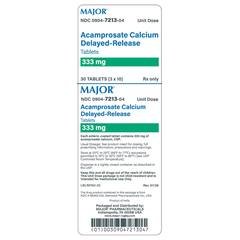
Medicine information on IMCURE is provided for educational purposes and is not a substitute for diagnosis, prescription or medical advice. Always follow your doctor’s or pharmacist’s instructions. Real product image from the U.S. National Library of Medicine's DailyMed listing for Acamprosate Calcium Tablet, Delayed Release. Packaging varies by brand and manufacturer.