
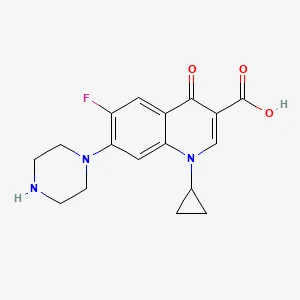
Fluoroquinolone antibacterialPrescription only (Schedule H)Boxed warning: tendon and nerve risksOn NLEM 2022NPPA price ceiling
Ciprofloxacin (ciprofloxacin hydrochloride)
सिप्रोफ्लॉक्सासिन
Ciprofloxacin is a fluoroquinolone antibiotic used for infections caused by susceptible bacteria. It is a Schedule H prescription medicine in India. The label carries a boxed warning for tendon rupture, nerve damage, effects on the brain and nerves, and worsening of myasthenia gravis. It does not work on viral infections.
- Generic name
- Ciprofloxacin (as hydrochloride)
- Used for
- Bacterial infections of the skin, bones and joints, abdomen, gut, urinary tract, lungs, sinuses and others, as listed on the label
- Prescription status (India)
- Prescription only (Schedule H) in the lists we checked
- On NLEM 2022
- Yes (tablets 250 mg and 500 mg, oral liquid, injection, eye and ear drops, eye ointment)
- NPPA price ceiling
- Yes (scheduled formulation)
- Jan Aushadhi
- Listed (tablets, injection, eye drops and combinations)
More facts
- Banned combinations
- 4 mentions in the list we checked; use the checker for your combination
- Label used
- Tablet label (oral), DailyMed set 47d1e4c5, effective 2026-08
Compiled from official drug labels and Indian government sources. Always follow your doctor's or pharmacist's advice.
Safety at a glance
- AlcoholNot mentioned in label text
- PregnancyCaution in label textSee wording
- BreastfeedingAvoid, per label textSee wording
- DrivingCaution in label textSee wording
- KidneyCaution in label textSee wording
- LiverCaution in label textSee wording
Taken only from the label text cited on this page. "Not mentioned" does not mean safe. Ask your doctor or pharmacist.
What is Ciprofloxacin used for?
The US label says ciprofloxacin tablets treat infections caused by bacteria that are susceptible to it. It says they should be used only for infections proven or strongly suspected to be bacterial.
The label lists several adult uses. The main ones are below. Some, such as anthrax after exposure and plague, also apply to children.
The label also says that, because of serious risks, ciprofloxacin should be kept for patients with no alternative for acute worsening of chronic bronchitis, simple bladder infection and acute sinusitis.
- Skin and skin structure infections
- Bone and joint infections
- Complicated infections inside the abdomen (with metronidazole)
- Infectious diarrhoea
- Typhoid (enteric) fever
- Uncomplicated gonorrhoea of the cervix and urethra
- Anthrax after exposure and plague
- Chronic bacterial prostatitis
- Lower respiratory tract infections
- Urinary tract infections
- Acute sinusitis
It is an antibiotic for bacterial infections. It does not treat viral illness such as colds or flu.
Source1
How does Ciprofloxacin work?
The label places ciprofloxacin in the fluoroquinolone class of antibacterial medicines.
The label sections we reviewed do not explain its action in more detail.
It is a fluoroquinolone antibiotic that acts against bacteria.
Source1
How is Ciprofloxacin taken? What the US label says
The dosing here comes from a US tablet label (ciprofloxacin tablets, taken by mouth) for adults. Other Indian pack forms exist, and the prescriber decides.
The US label for adults gives a dose and length that depend on the infection. Doses are usually every 12 hours.
Examples from the label table: skin infections 500 to 750 mg every 12 hours for 7 to 14 days; typhoid 500 mg every 12 hours for 10 days; infectious diarrhoea 500 mg every 12 hours for 5 to 7 days.
Further examples: urinary tract infection 250 to 500 mg every 12 hours for 7 to 14 days; simple bladder infection 250 mg every 12 hours for 3 days; gonorrhoea 250 mg as a single dose.
The label says the dose and length depend on the infection, the germ, and kidney and liver function. It lowers the dose in kidney impairment.
It says to continue at least 2 days after signs of infection have gone, apart from anthrax after exposure.
This is label information, not a prescription. Indian pack labels may differ from the US label, and your prescriber's instruction always comes first.
The label ties the dose and length to the infection and kidney function. The prescriber sets both.
Source1
What are the side effects of Ciprofloxacin?
Common
- The label says the most common reactions in trials were nausea (2.5%), diarrhoea (1.6%), abnormal liver tests (1.3%), vomiting (1%) and rash (1%).
- The label also lists less common effects such as headache, dizziness, trouble sleeping and joint or muscle pain.
- Common: nausea, diarrhoea, abnormal liver tests, vomiting, rash
Serious: get help
- Serious effects can start within hours or weeks of starting. The label says some are disabling and may be irreversible.
- Serious: tendon inflammation or rupture, joint and muscle pain
- Serious: numbness, tingling or burning (peripheral neuropathy)
- Serious: hallucinations, anxiety, depression, insomnia, severe headache, confusion
- Serious: allergic reactions, liver injury, severe diarrhoea from C. difficile, QT prolongation, skin sensitivity to light, aortic aneurysm
Nausea and diarrhoea are the most common effects. Tendon, nerve and brain effects are the serious ones.
Source1
Who should be careful with Ciprofloxacin?
Boxed warning: the label says fluoroquinolones have been linked to disabling and possibly permanent reactions together, including tendon rupture, nerve damage and brain effects. It says to stop at the first sign and avoid fluoroquinolones in people who had these reactions.
Myasthenia gravis: the label says it may worsen muscle weakness and to avoid it in people with a known history.
Allergy: it is not for people with a history of allergy to ciprofloxacin or other quinolones. It must not be combined with tizanidine.
Tendon risk is higher in people over 60, people taking corticosteroids, and people with kidney, heart or lung transplants.
Heart rhythm: the label says to avoid it in people with known QT prolongation or low potassium.
Elderly: higher risk of tendon problems, aortic aneurysm and QT effects. Kidney function may need checking.
Pregnancy: long experience in studies did not show a clear risk of birth defects. The label has limits, so ask your doctor.
Breastfeeding: the label says it is not recommended. A mother may pump and discard milk during treatment and for 2 days after the last dose.
Children: the label says it is not a first-choice medicine in children because of joint-related reactions.
Serious tendon, nerve and brain risks. Not with tizanidine. Be careful if elderly, on steroids or with myasthenia gravis.
Source1
What interacts with Ciprofloxacin?
- Tizanidine: contraindicated
- Theophylline: avoid
- QT-prolonging medicines: avoid
- Diabetes tablets such as sulfonylureas: low blood sugar
- Phenytoin, cyclosporine, warfarin, methotrexate: caution and monitoring
- The label says ciprofloxacin must not be combined with tizanidine, because tizanidine effects on blood pressure and sedation are increased.
- It says to avoid theophylline where possible, because blood levels may rise and cause serious reactions.
- It says to avoid use with other medicines that prolong the QT interval, such as some antiarrhythmics, tricyclic antidepressants, macrolides and antipsychotics.
- It says to use caution with diabetes medicines (low blood sugar, sometimes severe), phenytoin, cyclosporine, warfarin-type anticoagulants and methotrexate.
- Tell your doctor about every medicine you use.
No match in this label text. Ask your pharmacist about any medicine you take.
Tell your doctor about all medicines. Tizanidine must not be combined with it.
Source1
Overdose
The label says an overdose has caused reversible kidney toxicity in some cases. Treatment is supportive, with fluids and monitoring of kidney function.
Antacids with magnesium, aluminium or calcium can reduce absorption. Only a small part is removed by dialysis. Get medical help right away.
Overdose can affect the kidneys and needs medical care.
Source1
How should Ciprofloxacin be stored?
The label says to store it at 20 to 25 degrees C (68 to 77 degrees F). Short excursions to 15 to 30 degrees C are allowed.
Room temperature.
Source1
Legal status and lists in India
In the Drugs Rules schedules we checked, ciprofloxacin is listed under Schedule H (Schedule H, serial 113 (rules 65 and 97)). Schedule H medicines are sold only on a doctor's prescription.
Ciprofloxacin appears in the National List of Essential Medicines 2022 on page 71, 93, 99. Listed forms include 250 mg and 500 mg tablets, an oral liquid, an injection, and eye and ear drops and eye ointment.
NPPA lists ceiling prices for several ciprofloxacin formulations. The table shows the rows we found. Check NPPA directly for the current list.
Banned combinations: 4 mentions of ciprofloxacin in the banned-combination list we checked. Use the checker for your exact combination.
| Formulation | Strength | Unit | Ceiling price (Rs per unit) | List date |
|---|---|---|---|---|
| Ointment | 0.3% | 1 gm | 1.13 | As on 30.09.2020 |
| Drops | 0.30% | 1 ml | 1.52 | As on 30.09.2020 |
| Injection | 200 mg/100ml | 1 ml | 0.17 | As on 30.09.2020 |
| Oral Liquid | 250 mg/5ml | 1 ml | 0.63 | As on 30.09.2020 |
| Tablet | 250mg | 1 Tablet | 2.07 | As on 30.09.2020 |
| Tablet | 500mg | 1 Tablet | 3.64 | As on 30.09.2020 |
Prescription antibiotic (Schedule H), on NLEM 2022, with NPPA price ceilings.
Price ceilings and Jan Aushadhi
NPPA ceiling prices set the most a seller can charge per unit for the listed formulations, before local taxes. Check the pack and the seller.
Jan Aushadhi (PMBJP) lists ciprofloxacin products in the file we checked. We have not shown a brand price here.
- Ciprofloxacin 250mg and Tinidazole 300mg Tablets (pack 10's)
- Ciprofloxacin 500mg and Tinidazole 600mg Tablets (pack 10's)
- Ciprofloxacin Hydrochloride Tablets IP 250 mg (pack 10's)
- Ciprofloxacin Hydrochloride Tablets IP 500 mg (pack 10's)
- Ciprofloxacin Injection IP 200mg (pack 100 ml)
- Ciprofloxacin Eye Drops IP 0.3% w/v (pack 5 ml)
- Ciprofloxacin 0.3% w/v and Dexamethasone 0.1% w/v Eye/Ear Drops (pack 10 ml)
Ceiling prices apply per tablet, capsule, ml or other unit. Check the pack and the seller.
Frequently asked questions
Can I take ciprofloxacin with alcohol?
The label text we reviewed does not address alcohol directly. Ciprofloxacin can cause dizziness and nervous system effects. Ask your doctor or pharmacist.
Source1
What are the serious side effects of ciprofloxacin?
The boxed warning names tendon rupture, nerve damage, effects on the brain and nerves, and worsening of myasthenia gravis. It says to stop at the first sign and speak to a doctor.
Source1
Is ciprofloxacin safe to take in pregnancy?
Long experience in studies did not show a clear link to birth defects, but the label notes study limits. Do not decide alone. Ask your doctor.
Source1
Can I take ciprofloxacin with other medicines?
Some combinations matter a great deal. The label says it must not be combined with tizanidine and that theophylline and QT-prolonging medicines should be avoided.
Source1
Does ciprofloxacin treat a cold or flu?
No. The label says to use ciprofloxacin only for infections proven or strongly suspected to be bacterial. Colds and flu are viral.
Source1
Is ciprofloxacin a prescription medicine in India?
In the Drugs Rules lists we checked, ciprofloxacin is under Schedule H, which means sale on a doctor's prescription.
Source1
Sources
- 1U.S. FDA-approved label (DailyMed) (47d1e4c5-f669-4aca-9e8c-0d6bb833b859) Open source · 2026-10-15
- 2Drugs Rules 1945, Schedules (2022 consolidation) (Schedule H, serial 113 (rules 65 and 97)) Open source · 2026-10-15
- 3National List of Essential Medicines 2022 (p. 71, 93, 99) Open source · 2026-10-15
- 4NPPA ceiling prices (All scheduled (NLEM 2015), p. 5) Open source · 2026-10-15
- 5Jan Aushadhi (PMBJP) product list (p4:sno78) Open source · 2026-10-15
- 6Jan Aushadhi (PMBJP) product list (p4:sno79) Open source · 2026-10-15
- 7Jan Aushadhi (PMBJP) product list (p4:sno80) Open source · 2026-10-15
- 8Jan Aushadhi (PMBJP) product list (p4:sno81) Open source · 2026-10-15
- 9Jan Aushadhi (PMBJP) product list (p7:sno140) Open source · 2026-10-15
- 10Jan Aushadhi (PMBJP) product list (p12:sno267) Open source · 2026-10-15
- 11Jan Aushadhi (PMBJP) product list (p40:sno903) Open source · 2026-10-15
Compiled by software from the sources above and checked by automated rules. Last checked: 2026-10-15 · How we use sources · Report a correction
This information is educational and is not a substitute for advice from your doctor or pharmacist. It does not tell you what dose you personally should take. In an emergency call 112.