
Cyclobenzaprine Hydrochloride
DESCRIPTION Cyclobenzaprine hydrochloride, USP is a tricyclic amine salt which is white to off white, odourless, crystalline powder with the molecular formula C 20 H 21 N • HCl and a molecular weight of 311.9. It has a melting point of 217°C, and a pKa of 8.47 at 25°C. It is freely soluble in water, in alcohol and in methanol, sparingly soluble in isopropanol, slightly soluble in chloroform and in methylene chloride, insoluble in n-hexane. If aqueous solutions are made alkaline, the free base separates. Cyclobenzaprine hydrochloride is designated chemically as 3-(5H -dibenzo[a,d] cyclohepten-5-ylidene)- N,N -dimethyl-1-propanamine hydrochloride, and has the following structural formula: Cyclobenzaprine hydrochloride tablets, USP are available as 5 mg, 7.5 mg and 10 mg tablets for oral administration. Each 5 mg, 7.5 mg and 10 mg tablet contains cyclobenzaprine hydrochloride and the following inactive ingredients: crospovidone, hypromellose, lactose anhydrous, macrogol, magnesium stearate, polysorbate 80, pregelatinized starch, silicified microcrystalline cellulose, titanium dioxide. The tablets of 5 mg and 10 mg also contain D&C Yellow #10 Aluminum Lake and FD&C Yellow #6 Sunset Yel
Information page. Not necessarily available for purchase.
What is Cyclobenzaprine Hydrochloride?
DESCRIPTION Cyclobenzaprine hydrochloride, USP is a tricyclic amine salt which is white to off white, odourless, crystalline powder with the molecular formula C 20 H 21 N • HCl and a molecular weight of 311.9. It has a melting point of 217°C, and a pKa of 8.47 at 25°C. It is freely soluble in water, in alcohol and in methanol, sparingly soluble in isopropanol, slightly soluble in chloroform and in methylene chloride, insoluble in n-hexane. If aqueous solutions are made alkaline, the free base separates. Cyclobenzaprine hydrochloride is designated chemically as 3-(5H -dibenzo[a,d] cyclohepten-5-ylidene)- N,N -dimethyl-1-propanamine hydrochloride, and has the following structural formula: Cyclobenzaprine hydrochloride tablets, USP are available as 5 mg, 7.5 mg and 10 mg tablets for oral administration. Each 5 mg, 7.5 mg and 10 mg tablet contains cyclobenzaprine hydrochloride and the following inactive ingredients: crospovidone, hypromellose, lactose anhydrous, macrogol, magnesium stearate, polysorbate 80, pregelatinized starch, silicified microcrystalline cellulose, titanium dioxide. The tablets of 5 mg and 10 mg also contain D&C Yellow #10 Aluminum Lake and FD&C Yellow #6 Sunset Yel
Uses of Cyclobenzaprine Hydrochloride
Established uses
- INDICATIONS AND USAGE Cyclobenzaprine hydrochloride tablets, USP are indicated as an adjunct to rest and physical therapy for relief of muscle spasm associated with acute, painful musculoskeletal conditions.
- Improvement is manifested by relief of muscle spasm and its associated signs and symptoms, namely, pain, tenderness, limitation of motion, and restriction in activities of daily living.
- Cyclobenzaprine hydrochloride tablets should be used only for short periods (up to 2 or 3 weeks) because adequate evidence of effectiveness for more prolonged use is not available and because muscle spasm associated with acute, painful musculoskeletal conditions is generally of short duration and specific therapy for longer periods is seldom warranted.
- Cyclobenzaprine hydrochloride tablets have not been found effective in the treatment of spasticity associated with cerebral or spinal cord disease, or in children with cerebral palsy.
How to take Cyclobenzaprine Hydrochloride
DOSAGE AND ADMINISTRATION For most patients, the recommended dose of cyclobenzaprine hydrochloride tablets is 5 mg three times a day. Based on individual patient response, the dose may be increased to 10 mg three times a day. Use of cyclobenzaprine hydrochloride tablets for periods longer than 2 or 3 weeks is not recommended (see INDICATIONS AND USAGE) . Less frequent dosing should be considered for hepatically impaired or elderly patients (see PRECAUTIONS: Impaired Hepatic Function , and Use in the Elderly).
Dosage
Follow the dose prescribed by your doctor or pharmacist. The ranges below are general information, not a personal prescription.
- Adults
- DOSAGE AND ADMINISTRATION For most patients, the recommended dose of cyclobenzaprine hydrochloride tablets is 5 mg three times a day. Based on individual patient response, the dose may be increased to 10 mg three times a day. Use of cyclobenzaprine hydrochloride tablets for periods longer than 2 or 3 weeks is not recommended (see INDICATIONS AND USAGE) . Less frequent dosing should be considered for hepatically impaired or elderly patients (see PRECAUTIONS: Impaired Hepatic Function , and Use in the Elderly).
Side effects of Cyclobenzaprine Hydrochloride
Common
- ADVERSE REACTIONS Incidence of most common adverse reactions in the two double-blind*, placebo-controlled 5 mg studies (incidence of > 3% on cyclobenzaprine hydrochloride 5 mg): Cyclobenzaprine Hydrochloride 5 mg Cyclobenzaprine Hydrochloride 10 mg Placebo N = 464 N = 249 N = 469 Drowsiness 29% 38% 10% Dry Mouth 21% 32% 7% Fatigue 6% 6% 3% Headache 5% 5% 8% *Note: Cyclobenzaprine hydrochloride 10 mg data are from one clinical trial.
- Cyclobenzaprine hydrochloride 5 mg and placebo data are from two studies.
- Adverse reactions which were reported in 1% to 3% of the patients were: abdominal pain, acid regurgitation, constipation, diarrhea, dizziness, nausea, irritability, mental acuity decreased, nervousness, upper respiratory infection, and pharyngitis.
- The following list of adverse reactions is based on the experience in 473 patients treated with cyclobenzaprine hydrochloride 10 mg in additional controlled clinical studies, 7,607 patients in the postmarketing surveillance program, and reports received since the drug was marketed.
- The overall incidence of adverse reactions among patients in the surveillance program was less than the incidence in the controlled clinical studies.
- The adv
Warnings and who should not take it
Who should NOT take Cyclobenzaprine Hydrochloride?
- CONTRAINDICATIONS Hypersensitivity to any component of this product.
- Concomitant use of monoamine oxidase (MAO) inhibitors or within 14 days after their discontinuation.
- Hyperpyretic crisis seizures and deaths have occurred in patients receiving cyclobenzaprine (or structurally similar tricyclic antidepressants) concomitantly with MAO inhibitor drugs.
- Acute recovery phase of myocardial infarction, and patients with arrhythmias, heart block or conduction disturbances, or congestive heart failure.
- Hyperthyroidism.
Warnings and precautions
- WARNINGS Serotonin Syndrome The development of a potentially life-threatening serotonin syndrome has been reported with cyclobenzaprine hydrochloride when used in combination with other drugs, such as selective serotonin reuptake inhibitors (SSRIs), serotonin norepinephrine reuptake inhibitors (SNRIs), tricyclic antidepressants (TCAs), tramadol, bupropion, meperidine, verapamil, or (MAO) inhibitors.
- The concomitant use of cyclobenzaprine hydrochloride with MAO inhibitors is contraindicated (see CONTRAINDICATIONS ).
- Serotonin syndrome symptoms may include mental status changes (e.g., confusion, agitation, hallucinations), autonomic instability (e.g., diaphoresis, tachycardia, labile blood pressure, hyperthermia), neuromuscular abnormalities (e.g., tremor, ataxia, hyperreflexia, clonus, muscle rigidity), and/or gastrointestinal symptoms (e.g., nausea, vomiting, diarrhea).
- Treatment with cyclobenzaprine hydrochloride and any concomitant serotonergic agents should be discontinued immediately if the above reactions occur and supportive symptomatic treatment should be initiated.
- If concomitant treatment with cyclobenzaprine hydrochloride and other serotonergic drugs is clinically warrant
Overdose
OVERDOSAGE Although rare, deaths may occur from overdosage with cyclobenzaprine. Multiple drug ingestion (including alcohol) is common in deliberate cyclobenzaprine overdose. As management of overdose is complex and changing, it is recommended that the physician contact a poison control center for current information on treatment . Signs and symptoms of toxicity may develop rapidly after cyclobenzaprine overdose; therefore, hospital monitoring is required as soon as possible. The acute oral LD 50 of cyclobenzaprine is approximately 338 and 425 mg/kg in mice and rats, respectively. Manifestations The most common effects associated with cyclobenzaprine overdose are drowsiness and tachycardia. Less frequent manifestations include tremor, agitation, coma, ataxia, hypertension, slurred speech, confusion, dizziness, nausea, vomiting, and hallucinations. Rare but potentially critical manifestations of overdose are cardiac arrest, chest pain, cardiac dysrhythmias, severe hypotension, seizures, and neuroleptic malignant syndrome. Changes in the electrocardiogram, particularly in QRS axis or width, are clinically significant indicators of cyclobenzaprine toxicity. Other potential effects of
Frequently asked questions
What is Cyclobenzaprine Hydrochloride used for?
INDICATIONS AND USAGE Cyclobenzaprine hydrochloride tablets, USP are indicated as an adjunct to rest and physical therapy for relief of muscle spasm associated with acute, painful musculoskeletal conditions., Improvement is manifested by relief of muscle spasm and its associated signs and symptoms, namely, pain, tenderness, limitation of motion, and restriction in activities of daily living., Cyclobenzaprine hydrochloride tablets should be used only for short periods (up to 2 or 3 weeks) because adequate evidence of effectiveness for more prolonged use is not available and because muscle spasm associated with acute, painful musculoskeletal conditions is generally of short duration and specific therapy for longer periods is seldom warranted., Cyclobenzaprine hydrochloride tablets have not been found effective in the treatment of spasticity associated with cerebral or spinal cord disease, or in children with cerebral palsy..
How should I take Cyclobenzaprine Hydrochloride?
DOSAGE AND ADMINISTRATION For most patients, the recommended dose of cyclobenzaprine hydrochloride tablets is 5 mg three times a day. Based on individual patient response, the dose may be increased to 10 mg three times a day. Use of cyclobenzaprine hydrochloride tablets for periods longer than 2 or 3 weeks is not recommended (see INDICATIONS AND USAGE) . Less frequent dosing should be considered for hepatically impaired or elderly patients (see PRECAUTIONS: Impaired Hepatic Function , and Use in the Elderly).
What are the common side effects?
ADVERSE REACTIONS Incidence of most common adverse reactions in the two double-blind*, placebo-controlled 5 mg studies (incidence of > 3% on cyclobenzaprine hydrochloride 5 mg): Cyclobenzaprine Hydrochloride 5 mg Cyclobenzaprine Hydrochloride 10 mg Placebo N = 464 N = 249 N = 469 Drowsiness 29% 38% 10% Dry Mouth 21% 32% 7% Fatigue 6% 6% 3% Headache 5% 5% 8% *Note: Cyclobenzaprine hydrochloride 10 mg data are from one clinical trial., Cyclobenzaprine hydrochloride 5 mg and placebo data are from two studies., Adverse reactions which were reported in 1% to 3% of the patients were: abdominal pain, acid regurgitation, constipation, diarrhea, dizziness, nausea, irritability, mental acuity decreased, nervousness, upper respiratory infection, and pharyngitis., The following list of adverse reactions is based on the experience in 473 patients treated with cyclobenzaprine hydrochloride 10 mg in additional controlled clinical studies, 7,607 patients in the postmarketing surveillance program, and reports received since the drug was marketed., The overall incidence of adverse reactions among patients in the surveillance program was less than the incidence in the controlled clinical studies., The adv.
Who should not take Cyclobenzaprine Hydrochloride?
CONTRAINDICATIONS Hypersensitivity to any component of this product.; Concomitant use of monoamine oxidase (MAO) inhibitors or within 14 days after their discontinuation.; Hyperpyretic crisis seizures and deaths have occurred in patients receiving cyclobenzaprine (or structurally similar tricyclic antidepressants) concomitantly with MAO inhibitor drugs.; Acute recovery phase of myocardial infarction, and patients with arrhythmias, heart block or conduction disturbances, or congestive heart failure.; Hyperthyroidism..
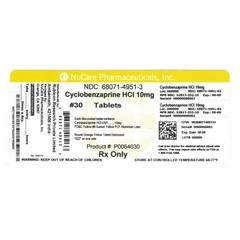
Medicine information on IMCURE is provided for educational purposes and is not a substitute for diagnosis, prescription or medical advice. Always follow your doctor’s or pharmacist’s instructions. Real product image from the U.S. National Library of Medicine's DailyMed listing for Cyclobenzaprine Hydrochloride Tablet, Film Coated. Packaging varies by brand and manufacturer.