
Diclofenac Epolamine
11 DESCRIPTION DICLOFENAC EPOLAMINE TOPICAL SYSTEM 1.3% is a nonsteroidal anti-inflammatory drug, available for topical application. DICLOFENAC EPOLAMINE TOPICAL SYSTEM 1.3% is a 10 cm × 14 cm topical system comprised of an adhesive material containing 1.3% diclofenac epolamine which is applied to a non-woven polyester felt backing and covered with a polypropylene film release liner. The release liner is removed prior to topical application to the skin. The chemical name of diclofenac epolamine is 2-[(2,6-dichlorophenyl) amino] benzeneacetic acid, (2-(pyrrolidin-1-yl) ethanol salt, with a molecular formula of C 20 H 24 Cl 2 N 2 O 3, and molecular weight 411.3, an n-octanol/water partition coefficient of 8 at pH 8.5, and the following chemical structure: Each adhesive topical system contains 180 mg of diclofenac epolamine (13 mg per gram adhesive) in an aqueous base. It also contains the following inactive ingredients: butylene glycol, carboxymethylcellulose sodium, dihydroxyaluminum aminoacetate, edetate disodium, fragrance (Dalin PH), gelatin, kaolin, methylparaben, polysorbate 80, povidone, propylene glycol, propylparaben, sodium polyacrylate, sorbitol solution, tartaric acid, ti
Information page. Not necessarily available for purchase.
What is Diclofenac Epolamine?
11 DESCRIPTION DICLOFENAC EPOLAMINE TOPICAL SYSTEM 1.3% is a nonsteroidal anti-inflammatory drug, available for topical application. DICLOFENAC EPOLAMINE TOPICAL SYSTEM 1.3% is a 10 cm × 14 cm topical system comprised of an adhesive material containing 1.3% diclofenac epolamine which is applied to a non-woven polyester felt backing and covered with a polypropylene film release liner. The release liner is removed prior to topical application to the skin. The chemical name of diclofenac epolamine is 2-[(2,6-dichlorophenyl) amino] benzeneacetic acid, (2-(pyrrolidin-1-yl) ethanol salt, with a molecular formula of C 20 H 24 Cl 2 N 2 O 3, and molecular weight 411.3, an n-octanol/water partition coefficient of 8 at pH 8.5, and the following chemical structure: Each adhesive topical system contains 180 mg of diclofenac epolamine (13 mg per gram adhesive) in an aqueous base. It also contains the following inactive ingredients: butylene glycol, carboxymethylcellulose sodium, dihydroxyaluminum aminoacetate, edetate disodium, fragrance (Dalin PH), gelatin, kaolin, methylparaben, polysorbate 80, povidone, propylene glycol, propylparaben, sodium polyacrylate, sorbitol solution, tartaric acid, ti
Uses of Diclofenac Epolamine
Established uses
- 1 INDICATIONS AND USAGE DICLOFENAC EPOLAMINE TOPICAL SYSTEM 1.3% is indicated for the topical treatment of acute pain due to minor strains, sprains, and contusions in adults and pediatric patients 6 years and older.
- DICLOFENAC EPOLAMINE TOPICAL SYSTEM 1.3% is a nonsteroidal anti-inflammatory drug (NSAID), and is indicated for the topical treatment of acute pain due to minor strains, sprains, and contusions in adults and pediatric patients 6 years and older.
- ( 1 )
How Diclofenac Epolamine works
In more detail: 12.1 Mechanism of Action Diclofenac has analgesic, anti-inflammatory, and antipyretic properties. The mechanism of action of diclofenac, like that of other NSAIDs, is not completely understood but involves inhibition of cyclooxygenase (COX-1 and COX-2). Diclofenac is a potent inhibitor of prostaglandin synthesis in vitro. Diclofenac concentrations reached during therapy have produced in vivo effects. Prostaglandins sensitize afferent nerves and potentiate the action of bradykinin in inducing pain in animal models. Prostaglandins are mediators of inflammation. Because diclofenac is an inhibitor of prostaglandin synthesis, its mode of action may be due to a decrease of prostaglandins in peripheral tissues.
How to take Diclofenac Epolamine
2 DOSAGE AND ADMINISTRATION Use the lowest effective dosage for shortest duration consist with the individual patient treatment goals ( 2.1 ) The recommended dose of DICLOFENAC EPOLAMINE TOPICAL SYSTEM 1.3% for adults and pediatric patients 6 years and older is one (1) topical system to the most painful area twice a day. ( 2 ) DICLOFENAC EPOLAMINE TOPICAL SYSTEM 1.3% should not be applied to damaged or non-intact skin. ( 2 ) 2.1 General Dosing Instructions Use the lowest effective dosage for the shortest duration consistent with individual patient treatment goals [ see Warnings and Precautions (5) ]. The recommended dose of DICLOFENAC EPOLAMINE TOPICAL SYSTEM 1.3% is one (1) topical system to the most painful area twice a day both in adults and pediatric patients 6 years of age and older. 2.2 Special Precautions Inform patients that, if DICLOFENAC EPOLAMINE TOPICAL SYSTEM 1.3% begins to peel-off, the edges of the topical system may be taped down. If problems with adhesion persist, patients may overlay the topical system with a mesh netting sleeve, where appropriate (e.g. to secure topical systems applied to ankles, knees, or elbows). The mesh netting sleeve (e.g. Curad ® Hold Tite™
Dosage
Follow the dose prescribed by your doctor or pharmacist. The ranges below are general information, not a personal prescription.
- Adults
- 2 DOSAGE AND ADMINISTRATION Use the lowest effective dosage for shortest duration consist with the individual patient treatment goals ( 2.1 ) The recommended dose of DICLOFENAC EPOLAMINE TOPICAL SYSTEM 1.3% for adults and pediatric patients 6 years and older is one (1) topical system to the most painful area twice a day. ( 2 ) DICLOFENAC EPOLAMINE TOPICAL SYSTEM 1.3% should not be applied to damaged or non-intact skin. ( 2 ) 2.1 General Dosing Instructions Use the lowest effective dosage for the shortest duration consistent with individual patient treatment goals [ see Warnings and Precautions (5) ]. The recommended dose of DICLOFENAC EPOLAMINE TOPICAL SYSTEM 1.3% is one (1) topical system to the most painful area twice a day both in adults and pediatric patients 6 years of age and older. 2.2 Special Precautions Inform patients that, if DICLOFENAC EPOLAMINE TOPICAL SYSTEM 1.3% begins to peel-off, the edges of the topical system may be taped down. If problems with adhesion persist, patients may overlay the topical system with a mesh netting sleeve, where appropriate (e.g. to secure topical systems applied to ankles, knees, or elbows). The mesh netting sleeve (e.g. Curad ® Hold Tite™
Side effects of Diclofenac Epolamine
Common
- 6 ADVERSE REACTIONS The following adverse reactions are discussed in greater detail in other sections of the labeling: Cardiovascular Thrombotic Events [ see Warnings and Precautions (5.1) ] GI Bleeding, Ulceration and Perforation [ see Warnings and Precautions (5.2) ] Hepatotoxicity [ see Warnings and Precautions (5.3) ] Hypertension [ see Warnings and Precautions (5.4) ] Heart Failure and Edema [ see Warnings and Precautions (5.5) ] Renal Toxicity and Hyperkalemia [ see Warnings and Precautions (5.6) ] Anaphylactic Reactions [ see Warnings and Precautions (5.7) ] Serious Skin Reactions [ see Warnings and Precautions (5.9) ] Hematologic Toxicity [ see Warnings and Precautions (5.12) ] The most common adverse reactions in DICLOFENAC EPOLAMINE TOPICAL SYSTEM and placebo-treated adult patients were pruritus (5% and 8%, respectively) and nausea (3% and 2%, respectively) ( 6.1 ).
- The most common adverse reactions in DICLOFENAC EPOLAMINE TOPICAL SYSTEM 1.3% treated pediatric patients were headache (9%) and application site pruritus (7%) ( 6.1 ).
- To report SUSPECTED ADVERSE REACTIONS, contact Teva Pharmaceuticals USA, Inc.
- at 1-866-832-8537 or FDA at 1-800-FDA-1088 or www.fda.gov/medwatc
Warnings and who should not take it
Who should NOT take Diclofenac Epolamine?
- 4 CONTRAINDICATIONS DICLOFENAC EPOLAMINE TOPICAL SYSTEM 1.3% is contraindicated in the following patients: Known hypersensitivity (e.g., anaphylactic reactions and serious skin reactions) to diclofenac or any components of the drug product [ see Warnings and Precautions (5.7 , 5.9 ) ] History of asthma, urticaria, or other allergic-type reactions after taking aspirin or other NSAIDs.
- Severe, sometimes fatal, anaphylactic reactions to NSAIDs have been reported in such patients [ see Warnings and Precautions (5.7 , 5.8 ) ] In the setting of coronary artery bypass graft (CABG) surgery [ see Warnings and Precautions (5.1) ] DICLOFENAC EPOLAMINE TOPICAL SYSTEM 1.3% is contraindicated for use on non-intact or damaged skin resulting from any etiology, including exudative dermatitis, eczema, infection lesions, burns or wounds.
- Known hypersensitivity to diclofenac or any components of the drug product ( 4 ) History of asthma, urticaria, or other allergic-type reactions after taking aspirin or other NSAIDs ( 4 ) In the setting of CABG surgery ( 4 ) For use on non-intact or damaged skin ( 4 )
Overdose
10 OVERDOSAGE Symptoms following acute NSAID overdosages have been typically limited to lethargy, drowsiness, nausea, vomiting, and epigastric pain, which have been generally reversible with supportive care. Gastrointestinal bleeding has occurred. Hypertension, acute renal failure, respiratory depression, and coma have occurred, but were rare [ see Warnings and Precautions (5.1 , 5.2 , 5.4 , 5.6 ) ]. Manage patients with symptomatic and supportive care following an NSAID overdosage. There are no specific antidotes. Forced diuresis, alkalinization of urine, hemodialysis, or hemoperfusion may not be useful due to high protein binding. For additional information about overdosage treatment contact a poison control center (1-800-222-1222).
Safety at a glance
8.1 Pregnancy Risk Summary Use of NSAIDs, including DICLOFENAC EPOLAMINE TOPICAL SYSTEM 1.3%, can cause premature closure of the fetal ductus arteriosus and fetal renal dysfunction leading to oligohydramnios and, in some cases, neonatal renal impairment. Because of these risks, limit dose and duration of DICLOFENAC EPOLAMINE TOPICAL SYSTEM 1.3% use between about 20 and 30 weeks of gestation, and avoid DICLOFENAC EPOLAMINE TOPICAL SYSTEM 1.3% use at about 30 weeks of gestation and later in pregnancy ( see Clinical Considerations, Data ). Premature Closure of Fetal Ductus Arteriosus Use of NSAIDs, including DICLOFENAC EPOLAMINE TOPICAL SYSTEM 1.3%, at about 30 weeks gestation or later in pregnancy increases the risk of premature closure of the fetal ductus arteriosus. Oligohydramnios/Neonatal Renal Impairment Use of NSAIDs at about 20 weeks gestation or later in pregnancy has been associated with cases of fetal renal dysfunction leading to oligohydramnios, and in some cases, neonatal renal impairment. Data from observational studies regarding other potential embryofetal risks of NSAID use in women in the first or second trimesters of pregnancy are inconclusive. In animal reproduction
Children and elderly
Children
8.4 Pediatric Use The safety and effectiveness of DICLOFENAC EPOLAMINE TOPICAL SYSTEM 1.3% have been established in pediatric patients 6 years and older based on evidence from adequate and well-controlled studies with DICLOFENAC EPOLAMINE TOPICAL SYSTEM 1.3 % in adults, as well as an open-label study in pediatric patients 6 years and older. The pediatric study enrolled 104 patients, 6 years of age and older with minor soft tissue injuries. One DICLOFENAC EPOLAMINE TOPICAL SYSTEM 1.3 % was applied to the injury site twice daily for a maximum of 14 days or until treatment was no longer required for pain management, whichever occurred first. Based on the available data from the pediatric study, the safety profile of DICLOFENAC EPOLAMINE TOPICAL SYSTEM 1.3 % topical system in pediatric patients is similar to that in adults. The safety and effectiveness of DICLOFENAC EPOLAMINE TOPICAL SYSTEM 1.3 % has not been investigated in pediatric patients less than 6 years old. [see Clinical Trials Experience (6.1) , Clinical Pharmacology (12.3) ].
Elderly
8.5 Geriatric Use Elderly patients, compared to younger patients, are at greater risk for NSAID-associated serious cardiovascular, gastrointestinal, and/or renal adverse reactions. If the anticipated benefit for the elderly patient outweighs these potential risks, start dosing at the low end of the dosing range, and monitor patients for adverse effects [ see Warnings and Precautions (5.1 , 5.2 , 5.3 , 5.6 , 5.14 )]. Clinical studies of DICLOFENAC EPOLAMINE TOPICAL SYSTEM 1.3% did not include sufficient numbers of subjects aged 65 and over to determine whether they respond differently from younger subjects. Other reported clinical experience has not identified differences in responses between the elderly and younger patients.
Interactions
Medicine and medicine
- 7 DRUG INTERACTIONS See Table 2 for clinically significant drug interactions with diclofenac.
- Table 2: Clinically Significant Drug Interactions with Diclofenac Drugs That Interfere with Hemostasis Clinical Impact: Diclofenac and anticoagulants such as warfarin have a synergistic effect on bleeding.
- The concomitant use of diclofenac and anticoagulants have an increased risk of serious bleeding compared to the use of either drug alone.
- Serotonin release by platelets plays an important role in hemostasis.
- Case-control and cohort epidemiological studies showed that concomitant use of drugs that interfere with serotonin reuptake and an NSAID may potentiate the risk of bleeding more than an NSAID alone.
- Intervention: Monitor patients with concomitant use of DICLOFENAC EPOLAMINE TOPICAL SYSTEM 1.3% with anticoagulants (e.g., warfarin), antiplatelet agents (e.g., aspirin), selective serotonin reuptake inhibitors (SSRIs), and serotonin norepinephrine reuptake inhibitors (SNRIs) for signs of bleeding [ see Warnings and Precautions (5.12) ].
Frequently asked questions
What is Diclofenac Epolamine used for?
1 INDICATIONS AND USAGE DICLOFENAC EPOLAMINE TOPICAL SYSTEM 1.3% is indicated for the topical treatment of acute pain due to minor strains, sprains, and contusions in adults and pediatric patients 6 years and older., DICLOFENAC EPOLAMINE TOPICAL SYSTEM 1.3% is a nonsteroidal anti-inflammatory drug (NSAID), and is indicated for the topical treatment of acute pain due to minor strains, sprains, and contusions in adults and pediatric patients 6 years and older., ( 1 ).
How should I take Diclofenac Epolamine?
2 DOSAGE AND ADMINISTRATION Use the lowest effective dosage for shortest duration consist with the individual patient treatment goals ( 2.1 ) The recommended dose of DICLOFENAC EPOLAMINE TOPICAL SYSTEM 1.3% for adults and pediatric patients 6 years and older is one (1) topical system to the most painful area twice a day. ( 2 ) DICLOFENAC EPOLAMINE TOPICAL SYSTEM 1.3% should not be applied to damaged or non-intact skin. ( 2 ) 2.1 General Dosing Instructions Use the lowest effective dosage for the shortest duration consistent with individual patient treatment goals [ see Warnings and Precautions (5) ]. The recommended dose of DICLOFENAC EPOLAMINE TOPICAL SYSTEM 1.3% is one (1) topical system to the most painful area twice a day both in adults and pediatric patients 6 years of age and older. 2.2 Special Precautions Inform patients that, if DICLOFENAC EPOLAMINE TOPICAL SYSTEM 1.3% begins to peel-off, the edges of the topical system may be taped down. If problems with adhesion persist, patients may overlay the topical system with a mesh netting sleeve, where appropriate (e.g. to secure topical systems applied to ankles, knees, or elbows). The mesh netting sleeve (e.g. Curad ® Hold Tite™
What are the common side effects?
6 ADVERSE REACTIONS The following adverse reactions are discussed in greater detail in other sections of the labeling: Cardiovascular Thrombotic Events [ see Warnings and Precautions (5.1) ] GI Bleeding, Ulceration and Perforation [ see Warnings and Precautions (5.2) ] Hepatotoxicity [ see Warnings and Precautions (5.3) ] Hypertension [ see Warnings and Precautions (5.4) ] Heart Failure and Edema [ see Warnings and Precautions (5.5) ] Renal Toxicity and Hyperkalemia [ see Warnings and Precautions (5.6) ] Anaphylactic Reactions [ see Warnings and Precautions (5.7) ] Serious Skin Reactions [ see Warnings and Precautions (5.9) ] Hematologic Toxicity [ see Warnings and Precautions (5.12) ] The most common adverse reactions in DICLOFENAC EPOLAMINE TOPICAL SYSTEM and placebo-treated adult patients were pruritus (5% and 8%, respectively) and nausea (3% and 2%, respectively) ( 6.1 )., The most common adverse reactions in DICLOFENAC EPOLAMINE TOPICAL SYSTEM 1.3% treated pediatric patients were headache (9%) and application site pruritus (7%) ( 6.1 )., To report SUSPECTED ADVERSE REACTIONS, contact Teva Pharmaceuticals USA, Inc., at 1-866-832-8537 or FDA at 1-800-FDA-1088 or www.fda.gov/medwatc.
Who should not take Diclofenac Epolamine?
4 CONTRAINDICATIONS DICLOFENAC EPOLAMINE TOPICAL SYSTEM 1.3% is contraindicated in the following patients: Known hypersensitivity (e.g., anaphylactic reactions and serious skin reactions) to diclofenac or any components of the drug product [ see Warnings and Precautions (5.7 , 5.9 ) ] History of asthma, urticaria, or other allergic-type reactions after taking aspirin or other NSAIDs.; Severe, sometimes fatal, anaphylactic reactions to NSAIDs have been reported in such patients [ see Warnings and Precautions (5.7 , 5.8 ) ] In the setting of coronary artery bypass graft (CABG) surgery [ see Warnings and Precautions (5.1) ] DICLOFENAC EPOLAMINE TOPICAL SYSTEM 1.3% is contraindicated for use on non-intact or damaged skin resulting from any etiology, including exudative dermatitis, eczema, infection lesions, burns or wounds.; Known hypersensitivity to diclofenac or any components of the drug product ( 4 ) History of asthma, urticaria, or other allergic-type reactions after taking aspirin or other NSAIDs ( 4 ) In the setting of CABG surgery ( 4 ) For use on non-intact or damaged skin ( 4 ).
Can I take Diclofenac Epolamine during pregnancy?
8.1 Pregnancy Risk Summary Use of NSAIDs, including DICLOFENAC EPOLAMINE TOPICAL SYSTEM 1.3%, can cause premature closure of the fetal ductus arteriosus and fetal renal dysfunction leading to oligohydramnios and, in some cases, neonatal renal impairment. Because of these risks, limit dose and duration of DICLOFENAC EPOLAMINE TOPICAL SYSTEM 1.3% use between about 20 and 30 weeks of gestation, and avoid DICLOFENAC EPOLAMINE TOPICAL SYSTEM 1.3% use at about 30 weeks of gestation and later in pregnancy ( see Clinical Considerations, Data ). Premature Closure of Fetal Ductus Arteriosus Use of NSAIDs, including DICLOFENAC EPOLAMINE TOPICAL SYSTEM 1.3%, at about 30 weeks gestation or later in pregnancy increases the risk of premature closure of the fetal ductus arteriosus. Oligohydramnios/Neonatal Renal Impairment Use of NSAIDs at about 20 weeks gestation or later in pregnancy has been associated with cases of fetal renal dysfunction leading to oligohydramnios, and in some cases, neonatal renal impairment. Data from observational studies regarding other potential embryofetal risks of NSAID use in women in the first or second trimesters of pregnancy are inconclusive. In animal reproduction
Can children take Diclofenac Epolamine?
8.4 Pediatric Use The safety and effectiveness of DICLOFENAC EPOLAMINE TOPICAL SYSTEM 1.3% have been established in pediatric patients 6 years and older based on evidence from adequate and well-controlled studies with DICLOFENAC EPOLAMINE TOPICAL SYSTEM 1.3 % in adults, as well as an open-label study in pediatric patients 6 years and older. The pediatric study enrolled 104 patients, 6 years of age and older with minor soft tissue injuries. One DICLOFENAC EPOLAMINE TOPICAL SYSTEM 1.3 % was applied to the injury site twice daily for a maximum of 14 days or until treatment was no longer required for pain management, whichever occurred first. Based on the available data from the pediatric study, the safety profile of DICLOFENAC EPOLAMINE TOPICAL SYSTEM 1.3 % topical system in pediatric patients is similar to that in adults. The safety and effectiveness of DICLOFENAC EPOLAMINE TOPICAL SYSTEM 1.3 % has not been investigated in pediatric patients less than 6 years old. [see Clinical Trials Experience (6.1) , Clinical Pharmacology (12.3) ].
Does Diclofenac Epolamine interact with other medicines?
7 DRUG INTERACTIONS See Table 2 for clinically significant drug interactions with diclofenac.; Table 2: Clinically Significant Drug Interactions with Diclofenac Drugs That Interfere with Hemostasis Clinical Impact: Diclofenac and anticoagulants such as warfarin have a synergistic effect on bleeding.; The concomitant use of diclofenac and anticoagulants have an increased risk of serious bleeding compared to the use of either drug alone.; Serotonin release by platelets plays an important role in hemostasis.; Case-control and cohort epidemiological studies showed that concomitant use of drugs that interfere with serotonin reuptake and an NSAID may potentiate the risk of bleeding more than an NSAID alone.; Intervention: Monitor patients with concomitant use of DICLOFENAC EPOLAMINE TOPICAL SYSTEM 1.3% with anticoagulants (e.g., warfarin), antiplatelet agents (e.g., aspirin), selective serotonin reuptake inhibitors (SSRIs), and serotonin norepinephrine reuptake inhibitors (SNRIs) for signs of bleeding [ see Warnings and Precautions (5.12) ]..
How should it be stored?
Storage Store at 20°C to 25°C (68°F to 77°F); excursions permitted between 15°C to 30°C (59°F to 86°F) [see USP Controlled Room Temperature].
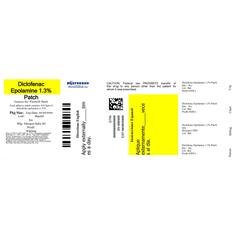
Medicine information on IMCURE is provided for educational purposes and is not a substitute for diagnosis, prescription or medical advice. Always follow your doctor’s or pharmacist’s instructions. Real product image from the U.S. National Library of Medicine's DailyMed listing for Diclofenac Epolamine System. Packaging varies by brand and manufacturer.