
Lixofen
11 DESCRIPTION Diclofenac sodium topical solution USP, 1.5% is a nonsteroidal anti-inflammatory drug, available as a clear, colorless to faintly pink-orange solution for topical application. Diclofenac sodium topical solution contains 1.5% w/w diclofenac sodium, a benzeneacetic acid derivative that is a nonsteroidal anti-inflammatory drug (NSAID), designated chemically as 2-[(2,6-dichlorophenyl)amino]-benzeneacetic acid, monosodium salt. The molecular weight is 318.14. Its molecular formula is C 14 H 10 Cl 2 NNaO 2 and it has the following structural formula: Each 1 mL of solution contains 16.05 mg of diclofenac sodium. In addition, diclofenac sodium topical solution contains the following inactive ingredients: dimethyl sulfoxide USP (DMSO, 45.5% w/w), ethanol, glycerin, propylene glycol and purified water. Chemical Structure
Information page. Not necessarily available for purchase.
What is Lixofen?
11 DESCRIPTION Diclofenac sodium topical solution USP, 1.5% is a nonsteroidal anti-inflammatory drug, available as a clear, colorless to faintly pink-orange solution for topical application. Diclofenac sodium topical solution contains 1.5% w/w diclofenac sodium, a benzeneacetic acid derivative that is a nonsteroidal anti-inflammatory drug (NSAID), designated chemically as 2-[(2,6-dichlorophenyl)amino]-benzeneacetic acid, monosodium salt. The molecular weight is 318.14. Its molecular formula is C 14 H 10 Cl 2 NNaO 2 and it has the following structural formula: Each 1 mL of solution contains 16.05 mg of diclofenac sodium. In addition, diclofenac sodium topical solution contains the following inactive ingredients: dimethyl sulfoxide USP (DMSO, 45.5% w/w), ethanol, glycerin, propylene glycol and purified water. Chemical Structure
Uses of Lixofen
Established uses
- 1 INDICATIONS AND USAGE Diclofenac sodium topical solution, USP is indicated for the treatment of signs and symptoms of osteoarthritis of the knee(s) (1).
- Diclofenac sodium topical solution is a nonsteroidal anti-inflammatory drug indicated for the treatment of signs and symptoms of osteoarthritis of the knee(s).
- ( 1 )
How Lixofen works
In more detail: 12.1 Mechanism of Action Diclofenac has analgesic, anti-inflammatory, and antipyretic properties. The mechanism of action of diclofenac sodium, like that of other NSAIDs, is not completely understood but involves inhibition of cyclooxygenase (COX-1 and COX-2). Diclofenac is a potent inhibitor of prostaglandin synthesis in vitro. Diclofenac concentrations reached during therapy have produced in vivo effects. Prostaglandins sensitize afferent nerves and potentiate the action of bradykinin in inducing pain in animal models. Prostaglandins are mediators of inflammation. Because diclofenac is an inhibitor of prostaglandin synthesis, its mode of action may be due to a decrease of prostaglandins in peripheral tissues.
How to take Lixofen
2 DOSAGE AND ADMINISTRATION Use the lowest effective dosage for the shortest duration consistent with individual patient treatment goals. The recommended dose is 40 drops on each painful knee, 4 times a day. ( 2 ) Apply diclofenac sodium topical solution to clean, dry skin. ( 2.1 ) Dispense diclofenac sodium topical solution 10 drops at a time either directly onto the knee or first into the hand and then onto the knee. Spread diclofenac sodium topical solution evenly around front, back and sides of the knee. Repeat this procedure until 40 drops have been applied and the knee is completely covered with solution. ( 2.1 ) Wash hands completely after administering the product. Wait until the area is completely dry before covering with clothing or applying sunscreen, insect repellent, cosmetics, topical medications, or other substances. Until the treated knee(s) is completely dry, avoid skin-to-skin contact between other people and the treated knee(s). ( 2.2 ) Do not get diclofenac sodium topical solution in your eyes, nose or mouth. 2.1 General Dosing Instructions Use the lowest effective dosage for the shortest duration consistent with individual patient treatment goals [ see Warning
Dosage
Follow the dose prescribed by your doctor or pharmacist. The ranges below are general information, not a personal prescription.
- Adults
- 2 DOSAGE AND ADMINISTRATION Use the lowest effective dosage for the shortest duration consistent with individual patient treatment goals. The recommended dose is 40 drops on each painful knee, 4 times a day. ( 2 ) Apply diclofenac sodium topical solution to clean, dry skin. ( 2.1 ) Dispense diclofenac sodium topical solution 10 drops at a time either directly onto the knee or first into the hand and then onto the knee. Spread diclofenac sodium topical solution evenly around front, back and sides of the knee. Repeat this procedure until 40 drops have been applied and the knee is completely covered with solution. ( 2.1 ) Wash hands completely after administering the product. Wait until the area is completely dry before covering with clothing or applying sunscreen, insect repellent, cosmetics, topical medications, or other substances. Until the treated knee(s) is completely dry, avoid skin-to-skin contact between other people and the treated knee(s). ( 2.2 ) Do not get diclofenac sodium topical solution in your eyes, nose or mouth. 2.1 General Dosing Instructions Use the lowest effective dosage for the shortest duration consistent with individual patient treatment goals [ see Warning
Side effects of Lixofen
Common
- 6 ADVERSE REACTIONS The following adverse reactions are discussed in greater detail in other sections of the labeling: Cardiovascular Thrombotic Events [ see Warnings and Precautions (5.1) ] GI Bleeding, Ulceration and Perforation [ see Warnings and Precautions (5.2) ] Hepatotoxicity [ see Warnings and Precautions (5.3) ] Hypertension [ see Warnings and Precautions (5.4) ] Heart Failure and Edema [ see Warnings and Precautions (5.5) ] Renal Toxicity and Hyperkalemia [ see Warnings and Precautions (5.6) ] Anaphylactic Reactions [ see Warnings and Precautions (5.7) ] Serious Skin Reactions [ see Warnings and Precautions (5.9) ] Hematologic Toxicity [ see Warnings and Precautions (5.12) ] The most common adverse reactions with diclofenac sodium topical solution are application site reactions.
- ( 6.1 ) To report SUSPECTED ADVERSE REACTIONS, contact Taro Pharmaceuticals U.S.A., Inc.
- at 1-866-923-4914 or the FDA at 1-800-FDA-1088 or www.fda.gov/medwatch .
- 6.1 Clinical Trials Experience Because clinical trials are conducted under widely varying conditions, adverse reaction rates observed in the clinical trials of a drug cannot be directly compared to rates in the clinical trials of another
Warnings and who should not take it
Who should NOT take Lixofen?
- 4 CONTRAINDICATIONS Diclofenac sodium topical solution, USP is contraindicated in the following patients: Known hypersensitivity (e.g., anaphylactic reactions and serious skin reactions) to diclofenac or any components of the drug product [see Warnings and Precautions (5.7 , 5.9) ].
- History of asthma, urticaria, or other allergic-type reactions after taking aspirin or other NSAIDs.
- Severe, sometimes fatal, anaphylactic reactions to NSAIDs have been reported in such patients [ see Warnings and Precautions (5.7 , 5.8) ] .
- In the setting of coronary artery bypass graft (CABG) surgery [ see Warnings and Precautions (5.1) ].
- Known hypersensitivity to diclofenac or any components of the drug product.
- ( 4 ) History of asthma, urticaria, or allergic-type reactions after taking aspirin or other NSAIDs.
Overdose
10 OVERDOSAGE Symptoms following acute NSAID overdosages have been typically limited to lethargy, drowsiness, nausea, vomiting, and epigastric pain, which have been generally reversible with supportive care. Gastrointestinal bleeding has occurred. Hypertension, acute renal failure, respiratory depression, and coma have occurred, but were rare. [ see Warnings and Precautions (5.1 , 5.2 . 5.4 , 5.6) ]. Manage patients with symptomatic and supportive care following an NSAID overdosage. There are no specific antidotes. Emesis is not recommended due to a possibility of aspiration and subsequent respiratory irritation by DMSO contained in diclofenac sodium. Consider activated charcoal (60 to 100 grams in adults, 1 to 2 grams per kg of body weight in pediatric patients) and/or osmotic cathartic in symptomatic patients seen within four hours of ingestion or in patients with a large overdosage (5 to 10 times the recommended dosage). Forced diuresis, alkalinization of urine, hemodialysis, or hemoperfusion may not be useful due to high protein binding. For additional information about overdose treatment, contact a poison control center (1-800-222-1222).
Safety at a glance
8.1 Pregnancy Risk Summary Use of NSAIDs, including diclofenac sodium, can cause premature closure of the fetal ductus arteriosus and fetal renal dysfunction leading to oligohydramnios and, in some cases, neonatal renal impairment. Because of these risks, limit dose and duration of diclofenac sodium use between about 20 and 30 weeks of gestation, and avoid diclofenac sodium use at about 30 weeks of gestation and later in pregnancy ( see Clinical Considerations , Data ). Premature Closure of Fetal Ductus Arteriosus Use of NSAIDs, including diclofenac sodium, at about 30 weeks gestation or later in pregnancy increases the risk of premature closure of the fetal ductus arteriosus. Oligohydramnios/Neonatal Renal Impairment Use of NSAIDs at about 20 weeks gestation or later in pregnancy has been associated with cases of fetal renal dysfunction leading to oligohydramnios, and in some cases, neonatal renal impairment. Data from observational studies regarding other potential embryo-fetal risks of NSAID use in women in the first or second trimesters of pregnancy are inconclusive. Published reproductive and developmental studies of dimethyl sulfoxide (DMSO, the solvent used in Diclofenac Sod
Children and elderly
Children
8.4 Pediatric Use Safety and effectiveness in pediatric patients have not been established.
Elderly
8.5 Geriatric Use Elderly patients, compared to younger patients, are a greater risk for NSAID-associated serious cardiovascular, gastrointestinal, and/or renal adverse reactions. If the anticipated benefit for the elderly patient outweighs these potential risks, start dosing at the low end of the dosing range, and monitor patients for adverse effects [ see Warnings and Precautions (5.1 , 5.2 , 5.3 , 5.6 , 5.14) ]. Of the 911 patients treated with diclofenac sodium in seven controlled, Phase 3 clinical trials, 444 subjects were 65 years of age and over. There was no age-related difference in the incidence of adverse events. Of the 793 patients treated with diclofenac sodium in one open-labeled safety trial, 334 subjects were 65 years of age and over including 107 subjects 75 and over. There was no difference in the incidence of adverse events with long-term exposure to diclofenac sodium for this elderly population.
Interactions
Medicine and medicine
- 7 DRUG INTERACTIONS See Table 2 for clinically significant drug interactions with diclofenac.
- Table 2: Clinically Significant Drug Interactions with Diclofenac Drugs That Interfere with Hemostasis Clinical Impact: Diclofenac and anticoagulants such as warfarin have a synergistic effect on bleeding.
- The concomitant use of diclofenac and anticoagulants have increased the risk of serious bleeding compared to the use of either drug alone.
- Serotonin release by platelets plays an important role in hemostasis.
- Case-control and cohort epidemiological studies showed that concomitant use of drugs that interfere with serotonin reuptake and an NSAID may potentiate the risk of bleeding more than an NSAID alone.
- Intervention: Monitor patients with concomitant use of diclofenac sodium with anticoagulants (e.g., warfarin), antiplatelet agents (e.g., aspirin), selective serotonin reuptake inhibitors (SSRIs), and serotonin norepinephrine reuptake inhibitors (SNRIs) for signs of bleeding [see Warnings and Precautions (5.12) ] Aspirin Clinical Impact: Controlled clinical studies showed that the concomitant use of NSAIDs and analgesic doses of aspirin does not produce any greater therapeutic effect tha
Frequently asked questions
What is Lixofen used for?
1 INDICATIONS AND USAGE Diclofenac sodium topical solution, USP is indicated for the treatment of signs and symptoms of osteoarthritis of the knee(s) (1)., Diclofenac sodium topical solution is a nonsteroidal anti-inflammatory drug indicated for the treatment of signs and symptoms of osteoarthritis of the knee(s)., ( 1 ).
How should I take Lixofen?
2 DOSAGE AND ADMINISTRATION Use the lowest effective dosage for the shortest duration consistent with individual patient treatment goals. The recommended dose is 40 drops on each painful knee, 4 times a day. ( 2 ) Apply diclofenac sodium topical solution to clean, dry skin. ( 2.1 ) Dispense diclofenac sodium topical solution 10 drops at a time either directly onto the knee or first into the hand and then onto the knee. Spread diclofenac sodium topical solution evenly around front, back and sides of the knee. Repeat this procedure until 40 drops have been applied and the knee is completely covered with solution. ( 2.1 ) Wash hands completely after administering the product. Wait until the area is completely dry before covering with clothing or applying sunscreen, insect repellent, cosmetics, topical medications, or other substances. Until the treated knee(s) is completely dry, avoid skin-to-skin contact between other people and the treated knee(s). ( 2.2 ) Do not get diclofenac sodium topical solution in your eyes, nose or mouth. 2.1 General Dosing Instructions Use the lowest effective dosage for the shortest duration consistent with individual patient treatment goals [ see Warning
What are the common side effects?
6 ADVERSE REACTIONS The following adverse reactions are discussed in greater detail in other sections of the labeling: Cardiovascular Thrombotic Events [ see Warnings and Precautions (5.1) ] GI Bleeding, Ulceration and Perforation [ see Warnings and Precautions (5.2) ] Hepatotoxicity [ see Warnings and Precautions (5.3) ] Hypertension [ see Warnings and Precautions (5.4) ] Heart Failure and Edema [ see Warnings and Precautions (5.5) ] Renal Toxicity and Hyperkalemia [ see Warnings and Precautions (5.6) ] Anaphylactic Reactions [ see Warnings and Precautions (5.7) ] Serious Skin Reactions [ see Warnings and Precautions (5.9) ] Hematologic Toxicity [ see Warnings and Precautions (5.12) ] The most common adverse reactions with diclofenac sodium topical solution are application site reactions., ( 6.1 ) To report SUSPECTED ADVERSE REACTIONS, contact Taro Pharmaceuticals U.S.A., Inc., at 1-866-923-4914 or the FDA at 1-800-FDA-1088 or www.fda.gov/medwatch ., 6.1 Clinical Trials Experience Because clinical trials are conducted under widely varying conditions, adverse reaction rates observed in the clinical trials of a drug cannot be directly compared to rates in the clinical trials of another.
Who should not take Lixofen?
4 CONTRAINDICATIONS Diclofenac sodium topical solution, USP is contraindicated in the following patients: Known hypersensitivity (e.g., anaphylactic reactions and serious skin reactions) to diclofenac or any components of the drug product [see Warnings and Precautions (5.7 , 5.9) ].; History of asthma, urticaria, or other allergic-type reactions after taking aspirin or other NSAIDs.; Severe, sometimes fatal, anaphylactic reactions to NSAIDs have been reported in such patients [ see Warnings and Precautions (5.7 , 5.8) ] .; In the setting of coronary artery bypass graft (CABG) surgery [ see Warnings and Precautions (5.1) ].; Known hypersensitivity to diclofenac or any components of the drug product.; ( 4 ) History of asthma, urticaria, or allergic-type reactions after taking aspirin or other NSAIDs..
Can I take Lixofen during pregnancy?
8.1 Pregnancy Risk Summary Use of NSAIDs, including diclofenac sodium, can cause premature closure of the fetal ductus arteriosus and fetal renal dysfunction leading to oligohydramnios and, in some cases, neonatal renal impairment. Because of these risks, limit dose and duration of diclofenac sodium use between about 20 and 30 weeks of gestation, and avoid diclofenac sodium use at about 30 weeks of gestation and later in pregnancy ( see Clinical Considerations , Data ). Premature Closure of Fetal Ductus Arteriosus Use of NSAIDs, including diclofenac sodium, at about 30 weeks gestation or later in pregnancy increases the risk of premature closure of the fetal ductus arteriosus. Oligohydramnios/Neonatal Renal Impairment Use of NSAIDs at about 20 weeks gestation or later in pregnancy has been associated with cases of fetal renal dysfunction leading to oligohydramnios, and in some cases, neonatal renal impairment. Data from observational studies regarding other potential embryo-fetal risks of NSAID use in women in the first or second trimesters of pregnancy are inconclusive. Published reproductive and developmental studies of dimethyl sulfoxide (DMSO, the solvent used in Diclofenac Sod
Can children take Lixofen?
8.4 Pediatric Use Safety and effectiveness in pediatric patients have not been established.
Does Lixofen interact with other medicines?
7 DRUG INTERACTIONS See Table 2 for clinically significant drug interactions with diclofenac.; Table 2: Clinically Significant Drug Interactions with Diclofenac Drugs That Interfere with Hemostasis Clinical Impact: Diclofenac and anticoagulants such as warfarin have a synergistic effect on bleeding.; The concomitant use of diclofenac and anticoagulants have increased the risk of serious bleeding compared to the use of either drug alone.; Serotonin release by platelets plays an important role in hemostasis.; Case-control and cohort epidemiological studies showed that concomitant use of drugs that interfere with serotonin reuptake and an NSAID may potentiate the risk of bleeding more than an NSAID alone.; Intervention: Monitor patients with concomitant use of diclofenac sodium with anticoagulants (e.g., warfarin), antiplatelet agents (e.g., aspirin), selective serotonin reuptake inhibitors (SSRIs), and serotonin norepinephrine reuptake inhibitors (SNRIs) for signs of bleeding [see Warnings and Precautions (5.12) ] Aspirin Clinical Impact: Controlled clinical studies showed that the concomitant use of NSAIDs and analgesic doses of aspirin does not produce any greater therapeutic effect tha.
How should it be stored?
Storage Store at 20° to 25°C (68° to 77°F) [See USP Controlled Room Temperature].
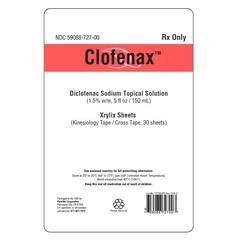
Medicine information on IMCURE is provided for educational purposes and is not a substitute for diagnosis, prescription or medical advice. Always follow your doctor’s or pharmacist’s instructions. Real product image from the U.S. National Library of Medicine's DailyMed listing for Clofenax (Diclofenac Sodium, Kinesiology Tape) Kit. Packaging varies by brand and manufacturer.