
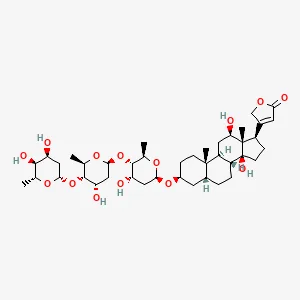
cardiac glycosidePrescription only (Schedule H)On NLEM 2022NPPA price ceilingJan Aushadhi listed
Digoxin
डिगोक्सिन
Digoxin tablets are a cardiac glycoside for heart failure and for controlling heart rate in atrial fibrillation. The main safety headline is that toxic levels are only slightly above therapeutic levels, so dosing depends on age, weight, kidney function and other medicines.
- Generic name
- Digoxin
- Used for
- Mild to moderate heart failure, and control of heart rate in chronic atrial fibrillation in adults.
- Label used
- Tablets label, oral, DailyMed set 5886e233, effective 2026-07
- Prescription status (India)
- Prescription only (Schedule H) in the lists we checked
- On NLEM 2022
- Yes (Tablet 0.25 mg; Oral liquid 0.05 mg/mL; Injection 0.25 mg/mL)
- NPPA price ceiling
- Yes (scheduled formulation)
More facts
- Jan Aushadhi
- Listed (1 product row)
- Banned combinations
- None found in the list we checked
Compiled from official drug labels and Indian government sources. Always follow your doctor's or pharmacist's advice.
Safety at a glance
- AlcoholNot mentioned in label text
- PregnancyNot mentioned in label text
- BreastfeedingNot mentioned in label text
- DrivingCaution in label textSee wording
- KidneyCaution in label textSee wording
- LiverNot mentioned in label text
Taken only from the label text cited on this page. "Not mentioned" does not mean safe. Ask your doctor or pharmacist.
What is digoxin used for?
The label describes digoxin for treating mild to moderate heart failure in adults, and for increasing heart muscle contractility in children with heart failure.
It is also described for controlling the resting heart rate in adults with chronic atrial fibrillation.
- Mild to moderate heart failure in adults
- Heart failure in children
- Heart rate control in chronic atrial fibrillation
It is used for heart failure and to control heart rate in atrial fibrillation.
Source1
How does digoxin work?
The label says digoxin blocks the sodium-potassium pump, called Na-K ATPase. This raises calcium inside heart cells, which makes the heart contract more strongly.
It also slows conduction through the heart's electrical system.
It blocks a sodium pump in heart cells, strengthening the beat and slowing conduction.
Source1
How is digoxin usually taken?
This page covers the US label for digoxin tablets taken by mouth, with the dosing the label gives for adults and, where the label says so, children.
This is label-level information, not personal advice. Indian pack labels may differ, and your prescriber's instruction always comes first.
The label says the dose depends on age, lean body weight, kidney function and other medicines. It says toxic levels are only slightly higher than therapeutic levels.
Dosing can begin with a loading dose then maintenance, or with maintenance alone. For loading, half the total dose is given first, then a quarter every 6 to 8 hours, twice.
The label says to use digoxin solution for infants and very low body weight patients, and to consider interrupting or reducing the dose before electrical cardioversion.
- Dose set by age, weight and kidney function
- Loading dose is optional
- Blood levels and toxicity are monitored
- Solution used for infants
The label describes individual dosing based on weight, age and kidney function.
Source1
What are the side effects of digoxin?
Common
- Toxicity signs include loss of appetite, nausea, vomiting, vision changes and heart rhythm problems.
- Nausea and vomiting
- Loss of appetite
- Visual changes
- Heart rhythm problems
Serious: get help
- The label says side effects are dose-related and less common within the recommended range. About 5 to 20 percent of patients had adverse reactions, and 15 to 20 percent of those were serious.
Side effects are dose-related and include nausea, vision changes and rhythm problems.
Source1
Who should be careful with digoxin?
The label says it is contraindicated with ventricular fibrillation and known allergy to digoxin or other digitalis forms.
It can cause severe slow heartbeat or heart block in people with sinus node disease or AV block. People with Wolff-Parkinson-White syndrome are at risk of ventricular fibrillation.
Older age, low body weight, kidney impairment and low potassium or magnesium or high calcium raise the risk of toxicity. The label does not recommend it in acute heart attack and says to avoid it in myocarditis.
- Narrow gap between helpful and toxic dose
- Kidney impairment and older age raise toxicity risk
- Heart block or sinus node disease
- Wolff-Parkinson-White syndrome
- Electrolyte imbalance
- Avoid in myocarditis
The safe dose range is narrow, so levels and kidney function need monitoring.
Source1
What medicines interact with digoxin?
- P-glycoprotein inhibitors and inducers
- Amiodarone
- Other drugs raising digoxin levels
- The label says digoxin has a narrow therapeutic index, so blood levels need monitoring when other medicines are started, changed or stopped.
- P-glycoprotein inducers and inhibitors can change digoxin levels.
- Amiodarone raises digoxin concentration by about 70 percent, and the label describes reducing the dose by 30 to 50 percent or modifying the dosing frequency.
No match in this label text. Ask your pharmacist about any medicine you take.
Many medicines change digoxin levels, so levels need monitoring.
Source1
How should digoxin be stored?
The label also says to protect it from light, keep the container tightly closed.
Follow the storage line on your own pack, and keep medicines out of the reach of children.
Follow the storage instructions on your pack.
Source1
Is digoxin a prescription medicine in India?
In the Drugs Rules schedules we checked, digoxin is listed under Schedule H (serial and rule: Schedule H, serial 152 (rules 65 and 97)). Schedule H medicines are sold only on a registered doctor's prescription.
Digoxin is on the National List of Essential Medicines 2022. Listed forms include: Tablet 0.25 mg (page 88); Oral liquid 0.05 mg/mL (page 88); Injection 0.25 mg/mL (page 88); Tablet 0.25 mg (page 89); Oral liquid 0.05 mg/mL (page 89).
NPPA lists ceiling prices for scheduled digoxin formulations. The table shows the rows we found. Check NPPA directly for the current list.
The Jan Aushadhi (PMBJP) list we checked has 1 product row that mention digoxin. We did not capture prices for them.
| List | Formulation and strength | Unit | Ceiling price (Rs) |
|---|---|---|---|
| Cardiovascular, as on March, 2026, page 4 | Tablet 0.25mg | 1 Tablet | 1.36 |
| Cardiovascular, as on March, 2026, page 4 | Oral liquid 0.05mg/mL | 1 ML | 1.51 |
| Cardiovascular, as on March, 2026, page 4 | Injection 0.25mg/mL | 1 ML | 3.97 |
| All scheduled (NLEM 2015), as on 30.09.2020, page 7 | Injection 0.25 mg/ml | 1 ml | 3.32 |
| All scheduled (NLEM 2015), as on 30.09.2020, page 7 | Oral liquid 0.05 mg/ml | 1 ml | 1.26 |
| All scheduled (NLEM 2015), as on 30.09.2020, page 7 | Tablet 0.25 mg | 1 Tablet | 1.19 |
Prescription medicine (Schedule H), on NLEM 2022 and with NPPA price ceilings.
What is the price ceiling for digoxin?
NPPA ceiling prices set the most a seller can charge per unit for the listed formulations, before local taxes. They are ceilings, not the price you will always pay.
Jan Aushadhi lists digoxin products including Digoxin Tablets IP 0.25 mg 0.25 mg. We have not shown a price for them. Check the pack and the seller for the actual price.
NPPA lists per-unit ceilings where a formulation is scheduled. Check the pack and seller.
Frequently asked questions
Can I drink alcohol while taking digoxin?
The label we reviewed does not say. Ask your doctor or pharmacist.
Source1
Is digoxin safe in pregnancy and breastfeeding?
The label says decades of experience have not identified a clear birth defect risk, and notes untreated heart failure and atrial fibrillation carry risks. Ask your doctor or pharmacist.
Source1
Should digoxin be taken with food?
The label we reviewed does not say. Ask your doctor or pharmacist.
Source1
Can digoxin affect driving or alertness?
The label lists visual changes as a sign of toxicity. It does not give driving advice. Ask your doctor or pharmacist.
Source1
Can children or older adults take digoxin?
The label describes use in children with weight-based dosing, and notes age and kidney function raise toxicity risk. Ask your doctor or pharmacist.
Source1
Sources
- 1U.S. FDA-approved label (DailyMed) (5886e233-b2da-4acb-be05-9bf40fb8e7f4) Open source · 2026-10-15
- 2National List of Essential Medicines 2022 (88) Open source · 2026-10-15
- 3NPPA price ceiling list (Cardiovascular 4) Open source · 2026-10-15
- 4PMBJP (Jan Aushadhi) product list (p14:sno324) Open source · 2026-10-15
- 5Drugs Rules 1945, Schedules (2022 consolidation) (Schedule H, Schedule H, serial 152 (rules 65 and 97)) Open source · 2026-10-15
Compiled by software from the sources above and checked by automated rules. Last checked: 2026-10-15 · How we use sources · Report a correction
This information is educational and is not a substitute for advice from your doctor or pharmacist. It does not tell you what dose you personally should take. In an emergency call 112.