
Esomeprazole Magnesium
11 DESCRIPTION The active ingredient in the proton pump inhibitor esomeprazole magnesium delayed-release capsules, USP for oral administration is bis (5-methoxy-2-[(S)-[(4-methoxy-3, 5-dimethyl-2-pyridinyl) methyl]sulfinyl]-1 H -benzimidazole-1-yl) magnesium trihydrate. Esomeprazole is the S- isomer of omeprazole, which is a mixture of the S- and R- isomers. (Initial U.S. approval of esomeprazole magnesium: 2001). Its molecular formula is C 34 H 36 MgN 6 O 6 S 2 • 3H 2 O with molecular weight of 767.2 as a trihydrate and 713.1 on an anhydrous basis. The structural formula is: The magnesium salt is a white to slightly colored crystalline powder. It contains 3 moles of water of solvation and is slightly soluble in water. The stability of esomeprazole magnesium is a function of pH; it rapidly degrades in acidic media, but it has acceptable stability under alkaline conditions. At pH 6.8 (buffer), the half-life of the magnesium salt is about 19 hours at 25°C and about 8 hours at 37°C. Esomeprazole magnesium is supplied as Esomeprazole magnesium delayed-release capsules, USP. Each delayed-release capsule contains 20 mg, or 40 mg of esomeprazole (present as 22.3 mg, or 44.5 mg esomeprazol
Information page. Not necessarily available for purchase.
What is Esomeprazole Magnesium?
11 DESCRIPTION The active ingredient in the proton pump inhibitor esomeprazole magnesium delayed-release capsules, USP for oral administration is bis (5-methoxy-2-[(S)-[(4-methoxy-3, 5-dimethyl-2-pyridinyl) methyl]sulfinyl]-1 H -benzimidazole-1-yl) magnesium trihydrate. Esomeprazole is the S- isomer of omeprazole, which is a mixture of the S- and R- isomers. (Initial U.S. approval of esomeprazole magnesium: 2001). Its molecular formula is C 34 H 36 MgN 6 O 6 S 2 • 3H 2 O with molecular weight of 767.2 as a trihydrate and 713.1 on an anhydrous basis. The structural formula is: The magnesium salt is a white to slightly colored crystalline powder. It contains 3 moles of water of solvation and is slightly soluble in water. The stability of esomeprazole magnesium is a function of pH; it rapidly degrades in acidic media, but it has acceptable stability under alkaline conditions. At pH 6.8 (buffer), the half-life of the magnesium salt is about 19 hours at 25°C and about 8 hours at 37°C. Esomeprazole magnesium is supplied as Esomeprazole magnesium delayed-release capsules, USP. Each delayed-release capsule contains 20 mg, or 40 mg of esomeprazole (present as 22.3 mg, or 44.5 mg esomeprazol
Uses of Esomeprazole Magnesium
Established uses
- 1 INDICATIONS AND USAGE Esomeprazole magnesium is a proton pump inhibitor (PPI).
- Esomeprazole magnesium delayed-release capsules are indicated for the: Short-term treatment in the healing of erosive esophagitis (EE) in adults and pediatric patients 12 years to 17 years of age.
- ( 1.1 ) Maintenance of healing of EE in adults.
- ( 1.2 ) Short-term treatment of heartburn and other symptoms associated GERD in adults and pediatric patients 12 years to 17 years of age.
- ( 1.3 ) Risk reduction of nonsteroidal anti-inflammatory drugs (NSAID)-associated gastric ulcer in adults at risk for developing gastric ulcers due to age (60 years and older) and/or documented history of gastric ulcers.
- ( 1.4 ) Helicobacter pylori eradication in adult patients to reduce the risk of duodenal ulcer recurrence in combination with amoxicillin and clarithromycin.
How Esomeprazole Magnesium works
In more detail: 12.1 Mechanism of Action Esomeprazole belongs to a class of antisecretory compounds, the substituted benzimidazoles, that suppress gastric acid secretion by specific inhibition of the H+/K+ ATPase enzyme system at the secretory surface of the gastric parietal cell. Esomeprazole is protonated and converted in the acidic compartment of the parietal cell forming the active inhibitor, the achiral sulphenamide. Because this enzyme system is regarded as the acid (proton) pump within the gastric mucosa, esomeprazole has been characterized as a gastric acid-pump inhibitor, in that it blocks the final step of acid production. This effect is dose-related and leads to inhibition of both basal and stimulated acid secretion irrespective of the stimulus.
How to take Esomeprazole Magnesium
2 DOSAGE AND ADMINISTRATION Population Recommended Adult (2.1) and Pediatric Dosage (2.2) Healing of EE (12 year and older) Adults 20 mg or 40 mg 1 once daily for 4 to 8 weeks; some patients may require an additional 4 to 8 weeks 12 years to 17 years 20 mg or 40 mg 1 once daily for 4 to 8 weeks Maintenance of Healing of EE Adults 20 mg once daily. Controlled studies do not extend beyond 6 months Treatment of Symptomatic GERD Adults 20 mg once daily once daily for 4 weeks some patients may require an additional 4 weeks 12 years to 17 years 20 mg once daily for 4 weeks Risk Reduction of NSAID-Associated Gastric Ulcer Adults 20 mg or 40 mg 1 once daily for up to 6 months 2 H. pylori Eradication to Reduce the Risk of Duodenal Ulcer Recurrence Adults Esomeprazole magnesium 40 mg 1 once daily for 10 days Amoxicillin 1000 mg twice daily for 10 days 3 Clarithromycin 500 mg twice daily for 10 days 3 Pathological Hypersecretory Conditions Including Zollinger-Ellison Syndrome Adults Starting dosage is 40 mg twice daily 4 (varies with the individual patient) as long as clinically indicated. 1 A maximum dosage of 20 mg once daily is recommended for patients with severe liver impairment (Child-P
Dosage
Follow the dose prescribed by your doctor or pharmacist. The ranges below are general information, not a personal prescription.
- Adults
- 2 DOSAGE AND ADMINISTRATION Population Recommended Adult (2.1) and Pediatric Dosage (2.2) Healing of EE (12 year and older) Adults 20 mg or 40 mg 1 once daily for 4 to 8 weeks; some patients may require an additional 4 to 8 weeks 12 years to 17 years 20 mg or 40 mg 1 once daily for 4 to 8 weeks Maintenance of Healing of EE Adults 20 mg once daily. Controlled studies do not extend beyond 6 months Treatment of Symptomatic GERD Adults 20 mg once daily once daily for 4 weeks some patients may require an additional 4 weeks 12 years to 17 years 20 mg once daily for 4 weeks Risk Reduction of NSAID-Associated Gastric Ulcer Adults 20 mg or 40 mg 1 once daily for up to 6 months 2 H. pylori Eradication to Reduce the Risk of Duodenal Ulcer Recurrence Adults Esomeprazole magnesium 40 mg 1 once daily for 10 days Amoxicillin 1000 mg twice daily for 10 days 3 Clarithromycin 500 mg twice daily for 10 days 3 Pathological Hypersecretory Conditions Including Zollinger-Ellison Syndrome Adults Starting dosage is 40 mg twice daily 4 (varies with the individual patient) as long as clinically indicated. 1 A maximum dosage of 20 mg once daily is recommended for patients with severe liver impairment (Child-P
Side effects of Esomeprazole Magnesium
Common
- 6 ADVERSE REACTIONS The following serious adverse reactions are described below and elsewhere in labeling: Acute Tubulointerstitial Nephritis [see Warnings and Precautions ( 5.2 ) ] Clostridium difficile -Associated Diarrhea [see Warnings and Precautions ( 5.3 ) ] Bone Fracture [see Warnings and Precautions ( 5.4 )] Severe Cutaneous Adverse Reactions [see Warnings and Precautions ( 5.5 )] Cutaneous and Systemic Lupus Erythematosus [see Warnings and Precautions ( 5.6 ) ] Cyanocobalamin (Vitamin B-12) Deficiency [see Warnings and Precautions ( 5.8 ) ] Hypomagnesemia and Mineral Metabolism [see Warnings and Precautions ( 5.9 )] Fundic Gland Polyps [see Warnings and Precautions ( 5.13 ) ] Most common adverse reactions ( 6.1 ) : Adults (≥ 18 years) (≥1%) are: headache, diarrhea, nausea, flatulence, abdominal pain, constipation, and dry mouth.
- Pediatrics (1 to 17 years) ( > 2%) are: headache, diarrhea, abdominal pain, nausea, and somnolence.
- To report SUSPECTED ADVERSE REACTIONS, contact Ascend Laboratories, LLC at 1-877-272-7901 or FDA at 1-800-FDA-1088 or www.fda.gov/medwatch .
- 6.1 Clinical Trials Experience Because clinical trials are conducted under widely varying conditions, adverse
Warnings and who should not take it
Who should NOT take Esomeprazole Magnesium?
- 4 CONTRAINDICATIONS Esomeprazole magnesium is contraindicated in patients with known hypersensitivity to substituted benzimidazoles or to any component of the formulation.
- Hypersensitivity reactions may include anaphylaxis, anaphylactic shock, angioedema, bronchospasm, acute tubulointerstitial nephritis, and urticaria [see Warnings and Precautions ( 5.2 ), Adverse Reactions ( 6.2 )].
- For information about contraindications of amoxicillin and clarithromycin, indicated in combination with esomeprazole magnesium for H.
- pylori eradication to reduce the risk of duodenal ulcer recurrence, refer to the Contraindications section of the respective prescribing information.
- Proton pump inhibitors (PPIs), including esomeprazole magnesium, are contraindicated in patients receiving rilpivirine-containing products [see Drug Interactions ( 7 ) ] .
- Known hypersensitivity to substituted benzimidazoles or any component of the formulation.
Overdose
10 OVERDOSAGE Manifestations in patients exposed to omeprazole, the racemic mixture, at doses up to 2,400 mg (120 times the usual recommended clinical dose) include confusion, drowsiness, blurred vision, tachycardia, nausea, diaphoresis, flushing, headache, dry mouth, and other adverse reactions similar to those seen at recommended dosages. See the full prescribing information for omeprazole for complete safety information. No specific antidote for esomeprazole is known. Since esomeprazole is extensively protein bound, it is not expected to be removed by dialysis. In the event of overdosage, treatment should be symptomatic and supportive. If over-exposure occurs, call your Poison Control Center at 1-800-222-1222 for current information on the management of poisoning or overdosage.
Safety at a glance
8.1 Pregnancy Risk Summary There are no adequate and well-controlled studies with esomeprazole in pregnant women. Esomeprazole is the S-isomer of omeprazole. Available epidemiologic data fail to demonstrate an increased risk of major congenital malformations or other adverse pregnancy outcomes with first trimester omeprazole use (see Data) . Reproduction studies in rats and rabbits resulted in dose-dependent embryo-lethality at omeprazole doses that were approximately 3.4 to 34 times an oral human dose of 40 mg (based on a body surface area for a 60 kg person). Teratogenicity was not observed in animal reproduction studies with administration of oral esomeprazole magnesium in rats and rabbits with doses about 68 times and 42 times, respectively, an oral human dose of 40 mg (based on a body surface area basis for a 60 kg person). Changes in bone morphology were observed in offspring of rats dosed through most of pregnancy and lactation at doses equal to or greater than approximately 34 times an oral human dose of 40 mg. When maternal administration was confined to gestation only, there were no effects on bone physeal morphology in the offspring at any age (see Data ) . The estimated
8.2 Lactation Risk Summary Esomeprazole is the S-isomer of omeprazole and limited data suggest that omeprazole may be present in human milk. There are no clinical data on the effects of esomeprazole on the breastfed infant or on milk production. The developmental and health benefits of breastfeeding should be considered along with the mother’s clinical need for esomeprazole magnesium and any potential adverse effects on the breastfed infant from esomeprazole magnesium or from the underlying maternal condition.
Children and elderly
Children
8.4 Pediatric Use Healing of EE Pediatric Patients 1 Year to 17 Years of Age The safety and effectiveness of esomeprazole magnesium delayed-release capsules and NEXIUM for delayed-release oral suspension have been established in pediatric patients 12 years to 17 years for short-term treatment (4 to 8 weeks) for healing of EE. Use of esomeprazole magnesium for this indication is supported by evidence from adequate and well-controlled studies in adults with additional safety and pharmacokinetic data in pediatric patients 1 year to 17 years of age. The safety profile in pediatric patients 1 year to 17 years of age was similar to adults [see Adverse Reactions ( 6.1 ) , Clinical Pharmacology ( 12.3 ) , Clinical Studies ( 14.4 ) ] . Symptomatic GERD Pediatric Patients 1 Year to 17 Years of Age The safety and effectiveness of esomeprazole magnesium delayed-release capsules and NEXIUM for delayed-release oral suspension have been established in pediatric patients 12 years to 17 years of age for the short-term treatment (4 weeks) of heartburn and other symptoms associated with GERD. Use of esomeprazole magnesium for this indication is supported by evidence from adequate and well-controlled
Elderly
8.5 Geriatric Use Of the total number of patients who received esomeprazole magnesium in clinical trials, 1459 were 65 to 74 years of age and 354 patients were 75 years of age and older. No overall differences in safety and efficacy were observed between the elderly and younger individuals, and other reported clinical experience has not identified differences in responses between elderly and younger patients, but greater sensitivity of some older individuals cannot be ruled out.
Interactions
Medicine and medicine
- 7 DRUG INTERACTIONS Tables 3 and 4 include drugs with clinically important drug interactions and interaction with diagnostics when administered concomitantly with esomeprazole and instructions for preventing or managing them.
- Consult the labeling of concomitantly used drugs to obtain further information about interactions with PPIs.
- Table 3: Clinically Relevant Interactions Affecting Drugs Co-Administered with Esomeprazole and Interaction with Diagnostics Antiretrovirals Clinical Impact: The effect of PPIs on antiretroviral drugs is variable.
- The clinical importance and the mechanisms behind these interactions are not always known.
- Decreased exposure of some antiretroviral drugs (e.g., rilpivirine atazanavir, and nelfinavir) when used concomitantly with esomeprazole may reduce antiviral effect and promote the development of drug resistance [see Clinical Pharmacology ( 12.3 ) ].
- Increased exposure of other antiretroviral drugs (e.g., saquinavir) when used concomitantly with esomeprazole may increase toxicity [see Clinical Pharmacology ( 12.3 ) ].
Frequently asked questions
What is Esomeprazole Magnesium used for?
1 INDICATIONS AND USAGE Esomeprazole magnesium is a proton pump inhibitor (PPI)., Esomeprazole magnesium delayed-release capsules are indicated for the: Short-term treatment in the healing of erosive esophagitis (EE) in adults and pediatric patients 12 years to 17 years of age., ( 1.1 ) Maintenance of healing of EE in adults., ( 1.2 ) Short-term treatment of heartburn and other symptoms associated GERD in adults and pediatric patients 12 years to 17 years of age., ( 1.3 ) Risk reduction of nonsteroidal anti-inflammatory drugs (NSAID)-associated gastric ulcer in adults at risk for developing gastric ulcers due to age (60 years and older) and/or documented history of gastric ulcers., ( 1.4 ) Helicobacter pylori eradication in adult patients to reduce the risk of duodenal ulcer recurrence in combination with amoxicillin and clarithromycin..
How should I take Esomeprazole Magnesium?
2 DOSAGE AND ADMINISTRATION Population Recommended Adult (2.1) and Pediatric Dosage (2.2) Healing of EE (12 year and older) Adults 20 mg or 40 mg 1 once daily for 4 to 8 weeks; some patients may require an additional 4 to 8 weeks 12 years to 17 years 20 mg or 40 mg 1 once daily for 4 to 8 weeks Maintenance of Healing of EE Adults 20 mg once daily. Controlled studies do not extend beyond 6 months Treatment of Symptomatic GERD Adults 20 mg once daily once daily for 4 weeks some patients may require an additional 4 weeks 12 years to 17 years 20 mg once daily for 4 weeks Risk Reduction of NSAID-Associated Gastric Ulcer Adults 20 mg or 40 mg 1 once daily for up to 6 months 2 H. pylori Eradication to Reduce the Risk of Duodenal Ulcer Recurrence Adults Esomeprazole magnesium 40 mg 1 once daily for 10 days Amoxicillin 1000 mg twice daily for 10 days 3 Clarithromycin 500 mg twice daily for 10 days 3 Pathological Hypersecretory Conditions Including Zollinger-Ellison Syndrome Adults Starting dosage is 40 mg twice daily 4 (varies with the individual patient) as long as clinically indicated. 1 A maximum dosage of 20 mg once daily is recommended for patients with severe liver impairment (Child-P
What are the common side effects?
6 ADVERSE REACTIONS The following serious adverse reactions are described below and elsewhere in labeling: Acute Tubulointerstitial Nephritis [see Warnings and Precautions ( 5.2 ) ] Clostridium difficile -Associated Diarrhea [see Warnings and Precautions ( 5.3 ) ] Bone Fracture [see Warnings and Precautions ( 5.4 )] Severe Cutaneous Adverse Reactions [see Warnings and Precautions ( 5.5 )] Cutaneous and Systemic Lupus Erythematosus [see Warnings and Precautions ( 5.6 ) ] Cyanocobalamin (Vitamin B-12) Deficiency [see Warnings and Precautions ( 5.8 ) ] Hypomagnesemia and Mineral Metabolism [see Warnings and Precautions ( 5.9 )] Fundic Gland Polyps [see Warnings and Precautions ( 5.13 ) ] Most common adverse reactions ( 6.1 ) : Adults (≥ 18 years) (≥1%) are: headache, diarrhea, nausea, flatulence, abdominal pain, constipation, and dry mouth., Pediatrics (1 to 17 years) ( > 2%) are: headache, diarrhea, abdominal pain, nausea, and somnolence., To report SUSPECTED ADVERSE REACTIONS, contact Ascend Laboratories, LLC at 1-877-272-7901 or FDA at 1-800-FDA-1088 or www.fda.gov/medwatch ., 6.1 Clinical Trials Experience Because clinical trials are conducted under widely varying conditions, adverse.
Who should not take Esomeprazole Magnesium?
4 CONTRAINDICATIONS Esomeprazole magnesium is contraindicated in patients with known hypersensitivity to substituted benzimidazoles or to any component of the formulation.; Hypersensitivity reactions may include anaphylaxis, anaphylactic shock, angioedema, bronchospasm, acute tubulointerstitial nephritis, and urticaria [see Warnings and Precautions ( 5.2 ), Adverse Reactions ( 6.2 )].; For information about contraindications of amoxicillin and clarithromycin, indicated in combination with esomeprazole magnesium for H.; pylori eradication to reduce the risk of duodenal ulcer recurrence, refer to the Contraindications section of the respective prescribing information.; Proton pump inhibitors (PPIs), including esomeprazole magnesium, are contraindicated in patients receiving rilpivirine-containing products [see Drug Interactions ( 7 ) ] .; Known hypersensitivity to substituted benzimidazoles or any component of the formulation..
Can I take Esomeprazole Magnesium during pregnancy?
8.1 Pregnancy Risk Summary There are no adequate and well-controlled studies with esomeprazole in pregnant women. Esomeprazole is the S-isomer of omeprazole. Available epidemiologic data fail to demonstrate an increased risk of major congenital malformations or other adverse pregnancy outcomes with first trimester omeprazole use (see Data) . Reproduction studies in rats and rabbits resulted in dose-dependent embryo-lethality at omeprazole doses that were approximately 3.4 to 34 times an oral human dose of 40 mg (based on a body surface area for a 60 kg person). Teratogenicity was not observed in animal reproduction studies with administration of oral esomeprazole magnesium in rats and rabbits with doses about 68 times and 42 times, respectively, an oral human dose of 40 mg (based on a body surface area basis for a 60 kg person). Changes in bone morphology were observed in offspring of rats dosed through most of pregnancy and lactation at doses equal to or greater than approximately 34 times an oral human dose of 40 mg. When maternal administration was confined to gestation only, there were no effects on bone physeal morphology in the offspring at any age (see Data ) . The estimated
Can I take Esomeprazole Magnesium while breastfeeding?
8.2 Lactation Risk Summary Esomeprazole is the S-isomer of omeprazole and limited data suggest that omeprazole may be present in human milk. There are no clinical data on the effects of esomeprazole on the breastfed infant or on milk production. The developmental and health benefits of breastfeeding should be considered along with the mother’s clinical need for esomeprazole magnesium and any potential adverse effects on the breastfed infant from esomeprazole magnesium or from the underlying maternal condition.
Can children take Esomeprazole Magnesium?
8.4 Pediatric Use Healing of EE Pediatric Patients 1 Year to 17 Years of Age The safety and effectiveness of esomeprazole magnesium delayed-release capsules and NEXIUM for delayed-release oral suspension have been established in pediatric patients 12 years to 17 years for short-term treatment (4 to 8 weeks) for healing of EE. Use of esomeprazole magnesium for this indication is supported by evidence from adequate and well-controlled studies in adults with additional safety and pharmacokinetic data in pediatric patients 1 year to 17 years of age. The safety profile in pediatric patients 1 year to 17 years of age was similar to adults [see Adverse Reactions ( 6.1 ) , Clinical Pharmacology ( 12.3 ) , Clinical Studies ( 14.4 ) ] . Symptomatic GERD Pediatric Patients 1 Year to 17 Years of Age The safety and effectiveness of esomeprazole magnesium delayed-release capsules and NEXIUM for delayed-release oral suspension have been established in pediatric patients 12 years to 17 years of age for the short-term treatment (4 weeks) of heartburn and other symptoms associated with GERD. Use of esomeprazole magnesium for this indication is supported by evidence from adequate and well-controlled
Does Esomeprazole Magnesium interact with other medicines?
7 DRUG INTERACTIONS Tables 3 and 4 include drugs with clinically important drug interactions and interaction with diagnostics when administered concomitantly with esomeprazole and instructions for preventing or managing them.; Consult the labeling of concomitantly used drugs to obtain further information about interactions with PPIs.; Table 3: Clinically Relevant Interactions Affecting Drugs Co-Administered with Esomeprazole and Interaction with Diagnostics Antiretrovirals Clinical Impact: The effect of PPIs on antiretroviral drugs is variable.; The clinical importance and the mechanisms behind these interactions are not always known.; Decreased exposure of some antiretroviral drugs (e.g., rilpivirine atazanavir, and nelfinavir) when used concomitantly with esomeprazole may reduce antiviral effect and promote the development of drug resistance [see Clinical Pharmacology ( 12.3 ) ].; Increased exposure of other antiretroviral drugs (e.g., saquinavir) when used concomitantly with esomeprazole may increase toxicity [see Clinical Pharmacology ( 12.3 ) ]..
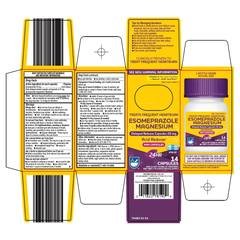
Medicine information on IMCURE is provided for educational purposes and is not a substitute for diagnosis, prescription or medical advice. Always follow your doctor’s or pharmacist’s instructions. Real product image from the U.S. National Library of Medicine's DailyMed listing for Esomeprazole Magnesium (Esomeprazole) Capsule, Delayed Release. Packaging varies by brand and manufacturer.