
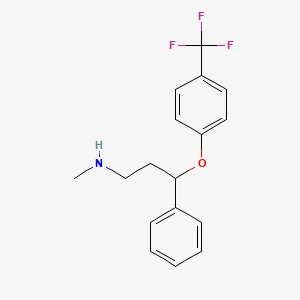
Selective serotonin reuptake inhibitor (SSRI)Prescription only (Schedule H)On NLEM 2022NPPA price ceilingJan Aushadhi listed
Fluoxetine
फ्लुऑक्सेटिन
Fluoxetine is an SSRI antidepressant. The US label lists depression, obsessive compulsive disorder, bulimia nervosa and panic disorder. In India it is a prescription medicine. It carries a boxed warning about suicidal thoughts and behaviour in children, teenagers and young adults.
- Generic name
- Fluoxetine
- Used for
- Major depressive disorder, obsessive compulsive disorder, bulimia nervosa and panic disorder (per the US label)
- Label used
- Capsule label, oral, DailyMed set a08dadff, effective 2026-09
- Prescription status (India)
- Prescription only (Schedule H)
- On NLEM 2022
- Yes
- NPPA price ceiling
- Yes (scheduled formulation)
More facts
- Jan Aushadhi
- Listed
- Banned combinations
- No entry found in the banned combination list we checked
Compiled from official drug labels and Indian government sources. Always follow your doctor's or pharmacist's advice.
Safety at a glance
- AlcoholCaution in label textSee wording
- PregnancyCaution in label textSee wording
- BreastfeedingNot mentioned in label text
- DrivingCaution in label textSee wording
- KidneyNot mentioned in label text
- LiverCaution in label textSee wording
Taken only from the label text cited on this page. "Not mentioned" does not mean safe. Ask your doctor or pharmacist.
What is fluoxetine used for?
The US label for fluoxetine capsules lists treatment of major depressive disorder, both acute and maintenance.
It also lists obsessive compulsive disorder, binge-eating and vomiting in moderate to severe bulimia nervosa, and panic disorder with or without agoraphobia.
With olanzapine, it is listed for depressive episodes in bipolar I disorder and for treatment resistant depression.
The label says fluoxetine alone is not indicated for bipolar depressive episodes or treatment resistant depression.
- Major depressive disorder
- Obsessive compulsive disorder
- Bulimia nervosa
- Panic disorder
- With olanzapine: bipolar I depressive episodes and treatment resistant depression
Fluoxetine is listed for depression, obsessive compulsive disorder, bulimia and panic disorder. Your doctor decides if it suits you.
Source1
How does fluoxetine work?
The label describes fluoxetine as a selective serotonin reuptake inhibitor.
It says the exact mechanism is unknown but is presumed to be linked to blocking the uptake of serotonin in the brain.
It is thought to work by blocking serotonin uptake in the brain. The exact mechanism is not known.
Source1
How is fluoxetine taken? Dosage information
The dosing below is for the fluoxetine capsule label, which is an adult oral capsule label from the US.
For adults with depression, the US label says the starting dose is 20 mg a day in the morning. A rise may be considered after several weeks. The label sets a ceiling of 80 mg a day.
For obsessive compulsive disorder, the label gives 20 mg a day as the starting dose. For bulimia nervosa it gives 60 mg a day in the morning. For panic disorder it gives 10 mg a day as the starting dose.
The label says doses above 20 mg can be taken once in the morning or split between morning and noon.
It advises a lower or less frequent dose for people with liver impairment, older adults, and people with other illnesses or many medicines.
The label notes that fluoxetine stays in the body for a long time, so a change in dose may take weeks to show fully.
Indian pack labels may differ from the US label. Your prescriber's instruction always comes first. Do not change the dose or stop it yourself; ask your doctor or pharmacist.
Adult doses depend on the condition and usually start low. Follow the prescriber, not this page.
Source1
What are the side effects of fluoxetine?
Common
- The label lists as most common (5% or more and at least twice the placebo rate): abnormal dreams, nausea, diarrhoea, dry mouth, indigestion, anxiety, nervousness, insomnia, sleepiness, tremor, sweating, weakness, rash and yawning.
- Sexual side effects such as lower sex drive and abnormal ejaculation are listed too.
- Common: nausea, diarrhoea, dry mouth, indigestion
- Common: insomnia, sleepiness, anxiety, nervousness, tremor
- Common: sweating, abnormal dreams, lower sex drive
Serious: get help
- Serious risks in the label include suicidal thoughts, serotonin syndrome, allergic reaction and rash, mania, seizures, bleeding, low sodium, angle-closure glaucoma and heart rhythm changes.
- Serious: new or worse suicidal thoughts or behaviour
- Serious: serotonin syndrome
- Serious: severe rash or allergic reaction
- Serious: mania, seizures, unusual bleeding
- Serious: low sodium, eye pain from glaucoma, QT prolongation
Nausea, sleep changes and dry mouth are common. Suicidal thoughts, serotonin syndrome and bleeding need urgent help.
Source1
Who should be careful with fluoxetine?
Boxed warning: antidepressants raised suicidal thoughts and behaviour in children, teenagers and young adults in short studies. The label asks for close watching in all ages at the start of treatment.
The label says fluoxetine is not approved for children under 7 years.
It is contraindicated with MAO inhibitors, linezolid, intravenous methylene blue, pimozide and thioridazine.
Use cautiously with a history of seizures, bipolar disorder, bleeding problems, narrow-angle glaucoma or heart rhythm risks.
Pregnancy: late use of SSRIs may raise the risk of breathing problems and poor adaptation in the newborn. Discuss with your doctor before planning or continuing.
Older adults are more prone to low sodium. Fluoxetine may impair judgement and motor skills, so take care when driving.
- Children, teenagers and young adults: watch for suicidal thoughts
- Pregnancy and late pregnancy
- Older adults: low sodium risk
- Liver impairment: lower or less frequent dosing
- History of seizures, bleeding or glaucoma
- Driving and machinery
The boxed warning is about suicidal thoughts in younger people. Tell your doctor about seizures, bleeding, pregnancy and other medicines.
Source1
What interacts with fluoxetine?
- MAO inhibitors, linezolid, methylene blue: do not combine
- Pimozide, thioridazine: do not combine
- Tricyclic antidepressants, haloperidol, clozapine, phenytoin, carbamazepine: levels may rise
- NSAIDs, aspirin, warfarin: more bleeding risk
- Other serotonergic or QT-prolonging medicines
- The label says never combine fluoxetine with MAO inhibitors used for psychiatric conditions, or start it within 14 days of stopping one.
- Wait 5 weeks after stopping fluoxetine before starting an MAOI.
- Pimozide and thioridazine must not be used with it because of heart rhythm and drug level risks.
- Fluoxetine strongly blocks the CYP2D6 enzyme, so levels of tricyclic antidepressants, some antipsychotics and some anticonvulsants may rise.
- NSAIDs, aspirin and warfarin may add to bleeding risk.
- Other serotonergic medicines raise the risk of serotonin syndrome.
No match in this label text. Ask your pharmacist about any medicine you take.
Do not mix with MAO inhibitors, pimozide or thioridazine. Tell your pharmacist about every medicine you take.
Source1
How should fluoxetine be stored? Overdose information
The label says to store the capsules at 20 to 25 degrees C, with short excursions to 15 to 30 degrees C allowed.
Overdose information: the label lists seizures, altered mental state, heart rhythm changes and serotonin syndrome. Contact a poison centre or emergency care at once.
Keep medicines out of reach of children.
Store at room temperature. Overdose needs emergency care.
Source1
Legal status in India: schedule, NLEM, price control and Jan Aushadhi
In the Drugs Rules schedules we checked, Fluoxetine is listed under Schedule H (Schedule H, serial 204 (rules 65 and 97)). It is sold on prescription.
The National List of Essential Medicines 2022 lists Fluoxetine in these forms: Capsule 20 mg; Capsule 40 mg; Capsule 60 mg.
NPPA ceiling prices exist for some Fluoxetine formulations. The table in the price section shows each row we found.
The Jan Aushadhi (PMBJP) product list we checked has 3 entries that name Fluoxetine. Availability at a Kendra can change.
No entry found in the banned combination list we checked.
- Jan Aushadhi: Fluoxetine Hydrochloride Capsules IP 20mg, pack 10's (row p11:sno254)
- Jan Aushadhi: Fluoxetine 10 Mg Tablet, pack 10's (row p93:sno2020)
- Jan Aushadhi: Fluoxetine Capsules 60Mg, pack 10's (row p93:sno2021)
Fluoxetine needs a prescription in India. The official lists we checked show it on the NLEM, with NPPA ceilings and Jan Aushadhi rows.
Price ceilings and Jan Aushadhi for Fluoxetine
NPPA sets a ceiling price per unit for scheduled formulations. The table shows every Fluoxetine row we found.
A ceiling is the most a seller may charge per unit for that formulation. Actual prices are often lower. Check the pack and seller.
Some rows appear under more than one NPPA category or date. Ask the pharmacist which row applies to your pack.
Jan Aushadhi lists 3 products that name Fluoxetine. Compare the form, strength and pack size with your prescription before switching, and ask your doctor or pharmacist.
We do not show brand prices because they change often and we have not verified them.
| Formulation | Strength | Unit | Ceiling price per unit | NPPA list (as on) |
|---|---|---|---|---|
| Capsule | 10 mg | 1 Capsule | Rs 2.96 | All scheduled (NLEM 2015) (As on 30.09.2020) |
| Capsule | 20 mg | 1 Capsule | Rs 3.64 | All scheduled (NLEM 2015) (As on 30.09.2020) |
| Capsule | 40 mg | 1 Capsule | Rs 5.52 | All scheduled (NLEM 2015) (As on 30.09.2020) |
| Capsule | 60 mg | 1 Capsule | Rs 9.76 | All scheduled (NLEM 2015) (As on 30.09.2020) |
| Tablet | 10 mg | 1 Tablet | Rs 2.49 | All scheduled (NLEM 2015) (As on 30.09.2020) |
| Tablet | 20 mg | 1 Tablet | Rs 3.95 | All scheduled (NLEM 2015) (As on 30.09.2020) |
| Tablet | 40 mg | 1 Tablet | Rs 5.32 | All scheduled (NLEM 2015) (As on 30.09.2020) |
| Tablet | 60 mg | 1 Tablet | Rs 7.38 | All scheduled (NLEM 2015) (As on 30.09.2020) |
NPPA ceilings and Jan Aushadhi rows are shown. Check the pack and seller.
Frequently asked questions
Can I take fluoxetine with alcohol?
The part of the label we reviewed does not give specific alcohol advice. The label says fluoxetine can affect judgement and motor skills, and alcohol may add to such effects. Ask your doctor or pharmacist.
Source1
How long does fluoxetine take to work?
The label says doses can be raised after several weeks if the response is not enough. It also says changes in dose take weeks to show fully because the drug stays in the body. Your doctor will review your progress.
Source1
Is fluoxetine safe in pregnancy?
The label says studies have not established a higher risk of major birth defects, but late-pregnancy use may cause breathing problems and poor adaptation in the newborn. Talk to your doctor before changing anything.
Source1
Can I stop fluoxetine suddenly?
The label lists discontinuation reactions among its warnings. Ask your doctor or pharmacist before stopping or changing the dose.
Source1
Does fluoxetine cause weight changes?
The label lists altered appetite and weight, including significant weight loss, among its warnings. Tell your doctor if appetite or weight changes a lot.
Source1
Sources
- 1U.S. FDA-approved label (DailyMed) (a08dadff-f209-48dc-b597-6f085be13640) Open source · 2026-10-15
- 2Drugs Rules 1945, Schedules (2022 consolidation) (Schedule H, serial 204 (rules 65 and 97)) Open source · 2026-10-15
- 3National List of Essential Medicines 2022 (page 84, 103) Open source · 2026-10-15
- 4NPPA ceiling price lists (All scheduled (NLEM 2015), page 8) Open source · 2026-10-15
- 5PMBJP (Jan Aushadhi) product list (rows p11:sno254, p93:sno2020, p93:sno2021) Open source · 2026-10-15
Compiled by software from the sources above and checked by automated rules. Last checked: 2026-10-15 · How we use sources · Report a correction
This information is educational and is not a substitute for advice from your doctor or pharmacist. It does not tell you what dose you personally should take. In an emergency call 112.