
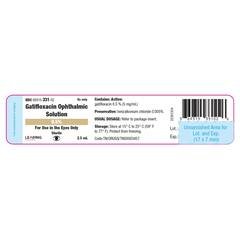
Zymaxid
11 DESCRIPTION ZYMAXID ® is a quinolone antimicrobial topical ophthalmic solution for the treatment of bacterial conjunctivitis. Its chemical name is (±)-1-Cyclopropyl-6-fluoro-1,4-dihydro-8-methoxy-7-(3-methyl-1-piperazinyl)-4-oxo-3-quinolinecarboxylic acid, sesquihydrate. Its molecular formula is C 19 H 22 FN 3 O 4 · 1½ H 2 O and its molecular weight is 402.42. Its chemical structure is: ZYMAXID ® is a clear, pale yellow, sterile, preserved aqueous solution with an osmolality of 260-330 mOsm/kg and a pH of 5.1-5.7. ZYMAXID ® contains the active ingredient gatifloxacin 0.5% (5 mg/mL) and the inactive ingredients benzalkonium chloride 0.005%, edetate disodium, sodium chloride and purified water. ZYMAXID ® may contain hydrochloric acid and/or sodium hydroxide to adjust pH. The chemical structure of ZYMAXID® is a quinolone antimicrobial topical ophthalmic solution for the treatment of bacterial conjunctivitis. Its chemical name is (±)-1-Cyclopropyl-6-fluoro-1,4-dihydro-8-methoxy-7-(3-methyl-1-piperazinyl)-4-oxo-3-quinolinecarboxylic acid, sesquihydrate. Its molecular formula is C19H22FN3O4 • 1½ H2O and its molecular weight is 402.42.
Information page. Not necessarily available for purchase.
What is Zymaxid?
11 DESCRIPTION ZYMAXID ® is a quinolone antimicrobial topical ophthalmic solution for the treatment of bacterial conjunctivitis. Its chemical name is (±)-1-Cyclopropyl-6-fluoro-1,4-dihydro-8-methoxy-7-(3-methyl-1-piperazinyl)-4-oxo-3-quinolinecarboxylic acid, sesquihydrate. Its molecular formula is C 19 H 22 FN 3 O 4 · 1½ H 2 O and its molecular weight is 402.42. Its chemical structure is: ZYMAXID ® is a clear, pale yellow, sterile, preserved aqueous solution with an osmolality of 260-330 mOsm/kg and a pH of 5.1-5.7. ZYMAXID ® contains the active ingredient gatifloxacin 0.5% (5 mg/mL) and the inactive ingredients benzalkonium chloride 0.005%, edetate disodium, sodium chloride and purified water. ZYMAXID ® may contain hydrochloric acid and/or sodium hydroxide to adjust pH. The chemical structure of ZYMAXID® is a quinolone antimicrobial topical ophthalmic solution for the treatment of bacterial conjunctivitis. Its chemical name is (±)-1-Cyclopropyl-6-fluoro-1,4-dihydro-8-methoxy-7-(3-methyl-1-piperazinyl)-4-oxo-3-quinolinecarboxylic acid, sesquihydrate. Its molecular formula is C19H22FN3O4 • 1½ H2O and its molecular weight is 402.42.
Uses of Zymaxid
Established uses
- 1 INDICATIONS AND USAGE ZYMAXID ® is indicated for the treatment of bacterial conjunctivitis caused by susceptible strains of the following organisms: Aerobic gram-positive bacteria: Staphylococcus aureus Staphylococcus epidermidis Streptococcus mitis group * Streptococcus oralis * Streptococcus pneumoniae Aerobic gram-negative bacteria: Haemophilus influenzae *Efficacy for these organisms were studied in fewer than 10 infections .
- ZYMAXID ® is a quinolone antimicrobial indicated for the treatment of bacterial conjunctivitis caused by susceptible strains of the following organisms: Haemophilus influenzae, Staphylococcus aureus, Staphylococcus epidermidis, Streptococcus mitis group , Streptococcus oralis, Streptococcus pneumoniae ( 1 )
How Zymaxid works
In more detail: 12.1 Mechanism of Action Gatifloxacin is a quinolone antimicrobial [ see Microbiology ( 12.4 ) ] .
How to take Zymaxid
2 DOSAGE AND ADMINISTRATION Day 1: Instill one drop every two hours in the affected eye(s) while awake, up to 8 times. Day 2 through Day 7: Instill one drop two to four times daily in the affected eye(s) while awake. Day 1: Instill one drop every two hours in the affected eye(s) while awake, up to 8 times on Day 1. Days 2 through 7: Instill one drop two to four times daily in the affected eye(s) while awake on Days 2 through 7. ( 2 )
Dosage
Follow the dose prescribed by your doctor or pharmacist. The ranges below are general information, not a personal prescription.
- Adults
- 2 DOSAGE AND ADMINISTRATION Day 1: Instill one drop every two hours in the affected eye(s) while awake, up to 8 times. Day 2 through Day 7: Instill one drop two to four times daily in the affected eye(s) while awake. Day 1: Instill one drop every two hours in the affected eye(s) while awake, up to 8 times on Day 1. Days 2 through 7: Instill one drop two to four times daily in the affected eye(s) while awake on Days 2 through 7. ( 2 )
Side effects of Zymaxid
Common
- 6 ADVERSE REACTIONS The following serious adverse reactions are described elsewhere in the labeling: Hypersensitivity [ see Contraindications ( 4 ) and Warnings and Precautions ( 5.1 ) ] Growth of Resistant Organisms With Prolonged Use [ see Warnings and Precautions ( 5.2 ) ] Corneal Endothelial Cell Injury [ see Warnings and Precautions ( 5.3 ) ] Most common adverse reactions occurring in ≥ 1 % of patients included worsening of conjunctivitis, eye irritation, dysgeusia, and eye pain.
- ( 6 ) To report SUSPECTED ADVERSE REACTIONS, contact Allergan at 1-800-433-8871 or FDA at 1-800-FDA-1088 or www.fda.gov/medwatch.
- 6.
- 1 Clinical Studies Experience Because clinical studies are conducted under widely varying conditions, adverse reaction rates observed in the clinical studies of a drug cannot be directly compared to rates in the clinical studies of another drug and may not reflect the rates observed in practice.
- In clinical studies of patients with bacterial conjunctivitis treated with ZYMAXID ® (N=717), the most frequently reported adverse reactions occurring in ≥ 1 % of patients were: worsening of the conjunctivitis, eye irritation, dysgeusia, and eye pain.
- Additional adverse reactions
Warnings and who should not take it
Who should NOT take Zymaxid?
- 4 CONTRAINDICATIONS ZYMAXID ® is contraindicated in patients with a history of hypersensitivity to gatifloxacin, to other quinolones, or to any of the components in this medication [see Warnings and Precautions ( 5.1 )] .
- ZYMAXID ® is contraindicated in patients with a history of hypersensitivity to gatifloxacin, to other quinolones, or to any of the components in this medication.
- ( 4 )
Safety at a glance
8.1 Pregnancy Risk Summary There are no available data on the use of ZYMAXID ® in pregnant women to inform a drug-associated risk. Administration of oral gatifloxacin to pregnant rats and rabbits throughout organogenesis did not produce adverse development outcomes at clinically relevant doses. Administration of gatifloxacin to rats during late gestation through lactation did not produce adverse maternal, fetal or neonatal effects at clinically relevant doses. Data Animal Data Oral administration of gatifloxacin to pregnant rats throughout organogenesis produced teratogenic effects in rat fetuses, including skeletal/craniofacial malformations, delayed ossification, atrial enlargement, and reduced fetal weight, at doses greater than or equal to 150 mg/kg/day (approximately 600-fold higher than the maximum recommended human ophthalmic dose [MRHOD] for ZYMAXID ® of 0.04 mg/kg/day, on a mg/m 2 basis). No teratogenic effects were observed in rat or rabbit fetuses at doses of gatifloxacin up to 50 mg/kg/day (approximately 200- and 400-fold higher than the MRHOD, respectively, on a mg/m 2 basis). In a perinatal/postnatal study in rats, oral administration of gatifloxacin during late gesta
Children and elderly
Children
8.4 Pediatric Use The safety and effectiveness of ZYMAXID ® in infants below one year of age have not been established. ZYMAXID ® has been demonstrated in clinical trials to be safe and effective for the treatment of bacterial conjunctivitis in pediatric patients one year or older [ see Clinical Studies ( 14 ) ] .
Elderly
8.5 Geriatric Use No overall differences in safety or effectiveness have been observed between elderly and younger patients.
Frequently asked questions
What is Zymaxid used for?
1 INDICATIONS AND USAGE ZYMAXID ® is indicated for the treatment of bacterial conjunctivitis caused by susceptible strains of the following organisms: Aerobic gram-positive bacteria: Staphylococcus aureus Staphylococcus epidermidis Streptococcus mitis group * Streptococcus oralis * Streptococcus pneumoniae Aerobic gram-negative bacteria: Haemophilus influenzae *Efficacy for these organisms were studied in fewer than 10 infections ., ZYMAXID ® is a quinolone antimicrobial indicated for the treatment of bacterial conjunctivitis caused by susceptible strains of the following organisms: Haemophilus influenzae, Staphylococcus aureus, Staphylococcus epidermidis, Streptococcus mitis group , Streptococcus oralis, Streptococcus pneumoniae ( 1 ).
How should I take Zymaxid?
2 DOSAGE AND ADMINISTRATION Day 1: Instill one drop every two hours in the affected eye(s) while awake, up to 8 times. Day 2 through Day 7: Instill one drop two to four times daily in the affected eye(s) while awake. Day 1: Instill one drop every two hours in the affected eye(s) while awake, up to 8 times on Day 1. Days 2 through 7: Instill one drop two to four times daily in the affected eye(s) while awake on Days 2 through 7. ( 2 )
What are the common side effects?
6 ADVERSE REACTIONS The following serious adverse reactions are described elsewhere in the labeling: Hypersensitivity [ see Contraindications ( 4 ) and Warnings and Precautions ( 5.1 ) ] Growth of Resistant Organisms With Prolonged Use [ see Warnings and Precautions ( 5.2 ) ] Corneal Endothelial Cell Injury [ see Warnings and Precautions ( 5.3 ) ] Most common adverse reactions occurring in ≥ 1 % of patients included worsening of conjunctivitis, eye irritation, dysgeusia, and eye pain., ( 6 ) To report SUSPECTED ADVERSE REACTIONS, contact Allergan at 1-800-433-8871 or FDA at 1-800-FDA-1088 or www.fda.gov/medwatch., 6., 1 Clinical Studies Experience Because clinical studies are conducted under widely varying conditions, adverse reaction rates observed in the clinical studies of a drug cannot be directly compared to rates in the clinical studies of another drug and may not reflect the rates observed in practice., In clinical studies of patients with bacterial conjunctivitis treated with ZYMAXID ® (N=717), the most frequently reported adverse reactions occurring in ≥ 1 % of patients were: worsening of the conjunctivitis, eye irritation, dysgeusia, and eye pain., Additional adverse reactions.
Who should not take Zymaxid?
4 CONTRAINDICATIONS ZYMAXID ® is contraindicated in patients with a history of hypersensitivity to gatifloxacin, to other quinolones, or to any of the components in this medication [see Warnings and Precautions ( 5.1 )] .; ZYMAXID ® is contraindicated in patients with a history of hypersensitivity to gatifloxacin, to other quinolones, or to any of the components in this medication.; ( 4 ).
Can I take Zymaxid during pregnancy?
8.1 Pregnancy Risk Summary There are no available data on the use of ZYMAXID ® in pregnant women to inform a drug-associated risk. Administration of oral gatifloxacin to pregnant rats and rabbits throughout organogenesis did not produce adverse development outcomes at clinically relevant doses. Administration of gatifloxacin to rats during late gestation through lactation did not produce adverse maternal, fetal or neonatal effects at clinically relevant doses. Data Animal Data Oral administration of gatifloxacin to pregnant rats throughout organogenesis produced teratogenic effects in rat fetuses, including skeletal/craniofacial malformations, delayed ossification, atrial enlargement, and reduced fetal weight, at doses greater than or equal to 150 mg/kg/day (approximately 600-fold higher than the maximum recommended human ophthalmic dose [MRHOD] for ZYMAXID ® of 0.04 mg/kg/day, on a mg/m 2 basis). No teratogenic effects were observed in rat or rabbit fetuses at doses of gatifloxacin up to 50 mg/kg/day (approximately 200- and 400-fold higher than the MRHOD, respectively, on a mg/m 2 basis). In a perinatal/postnatal study in rats, oral administration of gatifloxacin during late gesta
Can children take Zymaxid?
8.4 Pediatric Use The safety and effectiveness of ZYMAXID ® in infants below one year of age have not been established. ZYMAXID ® has been demonstrated in clinical trials to be safe and effective for the treatment of bacterial conjunctivitis in pediatric patients one year or older [ see Clinical Studies ( 14 ) ] .
Medicine information on IMCURE is provided for educational purposes and is not a substitute for diagnosis, prescription or medical advice. Always follow your doctor’s or pharmacist’s instructions. Real product image from the U.S. National Library of Medicine's DailyMed listing for Gatifloxacin Solution. Packaging varies by brand and manufacturer.