
Glyburide And Metformin Hydrochloride
11 DESCRIPTION Glyburide and metformin hydrochloride tablets, USP for oral use contain glyburide, USP and metformin hydrochloride, USP. Glyburide, USP is a sulfonylurea and its chemical name is 1-[[ p -[2-(5-chloro- o- anisamido) ethyl]phenyl]sulfonyl]-3-cyclo-hexylurea. Glyburide, USP is a white or almost white, crystalline powder with a molecular formula of C 23 H 28 ClN 3 O 5 S and a molecular weight of 494. The glyburide used in glyburide and metformin hydrochloride tablets, USP has a particle size at least 20% are less than 2 micron, at least 80% are less than 10 micron and 100% are less than 40 micron. The structural formula is represented below. Metformin hydrochloride, USP is a biguanide in hydrochloride salt form and its chemical name is N,N-dimethylimidodicarbonimidic diamide monohydrochloride. It is a white crystals with a molecular formula of C 4 H 12 ClN 5 (monohydrochloride) and a molecular weight of 165.62. Metformin hydrochloride, USP is freely soluble in water, slightly soluble in ethanol (95%), practically insoluble in acetone and in methylene chloride. The structural formula is as shown: Glyburide and metformin hydrochloride tablets, USP are available in film coa
Information page. Not necessarily available for purchase.
What is Glyburide And Metformin Hydrochloride?
11 DESCRIPTION Glyburide and metformin hydrochloride tablets, USP for oral use contain glyburide, USP and metformin hydrochloride, USP. Glyburide, USP is a sulfonylurea and its chemical name is 1-[[ p -[2-(5-chloro- o- anisamido) ethyl]phenyl]sulfonyl]-3-cyclo-hexylurea. Glyburide, USP is a white or almost white, crystalline powder with a molecular formula of C 23 H 28 ClN 3 O 5 S and a molecular weight of 494. The glyburide used in glyburide and metformin hydrochloride tablets, USP has a particle size at least 20% are less than 2 micron, at least 80% are less than 10 micron and 100% are less than 40 micron. The structural formula is represented below. Metformin hydrochloride, USP is a biguanide in hydrochloride salt form and its chemical name is N,N-dimethylimidodicarbonimidic diamide monohydrochloride. It is a white crystals with a molecular formula of C 4 H 12 ClN 5 (monohydrochloride) and a molecular weight of 165.62. Metformin hydrochloride, USP is freely soluble in water, slightly soluble in ethanol (95%), practically insoluble in acetone and in methylene chloride. The structural formula is as shown: Glyburide and metformin hydrochloride tablets, USP are available in film coa
Uses of Glyburide And Metformin Hydrochloride
Established uses
- 1 INDICATIONS AND USAGE Glyburide and metformin hydrochloride tablets are indicated as an adjunct to diet and exercise to improve glycemic control in adults with type 2 diabetes mellitus.
- Glyburide and metformin hydrochloride tablets are a combination of glyburide, a sulfonylurea, and metformin hydrochloride (HCl), a biguanide, indicated as an adjunct to diet and exercise to improve glycemic control in adults with type 2 diabetes mellitus.
- ( 1 )
How Glyburide And Metformin Hydrochloride works
In more detail: 12.1 Mechanism of Action Glyburide primarily lowers blood glucose by stimulating the release of insulin from the pancreas, an effect dependent upon functioning beta cells in the pancreatic islets. Sulfonylureas bind to the sulfonylurea receptor in the pancreatic beta-cell plasma membrane, leading to closure of the ATP-sensitive potassium channel, thereby stimulating the release of insulin. Metformin is an antihyperglycemic agent that improves glucose tolerance in patients with type 2 diabetes, lowering both basal and postprandial plasma glucose. Metformin decreases hepatic glucose production, decreases intestinal absorption of glucose, and improves insulin sensitivity by increasing peripheral glucose uptake and utilization. With metformin therapy, insulin secretion remains unchanged while fasting insulin levels and daylong plasma insulin response may decrease.
How to take Glyburide And Metformin Hydrochloride
2 DOSAGE AND ADMINISTRATION Adult Dosage: Give glyburide and metformin hydrochloride tablets in divided doses, twice daily, with meals. ( 2.1 ) For patients not treated with either glyburide (or another sulfonylurea) or metformin HCl, initiate treatment with another formulation with a dose of 1.25 mg glyburide and 250 mg metformin HCl orally, once or twice daily with meals. ( 2.1 ) For patients not adequately controlled on either glyburide (or another sulfonylurea) or metformin HCl alone, the recommended starting dose is 2.5 mg/500 mg or 5 mg/500 mg orally twice daily with meals. ( 2.1 ) For patients previously treated with a combination therapy of glyburide (or another sulfonylurea) and metformin HCl, the starting dose should not exceed the daily dose of glyburide (or equivalent dose of another sulfonylurea) and metformin HCl already being taken. ( 2.1 ) Increase the dose gradually on the basis of glycemic control and tolerability, up to a maximum to a maximum dose of 20 mg glyburide/2,000 mg metformin HCl daily. ( 2.1 ) Renal Impairment: Prior to initiation, assess renal function with estimated glomerular filtration rate (eGFR) ( 2.4 ) Do not use in patients with eGFR below 30 mL
Dosage
Follow the dose prescribed by your doctor or pharmacist. The ranges below are general information, not a personal prescription.
- Adults
- 2 DOSAGE AND ADMINISTRATION Adult Dosage: Give glyburide and metformin hydrochloride tablets in divided doses, twice daily, with meals. ( 2.1 ) For patients not treated with either glyburide (or another sulfonylurea) or metformin HCl, initiate treatment with another formulation with a dose of 1.25 mg glyburide and 250 mg metformin HCl orally, once or twice daily with meals. ( 2.1 ) For patients not adequately controlled on either glyburide (or another sulfonylurea) or metformin HCl alone, the recommended starting dose is 2.5 mg/500 mg or 5 mg/500 mg orally twice daily with meals. ( 2.1 ) For patients previously treated with a combination therapy of glyburide (or another sulfonylurea) and metformin HCl, the starting dose should not exceed the daily dose of glyburide (or equivalent dose of another sulfonylurea) and metformin HCl already being taken. ( 2.1 ) Increase the dose gradually on the basis of glycemic control and tolerability, up to a maximum to a maximum dose of 20 mg glyburide/2,000 mg metformin HCl daily. ( 2.1 ) Renal Impairment: Prior to initiation, assess renal function with estimated glomerular filtration rate (eGFR) ( 2.4 ) Do not use in patients with eGFR below 30 mL
Side effects of Glyburide And Metformin Hydrochloride
Common
- 6 ADVERSE REACTIONS The following adverse reactions are also discussed elsewhere in the labeling: Lactic Acidosis [see Boxed Warning and Warnings and Precautions ( 5.1 ) ] Hypoglycemia [see Warnings and Precautions ( 5.2 ) ] Cardiovascular mortality [see Warnings and Precautions ( 5.3 ) ] Hemolytic anemia [see Warnings and Precautions ( 5.4 )] Vitamin B 12 Deficiency [ see Warnings and Precautions ( 5.5 ) ] Most common (>5%) adverse reactions to glyburide and metformin hydrochloride tablets diarrhea, headache, nausea/vomiting, abdominal pain, and dizziness.
- ( 6.1 ) To report SUSPECTED ADVERSE REACTIONS, contact Zydus Pharmaceuticals (USA) Inc.
- at 1-877-993-8779 or FDA at 1-800-FDA-1088 or http://www.fda.gov/medwatch.
- 6.1 Clinical Studies Experience Because clinical studies are conducted under widely varying conditions, adverse reaction rates observed in the clinical studies of a drug cannot be directly compared to rates in the clinical studies of another drug and may not reflect the rates observed in practice.
- In double-blind clinical studies with glyburide and metformin hydrochloride as initial therapy or as second-line therapy of 20 and 14 weeks, respectively (see section 14), a
Warnings and who should not take it
Who should NOT take Glyburide And Metformin Hydrochloride?
- 4 CONTRAINDICATIONS Glyburide and metformin hydrochloride tablets are contraindicated in patients with: Severe renal impairment (eGFR below 30 mL/min/1.73 m 2 ) [see Warnings and Precautions ( 5.1 ) ].
- Hypersensitivity to metformin or glyburide.
- Acute or chronic metabolic acidosis, including diabetic ketoacidosis, with or without coma.
- Concomitant administration of bosentan [see Drug Interactions ( 7 ) ].
- Severe renal impairment (eGFR below 30 mL/min/1.73 m 2 ) ( 4 , 5.1 ) Hypersensitivity to metformin or glyburide.
- ( 4 ) Acute or chronic metabolic acidosis, including diabetic ketoacidosis, with or without coma.
Overdose
10 OVERDOSAGE Glyburide Overdosage of sulfonylureas, including glyburide tablets, can produce hypoglycemia. Mild hypoglycemic symptoms, without loss of consciousness or neurological findings, should be treated with oral glucose. Severe hypoglycemic reactions with coma, seizure, or other neurological impairment are medical emergencies requiring immediate treatment. The patient should be treated with glucagon or intravenous glucose. Patients should be closely monitored for a minimum of 24 to 48 hours since hypoglycemia may recur after apparent clinical recovery. Clearance of glyburide from plasma may be prolonged in persons with liver disease. Because of the extensive protein binding of glyburide, dialysis is unlikely to be of benefit. Metformin Overdose of metformin has occurred, including ingestion of amounts greater than 50 g. Hypoglycemia was reported in approximately 10% of cases, but no causal association with metformin has been established. Lactic acidosis has been reported in approximately 32% of metformin overdose cases [see Warnings and Precautions ( 5.1 ) ]. Metformin is dialyzable with a clearance of up to 170 mL/min under good hemodynamic conditions. Therefore, hemodialy
Safety at a glance
8.1 Pregnancy Risk Summary Available data from a small number of published studies and postmarketing experience with glyburide use in pregnancy over decades have not identified any drug associated risks for major birth defects, miscarriage, or adverse maternal outcomes. However, sulfonylureas (including glyburide) cross the placenta and have been associated with neonatal adverse reactions such as hypoglycemia. Therefore, glyburide and metformin hydrochloride should be discontinued at least two weeks before expected delivery [see Clinical Considerations ]. Limited data with metformin in pregnant women are not sufficient to determine a drug-associated risk for major birth defects or miscarriage. Published studies with metformin use during pregnancy have not reported a clear association with metformin and major birth defect or miscarriage risk [see Data ]. There are risks to the mother and fetus associated with poorly controlled diabetes mellitus in pregnancy [see Clinical Considerations ]. No evidence of harm to the fetus was observed when doses up to 500 times the maximum recommended human dose of 20 mg of glyburide, based on body surface area, were administered to rats and rabbits
Children and elderly
Elderly
8.5 Geriatric Use Of the 642 patients who received glyburide and metformin hydrochloride in double-blind clinical studies, 23.8% were 65 and older while 2.8% were 75 and older. No overall differences in effectiveness or safety were observed between these patients and younger patients, but greater sensitivity of some older individuals cannot be ruled out. Elderly patients are particularly susceptible to the hypoglycemic action of anti-diabetic agents. Hypoglycemia may be difficult to recognize in these patients. In general, dose selection for an elderly patient should be cautious, usually starting at the low end of the dosing range, reflecting the greater frequency of decreased hepatic, renal, or cardiac function, and of concomitant disease or other drug therapy and the higher risk of hypoglycemia and lactic acidosis. Assess renal function more frequently in elderly patients [see Dosage and Administration ( 2 ) and Warnings and Precautions ( 5.1 ) ].
Interactions
Medicine and medicine
- 7 DRUG INTERACTIONS Table 3 presents clinically significant drug interactions with glyburide and metformin hydrochloride.
- Table 3: Clinically Significant Drug Interactions with Glyburide and Metformin Hydrochloride Carbonic Anhydrase Inhibitors Clinical Impact: Carbonic anhydrase inhibitors frequently cause a decrease in serum bicarbonate and induce non-anion gap, hyperchloremic metabolic acidosis.
- Concomitant use of these drugs with glyburide and metformin hydrochloride may increase the risk for lactic acidosis.
- Intervention: Consider more frequent monitoring of these patients.
- Examples: Topiramate, zonisamide, acetazolamide and dichlorphenamide.
- Drugs that Reduce Metformin Clearance Clinical Impact: Concomitant use of drugs that interfere with common renal tubular transport systems involved in the renal elimination of metformin (e.g., organic cationic transporter-2 [OCT2] / multidrug and toxin extrusion [MATE] inhibitors) could increase systemic exposure to metformin and may increase the risk for lactic acidosis [ see Clinical Pharmacology ( 12.3 ) ].
Frequently asked questions
What is Glyburide And Metformin Hydrochloride used for?
1 INDICATIONS AND USAGE Glyburide and metformin hydrochloride tablets are indicated as an adjunct to diet and exercise to improve glycemic control in adults with type 2 diabetes mellitus., Glyburide and metformin hydrochloride tablets are a combination of glyburide, a sulfonylurea, and metformin hydrochloride (HCl), a biguanide, indicated as an adjunct to diet and exercise to improve glycemic control in adults with type 2 diabetes mellitus., ( 1 ).
How should I take Glyburide And Metformin Hydrochloride?
2 DOSAGE AND ADMINISTRATION Adult Dosage: Give glyburide and metformin hydrochloride tablets in divided doses, twice daily, with meals. ( 2.1 ) For patients not treated with either glyburide (or another sulfonylurea) or metformin HCl, initiate treatment with another formulation with a dose of 1.25 mg glyburide and 250 mg metformin HCl orally, once or twice daily with meals. ( 2.1 ) For patients not adequately controlled on either glyburide (or another sulfonylurea) or metformin HCl alone, the recommended starting dose is 2.5 mg/500 mg or 5 mg/500 mg orally twice daily with meals. ( 2.1 ) For patients previously treated with a combination therapy of glyburide (or another sulfonylurea) and metformin HCl, the starting dose should not exceed the daily dose of glyburide (or equivalent dose of another sulfonylurea) and metformin HCl already being taken. ( 2.1 ) Increase the dose gradually on the basis of glycemic control and tolerability, up to a maximum to a maximum dose of 20 mg glyburide/2,000 mg metformin HCl daily. ( 2.1 ) Renal Impairment: Prior to initiation, assess renal function with estimated glomerular filtration rate (eGFR) ( 2.4 ) Do not use in patients with eGFR below 30 mL
What are the common side effects?
6 ADVERSE REACTIONS The following adverse reactions are also discussed elsewhere in the labeling: Lactic Acidosis [see Boxed Warning and Warnings and Precautions ( 5.1 ) ] Hypoglycemia [see Warnings and Precautions ( 5.2 ) ] Cardiovascular mortality [see Warnings and Precautions ( 5.3 ) ] Hemolytic anemia [see Warnings and Precautions ( 5.4 )] Vitamin B 12 Deficiency [ see Warnings and Precautions ( 5.5 ) ] Most common (>5%) adverse reactions to glyburide and metformin hydrochloride tablets diarrhea, headache, nausea/vomiting, abdominal pain, and dizziness., ( 6.1 ) To report SUSPECTED ADVERSE REACTIONS, contact Zydus Pharmaceuticals (USA) Inc., at 1-877-993-8779 or FDA at 1-800-FDA-1088 or http://www.fda.gov/medwatch., 6.1 Clinical Studies Experience Because clinical studies are conducted under widely varying conditions, adverse reaction rates observed in the clinical studies of a drug cannot be directly compared to rates in the clinical studies of another drug and may not reflect the rates observed in practice., In double-blind clinical studies with glyburide and metformin hydrochloride as initial therapy or as second-line therapy of 20 and 14 weeks, respectively (see section 14), a.
Who should not take Glyburide And Metformin Hydrochloride?
4 CONTRAINDICATIONS Glyburide and metformin hydrochloride tablets are contraindicated in patients with: Severe renal impairment (eGFR below 30 mL/min/1.73 m 2 ) [see Warnings and Precautions ( 5.1 ) ].; Hypersensitivity to metformin or glyburide.; Acute or chronic metabolic acidosis, including diabetic ketoacidosis, with or without coma.; Concomitant administration of bosentan [see Drug Interactions ( 7 ) ].; Severe renal impairment (eGFR below 30 mL/min/1.73 m 2 ) ( 4 , 5.1 ) Hypersensitivity to metformin or glyburide.; ( 4 ) Acute or chronic metabolic acidosis, including diabetic ketoacidosis, with or without coma..
Can I take Glyburide And Metformin Hydrochloride during pregnancy?
8.1 Pregnancy Risk Summary Available data from a small number of published studies and postmarketing experience with glyburide use in pregnancy over decades have not identified any drug associated risks for major birth defects, miscarriage, or adverse maternal outcomes. However, sulfonylureas (including glyburide) cross the placenta and have been associated with neonatal adverse reactions such as hypoglycemia. Therefore, glyburide and metformin hydrochloride should be discontinued at least two weeks before expected delivery [see Clinical Considerations ]. Limited data with metformin in pregnant women are not sufficient to determine a drug-associated risk for major birth defects or miscarriage. Published studies with metformin use during pregnancy have not reported a clear association with metformin and major birth defect or miscarriage risk [see Data ]. There are risks to the mother and fetus associated with poorly controlled diabetes mellitus in pregnancy [see Clinical Considerations ]. No evidence of harm to the fetus was observed when doses up to 500 times the maximum recommended human dose of 20 mg of glyburide, based on body surface area, were administered to rats and rabbits
Does Glyburide And Metformin Hydrochloride interact with other medicines?
7 DRUG INTERACTIONS Table 3 presents clinically significant drug interactions with glyburide and metformin hydrochloride.; Table 3: Clinically Significant Drug Interactions with Glyburide and Metformin Hydrochloride Carbonic Anhydrase Inhibitors Clinical Impact: Carbonic anhydrase inhibitors frequently cause a decrease in serum bicarbonate and induce non-anion gap, hyperchloremic metabolic acidosis.; Concomitant use of these drugs with glyburide and metformin hydrochloride may increase the risk for lactic acidosis.; Intervention: Consider more frequent monitoring of these patients.; Examples: Topiramate, zonisamide, acetazolamide and dichlorphenamide.; Drugs that Reduce Metformin Clearance Clinical Impact: Concomitant use of drugs that interfere with common renal tubular transport systems involved in the renal elimination of metformin (e.g., organic cationic transporter-2 [OCT2] / multidrug and toxin extrusion [MATE] inhibitors) could increase systemic exposure to metformin and may increase the risk for lactic acidosis [ see Clinical Pharmacology ( 12.3 ) ]..
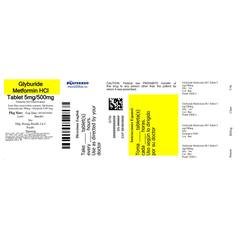
Medicine information on IMCURE is provided for educational purposes and is not a substitute for diagnosis, prescription or medical advice. Always follow your doctor’s or pharmacist’s instructions. Real product image from the U.S. National Library of Medicine's DailyMed listing for Glyburide And Metformin Hydrochloride Tablet, Film Coated. Packaging varies by brand and manufacturer.