
Anticholinergic (antimuscarinic) agentPrescription only (Schedule H)On NLEM 2022NPPA price ceilingJan Aushadhi listed
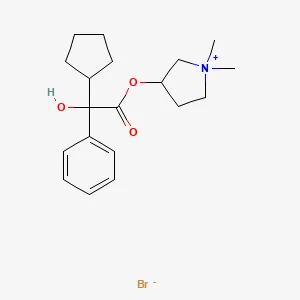
Glycopyrrolate
ग्लिकोपिरोलेट
Glycopyrrolate is an anticholinergic medicine. The US label we used is for oral tablets (1 mg and 2 mg) as an add-on to reduce peptic ulcer symptoms in adults. It is Schedule H in India. The label does not advise it for older adults and warns of glaucoma, gut slowing and heat stroke.
- Generic name
- Glycopyrrolate
- Used for
- Adjunct (add-on) to reduce symptoms of peptic ulcer in adults (oral tablets)
- Prescription status (India)
- Prescription only (Schedule H)
- On NLEM 2022
- Yes
- NPPA price ceiling
- Yes (scheduled formulation)
- Jan Aushadhi
- Listed
More facts
- Banned combinations
- No mention found in the list we checked
Compiled from official drug labels and Indian government sources. Always follow your doctor's or pharmacist's advice.
Safety at a glance
- AlcoholCaution in label textSee wording
- PregnancyCaution in label textSee wording
- BreastfeedingCaution in label textSee wording
- DrivingAvoid, per label textSee wording
- KidneyCaution in label textSee wording
- LiverNot mentioned in label text
Taken only from the label text cited on this page. "Not mentioned" does not mean safe. Ask your doctor or pharmacist.
What is glycopyrrolate used for?
This page follows the US label for glycopyrrolate oral tablets, 1 mg and 2 mg.
The label lists one use: in adults, to reduce symptoms of a peptic ulcer as an add-on to ulcer treatment.
It is not indicated as the only treatment, because healing of ulcers has not been shown.
The Indian lists we checked also include injection and other forms for use before surgery. Those uses are not covered by this label.
- Adult peptic ulcer symptoms (add-on treatment only)
It is an add-on to reduce symptoms of a peptic ulcer in adults, not a stand-alone ulcer treatment.
Source1
How does glycopyrrolate work?
The label says glycopyrrolate is an anticholinergic (antimuscarinic) agent.
It blocks acetylcholine on stomach parietal cells and reduces the volume and acidity of gastric secretions.
It reduces stomach acid and fluid by blocking acetylcholine on stomach cells.
Source1
How is glycopyrrolate taken? Dosage information
The US label for adults gives different schedules by tablet strength.
For the 1 mg tablet, the initial dosage is 1 mg three times daily (morning, early afternoon and bedtime). Some people may need 2 mg at bedtime. For maintenance, 1 mg twice daily is often enough.
For the 2 mg tablet, the label lists 2 mg two or three times daily at evenly spaced intervals.
The maximum daily dosage the label lists is 8 mg, and it says to use the lowest dose that controls symptoms.
The label says the 2 mg tablet is not meant for starting treatment or for maintenance when a 1 mg dose is enough.
Indian pack labels may differ from the US label. Your prescriber's instruction always comes first. Do not change the dose yourself.
Doses are set by tablet strength, with a label maximum of 8 mg a day. Your doctor sets the dose.
Source1
What are the side effects of glycopyrrolate?
Common
- The label lists blurred vision, dry mouth, constipation, nausea, dizziness, drowsiness, headache, decreased sweating and difficulty passing urine, among others.
- Common: dry mouth, blurred vision, constipation, nausea, dizziness, drowsiness, headache
- Reduced sweating and trouble passing urine
Serious: get help
- Serious risks include a sudden rise in eye pressure (acute glaucoma), gut blockage or slowing, confusion, and heat stroke in hot places.
- Rare allergic reactions, including anaphylaxis, have been reported.
- Serious: acute glaucoma (eye pain, vision changes)
- Serious: gut blockage or paralytic ileus, toxic megacolon
- Serious: heat stroke at high temperatures, mental confusion, anaphylaxis
Dry mouth, blurred vision and constipation are common. Eye pain, gut blockage and heat stroke need urgent care.
Source1
Who should be careful with glycopyrrolate? Warnings
The label contraindicates glycopyrrolate with glaucoma, urinary obstruction (including enlarged prostate), mechanical gut obstruction, gut motility disorders, bleeding gastrointestinal ulcer, active colitis, toxic megacolon and myasthenia gravis, or allergy to it.
Older adults: the label says tablets are not recommended in geriatric patients and may be contraindicated in some, because of urinary retention, bowel obstruction, heat prostration, arrhythmias, delirium and falls.
Heat: the label warns of heat prostration (fever and heat stroke), so avoid hot or very warm environments.
Driving: the label says it may impair mental or physical function, so avoid driving or hazardous tasks until you know how it affects you.
Kidneys: monitor people with renal impairment for anticholinergic side effects.
Pregnancy: human data are absent, and animal studies at non-toxic doses showed no developmental harm. Ask your doctor.
Breastfeeding: no data on milk or the infant, and it may suppress lactation, as other anticholinergics do.
Children: safety and effectiveness have not been established.
The label excerpt we reviewed does not describe alcohol. Ask your doctor or pharmacist.
- Glaucoma, urinary or gut obstruction, colitis, myasthenia gravis: contraindicated
- Older adults: not recommended by the label
- Avoid hot environments
- Do not drive until you know how it affects you
- Take care with kidney disease and heart disease
Not for older adults or people with glaucoma, urinary or gut obstruction. Avoid heat and driving until you know your response.
Source1
What interacts with glycopyrrolate?
- Other anticholinergic medicines
- Antipsychotics
- Solid oral potassium chloride
- Medicines whose absorption depends on gut movement
- The label says it is not recommended with other anticholinergic medicines, as effects add up.
- Examples include tricyclic antidepressants, antiepileptics, class I antiarrhythmics, antispasmodics and amantadine.
- Taking it with antipsychotics may worsen tardive dyskinesia.
- Slowed gut movement can change the absorption of other medicines, so the label does not recommend use with those affected.
- It is not recommended with solid oral forms of potassium chloride, because slow gut movement may worsen gut injury.
No match in this label text. Ask your pharmacist about any medicine you take.
Other anticholinergics, antipsychotics and potassium chloride tablets are the main concerns.
Source1
What happens in an overdose of glycopyrrolate?
The label says overdose gives excess anticholinergic effects such as flushing, high temperature, fast heartbeat, ileus, urinary retention and light sensitivity.
Brain effects such as agitation and seizures may also occur.
The label advises contacting a poison control centre. In India, go to the nearest hospital emergency department.
Overdose can cause high temperature, fast heartbeat, urinary retention and seizures. Get emergency care.
Source1
How should glycopyrrolate be stored?
The label says to store at 20 to 25 degrees C.
It should be kept in a tight, light-resistant container with a child-resistant closure.
Store at room temperature in a tight, light-resistant container.
Source1
Is glycopyrrolate prescription-only? Legal status in India
In the Drugs Rules 1945 schedules we checked, Glycopyrrolate appears as Schedule H, serial 230 (rules 65 and 97).
The National List of Essential Medicines 2022 lists these forms: Injection 0.2 mg/mL; Tablet 7.5 mg; Nasal Spray 0.5mg.
The National Pharmaceutical Pricing Authority (NPPA) lists ceiling prices for the formulations in the table below. A seller cannot charge more than the ceiling per unit.
We found no mention of Glycopyrrolate in the banned-combination list we checked.
| Formulation | Strength | Unit | Ceiling price per unit | List date |
|---|---|---|---|---|
| Injection | 0.2 mg/ml | 1 ml | Rs 12.25 | As on 30.09.2020 |
It needs a prescription in India. Check the pack and ask your pharmacist. Listed ceilings are for the injection only.
Glycopyrrolate price ceilings and Jan Aushadhi options
The ceiling price is the most a seller may charge per unit for a scheduled formulation. Actual brand prices are usually at or below it. Check the pack and seller for the real price.
Jan Aushadhi (PMBJP) product rows we found for Glycopyrrolate are listed next.
Glycopyrrolate Injection IP 0.2mg, pack 1 ml.
Glycopyrrolate Tablet 1Mg, pack 10's.
Glycopyrrolate Tablet 2Mg, pack 10's.
We do not show a brand price here. Prices change, so confirm with the seller.
Ceiling prices and Jan Aushadhi rows are listed where found. Always check the pack and seller.
Frequently asked questions
What is glycopyrrolate used for?
The US label for oral tablets lists it as an add-on to reduce symptoms of a peptic ulcer in adults.
Source1
What are the side effects of glycopyrrolate?
The label lists dry mouth, blurred vision, constipation, nausea, dizziness, drowsiness and decreased sweating, among others.
Source1
Can I take glycopyrrolate with alcohol?
The label excerpt we reviewed does not describe alcohol. It can cause drowsiness, so ask your doctor or pharmacist.
Source1
Is glycopyrrolate suitable for older adults?
The label says tablets are not recommended in geriatric patients and may be contraindicated in some. Ask your doctor.
Source1
Can glycopyrrolate cause heat stroke?
Yes. The label warns of heat prostration with fever and heat stroke, so avoid hot environments.
Source1
Can I drive after taking glycopyrrolate?
The label says it may impair mental or physical function. It advises not driving until you know how it affects you.
Source1
Sources
- 1U.S. FDA-approved label (DailyMed) (498bce66-6072-4212-8413-ff9888c58f9c) Open source · 2026-10-15
- 2Drugs Rules 1945, Schedules (2022 consolidation) (Schedule H, serial 230 (rules 65 and 97)) Open source · 2026-10-15
- 3National List of Essential Medicines 2022 (page 60) Open source · 2026-10-15
- 4NPPA price ceiling list (All scheduled (NLEM 2015), page 9) Open source · 2026-10-15
- 5PMBJP (Jan Aushadhi) product list (p32:sno715) Open source · 2026-10-15
- 6PMBJP (Jan Aushadhi) product list (p93:sno2026) Open source · 2026-10-15
- 7PMBJP (Jan Aushadhi) product list (p93:sno2027) Open source · 2026-10-15
Compiled by software from the sources above and checked by automated rules. Last checked: 2026-10-15 · How we use sources · Report a correction
This information is educational and is not a substitute for advice from your doctor or pharmacist. It does not tell you what dose you personally should take. In an emergency call 112.