
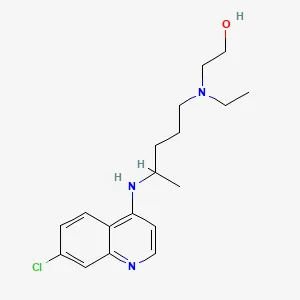
4-aminoquinolineIndian prescription status not found in lists checkedOn NLEM 2022NPPA price ceilingJan Aushadhi listed
Hydroxychloroquine
हाइड्रॉक्सीक्लोरोक्वीन
Hydroxychloroquine tablets are used for uncomplicated malaria, malaria prevention where chloroquine resistance is not reported, and for lupus and rheumatoid arthritis. The label warns of irreversible retinal damage and heart rhythm effects, so eye checks are recommended. Ask your doctor or pharmacist before use.
- Generic name
- Hydroxychloroquine
- Used for
- Treating and preventing malaria in chloroquine-sensitive areas, and for lupus and rheumatoid arthritis.
- Label used
- Tablets label, oral, DailyMed set a5b3455a, effective 2026-01
- Prescription status (India)
- Not found in the Schedule H/H1/X/G lists we checked
- On NLEM 2022
- Yes (Tablet 200 mg; Tablet 400 mg)
- NPPA price ceiling
- Yes (scheduled formulation)
More facts
- Jan Aushadhi
- Listed (2 product rows)
- Banned combinations
- None found in the list we checked
Compiled from official drug labels and Indian government sources. Always follow your doctor's or pharmacist's advice.
Safety at a glance
- AlcoholNot mentioned in label text
- PregnancyNot mentioned in label text
- BreastfeedingCaution in label textSee wording
- DrivingCaution in label textSee wording
- KidneyCaution in label textSee wording
- LiverNot mentioned in label text
Taken only from the label text cited on this page. "Not mentioned" does not mean safe. Ask your doctor or pharmacist.
What is hydroxychloroquine used for?
The label describes treatment of uncomplicated malaria and prevention in areas without chloroquine resistance. It is not recommended for complicated malaria or resistant strains.
The label text also covers rheumatoid arthritis and lupus erythematosus. It does not prevent relapse of P. vivax or P. ovale malaria.
- Uncomplicated malaria
- Malaria prevention in sensitive areas
- Lupus erythematosus
- Rheumatoid arthritis
It is used for malaria, lupus and rheumatoid arthritis.
Source1
How does hydroxychloroquine work?
The label says the precise mechanism against malaria parasites is not known. It may concentrate in acid vesicles of the parasite and block heme polymerisation.
For rheumatoid arthritis and lupus, the label says the mechanisms behind the anti-inflammatory effects are unknown.
The exact way it works is not known.
How is hydroxychloroquine usually taken?
This page covers the US label for hydroxychloroquine tablets taken by mouth, with the dosing the label gives for adults and, where the label says so, children.
This is label-level information, not personal advice. Indian pack labels may differ, and your prescriber's instruction always comes first.
For adults, the label says to take the tablets with a meal or a glass of milk. Doses differ for malaria prevention, malaria treatment and lupus.
For malaria, doses can be weight-based in adults and children. Prevention starts 2 weeks before exposure and continues 4 weeks after leaving the area.
The label says the film-coated tablets cannot be divided, so they should not be used for patients under 31 kg. For lupus, doses above 400 mg a day are not recommended.
- Take with a meal or milk
- Weight-based dosing for malaria
- Malaria prevention starts before travel
- Tablets cannot be divided
Take with a meal or milk, and the dose depends on the condition and body weight.
Source1
What are the side effects of hydroxychloroquine?
Common
- The label lists nausea, vomiting, diarrhoea, abdominal pain and fatigue among reported effects.
- Nausea, vomiting, diarrhoea
- Abdominal pain
- Vision changes and retinopathy
- Heart rhythm changes
- Blood disorders
Serious: get help
- Serious effects include irreversible retinopathy, blood disorders, cardiomyopathy and QT prolongation with ventricular arrhythmias.
Stomach upset is common; eye and heart effects can be serious.
Source1
Who should be careful with hydroxychloroquine?
The label says irreversible retinal damage has been seen. Risks rise with higher doses per body weight, use beyond five years, poor kidney filtration, tamoxifen and existing macular disease.
A baseline eye exam is recommended in the first year, with yearly checks for people with risk factors. People of Asian descent may need a wider visual field test.
It is contraindicated with known hypersensitivity to 4-aminoquinolines. Haemolysis was reported in G6PD deficiency. Caution is advised in nursing women, and infants are very sensitive to these drugs.
- Retinal damage with long use
- Annual eye checks for risk groups
- QT prolongation and cardiomyopathy
- G6PD deficiency
- Kidney impairment
- Nursing mothers
Regular eye checks matter, and heart, blood and kidney conditions need extra care.
Source1
What medicines interact with hydroxychloroquine?
- Digoxin
- Insulin and antidiabetic drugs
- QT-prolonging drugs
- Mefloquine and antiepileptics
- The label says it can raise digoxin levels and enhance the effect of insulin and antidiabetic drugs.
- It should not be given with other drugs that prolong the QT interval.
- Mefloquine and other seizure-threshold-lowering drugs raise convulsion risk, and antiepileptic activity may be impaired.
No match in this label text. Ask your pharmacist about any medicine you take.
It interacts with digoxin, diabetes medicines, QT-prolonging drugs and some seizure-related medicines.
Source1
How should hydroxychloroquine be stored?
The label gives a storage range of 20 to 25 degrees C.
The label also says to keep the container tightly closed.
Follow the storage line on your own pack, and keep medicines out of the reach of children.
Follow the storage instructions on your pack.
Source1
Is hydroxychloroquine a prescription medicine in India?
We did not find hydroxychloroquine in the Drugs Rules 1945 Schedule H, H1, X or G rows we checked, so we cannot state its Indian prescription status from our lists. Ask your pharmacist or doctor.
Hydroxychloroquine is on the National List of Essential Medicines 2022. Listed forms include: Tablet 200 mg (page 63); Tablet 400 mg (page 63).
NPPA lists ceiling prices for scheduled hydroxychloroquine formulations. The table shows the rows we found. Check NPPA directly for the current list.
The Jan Aushadhi (PMBJP) list we checked has 2 product rows that mention hydroxychloroquine. We did not capture prices for them.
| List | Formulation and strength | Unit | Ceiling price (Rs) |
|---|---|---|---|
| All scheduled (NLEM 2015), as on 30.09.2020, page 10 | Tablet 200 mg | 1 Tablet | 5.91 |
| All scheduled (NLEM 2015), as on 30.09.2020, page 10 | Tablet 400 mg | 1 Tablet | 11.91 |
We did not find hydroxychloroquine in the Schedule H, H1, X or G rows we checked, on NLEM 2022 and with NPPA price ceilings.
What is the price ceiling for hydroxychloroquine?
NPPA ceiling prices set the most a seller can charge per unit for the listed formulations, before local taxes. They are ceilings, not the price you will always pay.
Jan Aushadhi lists hydroxychloroquine products including Hydroxychloroquine Tablets IP 200 mg 200 mg; Hydroxychloroquine Tablet IP 400 mg 400 mg. We have not shown a price for them. Check the pack and the seller for the actual price.
NPPA lists per-unit ceilings where a formulation is scheduled. Check the pack and seller.
Frequently asked questions
Can I drink alcohol while taking hydroxychloroquine?
The label we reviewed does not say. Ask your doctor or pharmacist.
Source1
Is hydroxychloroquine safe in pregnancy and breastfeeding?
The label reports no rise in birth defects in published live births, and cautions for nursing women as the drug passes into milk. Ask your doctor or pharmacist.
Source1
Should hydroxychloroquine be taken with food?
The label says to take it with a meal or a glass of milk. Ask your doctor or pharmacist for advice.
Source1
Can hydroxychloroquine affect driving or alertness?
The label lists vision disturbances and dizziness-type effects. The label we reviewed gives no driving advice. Ask your doctor or pharmacist.
Source1
Can children or older adults take hydroxychloroquine?
The label describes weight-based dosing for children but says tablets should not be used under 31 kg. Chronic use safety in children is not established. Ask your doctor.
Source1
Sources
- 1U.S. FDA-approved label (DailyMed) (a5b3455a-e842-7d4b-e053-2995a90adee3) Open source · 2026-10-15
- 2U.S. FDA-approved label (DailyMed) (8aec894d-5711-4079-b167-240713bf04f2) Open source · 2026-10-15
- 3National List of Essential Medicines 2022 (63) Open source · 2026-10-15
- 4NPPA price ceiling list (All scheduled (NLEM 2015) 10) Open source · 2026-10-15
- 5PMBJP (Jan Aushadhi) product list (p17:sno395) Open source · 2026-10-15
Compiled by software from the sources above and checked by automated rules. Last checked: 2026-10-15 · How we use sources · Report a correction
This information is educational and is not a substitute for advice from your doctor or pharmacist. It does not tell you what dose you personally should take. In an emergency call 112.