
Novolog
11 DESCRIPTION Insulin aspart is a rapid-acting human insulin analog homologous with regular human insulin with the exception of a single substitution of the amino acid proline by aspartic acid in position B28, and is produced by recombinant DNA technology utilizing Saccharomyces cerevisiae (baker's yeast). Insulin aspart has the empirical formula C 256 H 381 N 65 0 79 S 6 and a molecular weight of 5825.8 Da. Figure 1. Structural formula of insulin aspart. NOVOLOG (insulin aspart) injection is a sterile, clear, and colorless solution for subcutaneous or intravenous use. Each mL contains 100 units of insulin aspart and the inactive ingredients: disodium hydrogen phosphate dihydrate (1.25 mg), glycerin (16.0 mg), metacresol (1.72 mg), phenol (1.50 mg), sodium chloride (0.58 mg), zinc (19.6 mcg), and Water for Injection, USP. NOVOLOG has a pH of 7.2-7.6. Hydrochloric acid 10% and/or sodium hydroxide 10% may be added to adjust pH. Fig. 1 - Structural Formula of Insulin Aspart
Information page. Not necessarily available for purchase.
What is Novolog?
11 DESCRIPTION Insulin aspart is a rapid-acting human insulin analog homologous with regular human insulin with the exception of a single substitution of the amino acid proline by aspartic acid in position B28, and is produced by recombinant DNA technology utilizing Saccharomyces cerevisiae (baker's yeast). Insulin aspart has the empirical formula C 256 H 381 N 65 0 79 S 6 and a molecular weight of 5825.8 Da. Figure 1. Structural formula of insulin aspart. NOVOLOG (insulin aspart) injection is a sterile, clear, and colorless solution for subcutaneous or intravenous use. Each mL contains 100 units of insulin aspart and the inactive ingredients: disodium hydrogen phosphate dihydrate (1.25 mg), glycerin (16.0 mg), metacresol (1.72 mg), phenol (1.50 mg), sodium chloride (0.58 mg), zinc (19.6 mcg), and Water for Injection, USP. NOVOLOG has a pH of 7.2-7.6. Hydrochloric acid 10% and/or sodium hydroxide 10% may be added to adjust pH. Fig. 1 - Structural Formula of Insulin Aspart
Uses of Novolog
Established uses
- 1 INDICATIONS AND USAGE NOVOLOG is indicated to improve glycemic control in adults and pediatric patients with diabetes mellitus.
- NOVOLOG is rapid acting human insulin analog indicated to improve glycemic control in adults and pediatric patients with diabetes mellitus ( 1 ).
How Novolog works
In more detail: 12.1 Mechanism of Action The primary activity of insulin, including NOVOLOG is the regulation of glucose metabolism. Insulin and its analogs lower blood glucose by stimulating peripheral glucose uptake, especially by skeletal muscle and fat, and by inhibiting hepatic glucose production. Insulin inhibits lipolysis and proteolysis, and enhances protein synthesis.
How to take Novolog
2 DOSAGE AND ADMINISTRATION See Full Prescribing Information for important preparation, administration, and dosage instructions ( 2.1, 2.2, 2.3, 2.4, 2.5 ). • Subcutaneous injection ( 2.2 ): o Inject subcutaneously within 5-10 minutes before a meal into the abdominal area, thigh, buttocks or upper arm. o Rotate injection sites within the same region from one injection to the next to reduce risk of lipodystrophy and localized cutaneous amyloidosis. o Should generally be used in regimens with an intermediate- or long-acting insulin. • Continuous Subcutaneous Infusion (Insulin Pump) ( 2.2 ): o Refer to the insulin infusion pump user manual to see if NOVOLOG can be used. Use in accordance with the insulin pump instructions for use. o Administer by continuous subcutaneous infusion using an insulin pump in a region recommended in the instructions from the pump manufacturer. o Rotate the injection sites within the same region from one injection to the next to reduce the risk of lipodystrophy and localized cutaneous amyloidosis. o Do not mix with other insulins or diluents in the pump. • Intravenous Administration ( 2.2 ) : o Dilute NOVOLOG to concentrations from 0.05 unit/mL to 1 unit/mL
Dosage
Follow the dose prescribed by your doctor or pharmacist. The ranges below are general information, not a personal prescription.
- Adults
- 2 DOSAGE AND ADMINISTRATION See Full Prescribing Information for important preparation, administration, and dosage instructions ( 2.1, 2.2, 2.3, 2.4, 2.5 ). • Subcutaneous injection ( 2.2 ): o Inject subcutaneously within 5-10 minutes before a meal into the abdominal area, thigh, buttocks or upper arm. o Rotate injection sites within the same region from one injection to the next to reduce risk of lipodystrophy and localized cutaneous amyloidosis. o Should generally be used in regimens with an intermediate- or long-acting insulin. • Continuous Subcutaneous Infusion (Insulin Pump) ( 2.2 ): o Refer to the insulin infusion pump user manual to see if NOVOLOG can be used. Use in accordance with the insulin pump instructions for use. o Administer by continuous subcutaneous infusion using an insulin pump in a region recommended in the instructions from the pump manufacturer. o Rotate the injection sites within the same region from one injection to the next to reduce the risk of lipodystrophy and localized cutaneous amyloidosis. o Do not mix with other insulins or diluents in the pump. • Intravenous Administration ( 2.2 ) : o Dilute NOVOLOG to concentrations from 0.05 unit/mL to 1 unit/mL
Side effects of Novolog
Common
- 6 ADVERSE REACTIONS The following adverse reactions are also discussed elsewhere: • Hypoglycemia [see Warnings and Precautions ( 5.3 )] • Hypoglycemia Due to Medication Errors [see Warnings and Precautions (5.4 )] • Hypersensitivity reactions [see Warnings and Precautions ( 5.5 )] • Hypokalemia [see Warnings and Precautions ( 5.6 )] Adverse reactions observed with NOVOLOG include: hypoglycemia, allergic reactions, local injection site reactions, lipodystrophy, rash, and pruritus ( 6 ).
- To report SUSPECTED ADVERSE REACTIONS, contact Novo Nordisk Inc.
- at 1-800-727-6500 or FDA at 1-800-FDA-1088 or www.fda.gov/medwatch.
- 6.1 Clinical Trial Experience Because clinical trials are conducted under widely varying designs, the adverse reaction rates reported in one clinical trial may not be easily compared to those rates reported in another clinical trial, and may not reflect the rates actually observed in clinical practice.
- The safety of NOVOLOG was evaluated in two treat-to-target trials of 6 months duration, conducted in patients with type 1 diabetes or type 2 diabetes [see Clinical Studies (14) ].
- The data in Table 1 reflect the exposure of 596 patients with type 1 diabetes to NOVOLOG in
Warnings and who should not take it
Who should NOT take Novolog?
- 4 CONTRAINDICATIONS NOVOLOG is contraindicated: • During episodes of hypoglycemia [see Warnings and Precautions ( 5.3 )] • In patients with hypersensitivity to NOVOLOG or one of its excipients, [see Warnings and Precautions ( 5.5 )] • During episodes of hypoglycemia ( 4 ).
- Hypersensitivity to NOVOLOG or one of its excipients.
Overdose
10 OVERDOSAGE Excess insulin administration may cause hypoglycemia and hypokalemia [see Warnings and Precautions ( 5.3 , 5.6 )] . Mild episodes of hypoglycemia usually can be treated with oral glucose. Adjustments in drug dosage, meal patterns, or exercise may be needed. More severe episodes with coma, seizure, or neurologic impairment may be treated with intramuscular/subcutaneous glucagon or concentrated intravenous glucose. Sustained carbohydrate intake and observation may be necessary because hypoglycemia may recur after apparent clinical recovery. Hypokalemia must be corrected appropriately.
Safety at a glance
8.1 Pregnancy Risk Summary Available information from published randomized controlled trials with insulin aspart use during the second trimester of pregnancy have not reported an association with insulin aspart and major birth defects or adverse maternal or fetal outcomes [see Data] . There are risks to the mother and fetus associated with poorly controlled diabetes in pregnancy [see Clinical Considerations] . In animal reproduction studies, administration of subcutaneous insulin aspart to pregnant rats and rabbits during the period of organogenesis did not cause adverse developmental effects at exposures 8-times and equal to the human subcutaneous dose of 1 unit/kg/day, respectively. Pre- and post-implantation losses and visceral/skeletal abnormalities were seen at higher exposures, which are considered secondary to maternal hypoglycemia. These effects were similar to those observed in rats administered regular human insulin [see Data] . In the U.S. general population, the estimated background risk of major birth defects and miscarriage in clinically recognized pregnancies is 2 to 4% and 15 to 20%, respectively. The estimated background risk of major birth defects is 6 to 10% in w
Children and elderly
Children
8.4 Pediatric Use The safety and effectiveness of NOVOLOG to improve glycemic control have been established in pediatric patients with diabetes mellitus. Use of NOVOLOG for this indication is supported by evidence from an adequate and well-controlled study in 283 pediatric patients with type 1 diabetes mellitus aged 6 to 18 years and from studies in adults with diabetes mellitus [see Adverse Reactions ( 6.1 ), Clinical Pharmacology ( 12.3 ), and Clinical Studies ( 14 )] .
Elderly
8.5 Geriatric Use Of the total number of patients (n=1,375) treated with NOVOLOG in 3 controlled clinical studies, 2.6% (n=36) were 65 years of age or over. One-half of these patients had type 1 diabetes (18/1285) and the other half had type 2 diabetes (18/90). The HbA 1c response to NOVOLOG, as compared to regular human insulin, did not differ by age.
Interactions
Medicine and medicine
- 7 DRUG INTERACTIONS The table below presents clinically significant drug interactions with NOVOLOG.
- Drugs That May Increase the Risk of Hypoglycemia Drugs: Antidiabetic agents, ACE inhibitors, angiotensin II receptor blocking agents, disopyramide, fibrates, fluoxetine, monoamine oxidase inhibitors, pentoxifylline, pramlintide, salicylates, somatostatin analog (e.g., octreotide), and sulfonamide antibiotics.
- Intervention: Dose adjustment and increased frequency of glucose monitoring may be required when NOVOLOG is concomitantly administered with these drugs.
- Drugs That May Decrease the Blood Glucose Lowering Effect of NOVOLOG Drugs: Atypical antipsychotics (e.g., olanzapine and clozapine), corticosteroids, danazol, diuretics, estrogens, glucagon, isoniazid, niacin, oral contraceptives, phenothiazines, progestogens (e.g., in oral contraceptives), protease inhibitors, somatropin, sympathomimetic agents (e.g., albuterol, epinephrine, terbutaline), and thyroid hormones.
- Intervention: Dose adjustment and increased frequency of glucose monitoring may be required when NOVOLOG is concomitantly administered with these drugs.
- Drugs That May Increase or Decrease the Blood Glucose Lowering Effe
Frequently asked questions
What is Novolog used for?
1 INDICATIONS AND USAGE NOVOLOG is indicated to improve glycemic control in adults and pediatric patients with diabetes mellitus., NOVOLOG is rapid acting human insulin analog indicated to improve glycemic control in adults and pediatric patients with diabetes mellitus ( 1 )..
How should I take Novolog?
2 DOSAGE AND ADMINISTRATION See Full Prescribing Information for important preparation, administration, and dosage instructions ( 2.1, 2.2, 2.3, 2.4, 2.5 ). • Subcutaneous injection ( 2.2 ): o Inject subcutaneously within 5-10 minutes before a meal into the abdominal area, thigh, buttocks or upper arm. o Rotate injection sites within the same region from one injection to the next to reduce risk of lipodystrophy and localized cutaneous amyloidosis. o Should generally be used in regimens with an intermediate- or long-acting insulin. • Continuous Subcutaneous Infusion (Insulin Pump) ( 2.2 ): o Refer to the insulin infusion pump user manual to see if NOVOLOG can be used. Use in accordance with the insulin pump instructions for use. o Administer by continuous subcutaneous infusion using an insulin pump in a region recommended in the instructions from the pump manufacturer. o Rotate the injection sites within the same region from one injection to the next to reduce the risk of lipodystrophy and localized cutaneous amyloidosis. o Do not mix with other insulins or diluents in the pump. • Intravenous Administration ( 2.2 ) : o Dilute NOVOLOG to concentrations from 0.05 unit/mL to 1 unit/mL
What are the common side effects?
6 ADVERSE REACTIONS The following adverse reactions are also discussed elsewhere: • Hypoglycemia [see Warnings and Precautions ( 5.3 )] • Hypoglycemia Due to Medication Errors [see Warnings and Precautions (5.4 )] • Hypersensitivity reactions [see Warnings and Precautions ( 5.5 )] • Hypokalemia [see Warnings and Precautions ( 5.6 )] Adverse reactions observed with NOVOLOG include: hypoglycemia, allergic reactions, local injection site reactions, lipodystrophy, rash, and pruritus ( 6 )., To report SUSPECTED ADVERSE REACTIONS, contact Novo Nordisk Inc., at 1-800-727-6500 or FDA at 1-800-FDA-1088 or www.fda.gov/medwatch., 6.1 Clinical Trial Experience Because clinical trials are conducted under widely varying designs, the adverse reaction rates reported in one clinical trial may not be easily compared to those rates reported in another clinical trial, and may not reflect the rates actually observed in clinical practice., The safety of NOVOLOG was evaluated in two treat-to-target trials of 6 months duration, conducted in patients with type 1 diabetes or type 2 diabetes [see Clinical Studies (14) ]., The data in Table 1 reflect the exposure of 596 patients with type 1 diabetes to NOVOLOG in.
Who should not take Novolog?
4 CONTRAINDICATIONS NOVOLOG is contraindicated: • During episodes of hypoglycemia [see Warnings and Precautions ( 5.3 )] • In patients with hypersensitivity to NOVOLOG or one of its excipients, [see Warnings and Precautions ( 5.5 )] • During episodes of hypoglycemia ( 4 ).; Hypersensitivity to NOVOLOG or one of its excipients..
Can I take Novolog during pregnancy?
8.1 Pregnancy Risk Summary Available information from published randomized controlled trials with insulin aspart use during the second trimester of pregnancy have not reported an association with insulin aspart and major birth defects or adverse maternal or fetal outcomes [see Data] . There are risks to the mother and fetus associated with poorly controlled diabetes in pregnancy [see Clinical Considerations] . In animal reproduction studies, administration of subcutaneous insulin aspart to pregnant rats and rabbits during the period of organogenesis did not cause adverse developmental effects at exposures 8-times and equal to the human subcutaneous dose of 1 unit/kg/day, respectively. Pre- and post-implantation losses and visceral/skeletal abnormalities were seen at higher exposures, which are considered secondary to maternal hypoglycemia. These effects were similar to those observed in rats administered regular human insulin [see Data] . In the U.S. general population, the estimated background risk of major birth defects and miscarriage in clinically recognized pregnancies is 2 to 4% and 15 to 20%, respectively. The estimated background risk of major birth defects is 6 to 10% in w
Can children take Novolog?
8.4 Pediatric Use The safety and effectiveness of NOVOLOG to improve glycemic control have been established in pediatric patients with diabetes mellitus. Use of NOVOLOG for this indication is supported by evidence from an adequate and well-controlled study in 283 pediatric patients with type 1 diabetes mellitus aged 6 to 18 years and from studies in adults with diabetes mellitus [see Adverse Reactions ( 6.1 ), Clinical Pharmacology ( 12.3 ), and Clinical Studies ( 14 )] .
Does Novolog interact with other medicines?
7 DRUG INTERACTIONS The table below presents clinically significant drug interactions with NOVOLOG.; Drugs That May Increase the Risk of Hypoglycemia Drugs: Antidiabetic agents, ACE inhibitors, angiotensin II receptor blocking agents, disopyramide, fibrates, fluoxetine, monoamine oxidase inhibitors, pentoxifylline, pramlintide, salicylates, somatostatin analog (e.g., octreotide), and sulfonamide antibiotics.; Intervention: Dose adjustment and increased frequency of glucose monitoring may be required when NOVOLOG is concomitantly administered with these drugs.; Drugs That May Decrease the Blood Glucose Lowering Effect of NOVOLOG Drugs: Atypical antipsychotics (e.g., olanzapine and clozapine), corticosteroids, danazol, diuretics, estrogens, glucagon, isoniazid, niacin, oral contraceptives, phenothiazines, progestogens (e.g., in oral contraceptives), protease inhibitors, somatropin, sympathomimetic agents (e.g., albuterol, epinephrine, terbutaline), and thyroid hormones.; Intervention: Dose adjustment and increased frequency of glucose monitoring may be required when NOVOLOG is concomitantly administered with these drugs.; Drugs That May Increase or Decrease the Blood Glucose Lowering Effe.
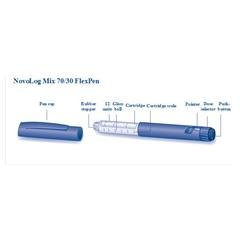
Medicine information on IMCURE is provided for educational purposes and is not a substitute for diagnosis, prescription or medical advice. Always follow your doctor’s or pharmacist’s instructions. Real product image from the U.S. National Library of Medicine's DailyMed listing for Novolog Mix 70/30 (Insulin Aspart) Injection, Suspension. Packaging varies by brand and manufacturer.