
Basaglar Kwikpen
11 DESCRIPTION Insulin glargine is a long-acting human insulin analog produced by recombinant DNA technology utilizing a non-pathogenic laboratory strain of Escherichia coli (K12) as the production organism. Insulin glargine differs from human insulin in that the amino acid asparagine at position A21 is replaced by glycine and two arginines are added to the C-terminus of the B-chain. Chemically, insulin glargine is 21 A -Gly-30 B -a-L-Arg-30 B b-L-Arg-human insulin and has the empirical formula C 267 H 404 N 72 O 78 S 6 and a molecular weight of 6.063 kDa. Insulin glargine has the following structural formula: BASAGLAR (insulin glargine) injection is a sterile clear and colorless aqueous solution for subcutaneous use. Each mL contains 100 units of insulin glargine (3.6378 mg). The 3 mL BASAGLAR prefilled pen presentations contain the following inactive ingredients per mL: glycerin (17 mg), metacresol (2.7 mg), zinc oxide (content adjusted to provide 30 mcg zinc ion), and Water for Injection, USP. The pH is adjusted by addition of aqueous solutions of hydrochloric acid 10% and/or sodium hydroxide 10%. BASAGLAR has a pH of approximately 4. Structural Formula
Information page. Not necessarily available for purchase.
What is Basaglar Kwikpen?
11 DESCRIPTION Insulin glargine is a long-acting human insulin analog produced by recombinant DNA technology utilizing a non-pathogenic laboratory strain of Escherichia coli (K12) as the production organism. Insulin glargine differs from human insulin in that the amino acid asparagine at position A21 is replaced by glycine and two arginines are added to the C-terminus of the B-chain. Chemically, insulin glargine is 21 A -Gly-30 B -a-L-Arg-30 B b-L-Arg-human insulin and has the empirical formula C 267 H 404 N 72 O 78 S 6 and a molecular weight of 6.063 kDa. Insulin glargine has the following structural formula: BASAGLAR (insulin glargine) injection is a sterile clear and colorless aqueous solution for subcutaneous use. Each mL contains 100 units of insulin glargine (3.6378 mg). The 3 mL BASAGLAR prefilled pen presentations contain the following inactive ingredients per mL: glycerin (17 mg), metacresol (2.7 mg), zinc oxide (content adjusted to provide 30 mcg zinc ion), and Water for Injection, USP. The pH is adjusted by addition of aqueous solutions of hydrochloric acid 10% and/or sodium hydroxide 10%. BASAGLAR has a pH of approximately 4. Structural Formula
Uses of Basaglar Kwikpen
Established uses
- 1 INDICATIONS AND USAGE BASAGLAR ® is indicated to improve glycemic control in adults and pediatric patients with type 1 diabetes mellitus and in adults with type 2 diabetes mellitus.
- BASAGLAR ® is a long-acting human insulin analog indicated to improve glycemic control in adults and pediatric patients with type 1 diabetes mellitus and in adults with type 2 diabetes mellitus.
- ( 1 ) Limitations of Use : Not recommended for treating diabetic ketoacidosis.
- ( 1 ) Limitations of Use BASAGLAR is not recommended for the treatment of diabetic ketoacidosis.
How Basaglar Kwikpen works
In more detail: 12.1 Mechanism of Action The primary activity of insulin, including insulin glargine, is regulation of glucose metabolism. Insulin and its analog lower blood glucose by stimulating peripheral glucose uptake, especially by skeletal muscle and fat, and by inhibiting hepatic glucose production. Insulin inhibits lipolysis and proteolysis, and enhances protein synthesis.
How to take Basaglar Kwikpen
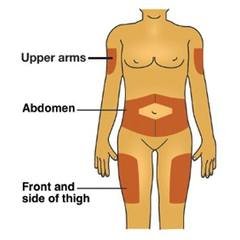
2 DOSAGE AND ADMINISTRATION Individualize dosage based on metabolic needs, blood glucose monitoring, glycemic control, type of diabetes, prior insulin use. ( 2.2 , 2.3 , 2.4 ) Administer subcutaneously once daily at any time of day, but at the same time every day. ( 2.2 ) Rotate injection sites into the abdominal area, thigh, or deltoid to reduce the risk of lipodystrophy and localized cutaneous amyloidosis. ( 2.1 ) Closely monitor glucose when converting to BASAGLAR and during initial weeks thereafter. ( 2.2 ) Do not dilute or mix with any other insulin or solution. ( 2.1 ) 2.1 Important Administration Instructions Always check insulin labels before administration [see Warnings and Precautions ( 5.4 )] . Visually inspect BASAGLAR prefilled pens for particulate matter and discoloration prior to administration. Only use if the solution is clear and colorless with no visible particles. Administer BASAGLAR subcutaneously into the abdominal area, thigh, or deltoid, and rotate injection sites within the same region from one injection to the next to reduce the risk of lipodystrophy and localized cutaneous amyloidosis. Do not inject into areas of lipodystrophy or localized cutaneous amylo
Dosage
Follow the dose prescribed by your doctor or pharmacist. The ranges below are general information, not a personal prescription.
- Adults
- 2 DOSAGE AND ADMINISTRATION Individualize dosage based on metabolic needs, blood glucose monitoring, glycemic control, type of diabetes, prior insulin use. ( 2.2 , 2.3 , 2.4 ) Administer subcutaneously once daily at any time of day, but at the same time every day. ( 2.2 ) Rotate injection sites into the abdominal area, thigh, or deltoid to reduce the risk of lipodystrophy and localized cutaneous amyloidosis. ( 2.1 ) Closely monitor glucose when converting to BASAGLAR and during initial weeks thereafter. ( 2.2 ) Do not dilute or mix with any other insulin or solution. ( 2.1 ) 2.1 Important Administration Instructions Always check insulin labels before administration [see Warnings and Precautions ( 5.4 )] . Visually inspect BASAGLAR prefilled pens for particulate matter and discoloration prior to administration. Only use if the solution is clear and colorless with no visible particles. Administer BASAGLAR subcutaneously into the abdominal area, thigh, or deltoid, and rotate injection sites within the same region from one injection to the next to reduce the risk of lipodystrophy and localized cutaneous amyloidosis. Do not inject into areas of lipodystrophy or localized cutaneous amylo
Side effects of Basaglar Kwikpen
Common
- 6 ADVERSE REACTIONS The following adverse reactions are discussed elsewhere: Hypoglycemia [see Warnings and Precautions ( 5.3 )] .
- Hypoglycemia Due to Medication Errors [see Warnings and Precautions ( 5.4 )] .
- Hypersensitivity Reactions [see Warnings and Precautions ( 5.5 )] .
- Hypokalemia [see Warnings and Precautions ( 5.6 )] .
- Adverse reactions commonly (≥5%) associated with insulin glargine products are: Hypoglycemia, allergic reactions, injection site reaction, lipodystrophy, pruritus, rash, edema, and weight gain.
- ( 6.1 ) To report SUSPECTED ADVERSE REACTIONS, contact Eli Lilly and Company at 1-800-LillyRx (1-800-545-5979) or FDA at 1-800-FDA-1088 or www.fda.gov/medwatch.
Warnings and who should not take it
Who should NOT take Basaglar Kwikpen?
- 4 CONTRAINDICATIONS BASAGLAR is contraindicated: During episodes of hypoglycemia [see Warnings and Precautions ( 5.3 )] .
- In patients with hypersensitivity to insulin glargine or any of the excipients in BASAGLAR [see Warnings and Precautions ( 5.5 )] .
- During episodes of hypoglycemia.
- ( 4 ) Hypersensitivity to BASAGLAR or any of its excipients.
- ( 4 )
Overdose
10 OVERDOSAGE Excess insulin administration relative to food intake, energy expenditure, or both may lead to severe and sometimes prolonged and life-threatening hypoglycemia and hypokalemia [see Warnings and Precautions ( 5.3 , 5.6 )] . Mild episodes of hypoglycemia can be treated with oral glucose. Adjustments in drug dosage, meal patterns, or physical activity level may be needed. More severe episodes with coma, seizure, or neurologic impairment may be treated with a glucagon product for emergency use or concentrated intravenous glucose. Sustained carbohydrate intake and observation may be necessary because hypoglycemia may recur after apparent clinical recovery. Hypokalemia must be corrected appropriately.
Safety at a glance
8.1 Pregnancy Risk Summary Published studies with use of insulin glargine products during pregnancy have not reported a clear association with insulin glargine products and adverse developmental outcomes (see Data). There are risks to the mother and fetus associated with poorly controlled diabetes in pregnancy (see Clinical Considerations). In animal reproduction studies, another insulin glargine product was administered to rats before, during and throughout pregnancy at doses up to 7 times the clinical dose of 10 units/day and to rabbits during organogenesis at doses approximately 2 times the clinical dose of 10 units/day. The effects of this other insulin glargine product did not generally differ from those observed with regular human insulin in rats or rabbits (see Data). The estimated background risk of major birth defects is 6-10% in women with pre-gestational diabetes with a HbA1c >7 and has been reported to be as high as 20-25% in women with a HbA1c >10. The estimated background risk of miscarriage for the indicated population is unknown. In the US general population, the estimated background risk of major birth defects and miscarriage in clinically recognized pregnancies is
Children and elderly
Children
8.4 Pediatric Use The safety and effectiveness of BASAGLAR have been established in pediatric patients (age 6 to 15 years) with type 1 diabetes based on an adequate and well-controlled trial of another insulin glargine product, 100 units/mL, in pediatric patients (age 6 to 15 years) with type 1 diabetes and additional data in adults with type 1 diabetes [see Clinical Studies ( 14.2 )] . The safety and effectiveness of BASAGLAR in pediatric patients younger than 6 years of age with type 1 diabetes and pediatric patients with type 2 diabetes has not been established. In the pediatric clinical trial, pediatric patients (age 6 to 15 years) with type 1 diabetes had a higher incidence of severe symptomatic hypoglycemia compared to the adults in trials with type 1 diabetes [see Adverse Reactions ( 6.1 )] .
Elderly
8.5 Geriatric Use Of the total number of subjects in clinical studies of patients with type 2 diabetes who were treated with BASAGLAR or another insulin glargine product, 100 units/mL, each in combination with oral agents in a controlled clinical trial environment, 28.3% were 65 and over, while 4.5% were 75 and over. No overall differences in safety or effectiveness were observed between these subjects and younger subjects, and other reported clinical experience has not identified differences in responses between the elderly and younger patients, but greater sensitivity of some older individuals cannot be ruled out. Nevertheless, caution should be exercised when BASAGLAR is administered to geriatric patients. In elderly patients with diabetes, the initial dosing, dose increments, and maintenance dosage should be conservative to avoid hypoglycemic reactions. Hypoglycemia may be difficult to recognize in the elderly.
Interactions
Medicine and medicine
- 7 DRUG INTERACTIONS Table 6 includes clinically significant drug interactions with BASAGLAR Table 6: Clinically Significant Drug Interactions with BASAGLAR Drugs That May Increase the Risk of Hypoglycemia Drugs: Antidiabetic agents, ACE inhibitors, angiotensin II receptor blocking agents, disopyramide, fibrates, fluoxetine, monoamine oxidase inhibitors, pentoxifylline, pramlintide, salicylates, somatostatin analogs (e.g., octreotide), and sulfonamide antibiotics.
- Intervention: Dose reductions and increased frequency of glucose monitoring may be required when BASAGLAR is co-administered with these drugs.
- Drugs That May Decrease the Blood Glucose Lowering Effect of BASAGLAR Drugs: Atypical antipsychotics (e.g., olanzapine and clozapine), corticosteroids, danazol, diuretics, estrogens, glucagon, isoniazid, niacin, oral contraceptives, phenothiazines, progestogens (e.g., in oral contraceptives), protease inhibitors, somatropin, sympathomimetic agents (e.g., albuterol, epinephrine, terbutaline), and thyroid hormones Intervention: Dose increases and increased frequency of glucose monitoring may be required when BASAGLAR is co-administered with these drugs.
- Drugs That May Increase or Decr
Frequently asked questions
What is Basaglar Kwikpen used for?
1 INDICATIONS AND USAGE BASAGLAR ® is indicated to improve glycemic control in adults and pediatric patients with type 1 diabetes mellitus and in adults with type 2 diabetes mellitus., BASAGLAR ® is a long-acting human insulin analog indicated to improve glycemic control in adults and pediatric patients with type 1 diabetes mellitus and in adults with type 2 diabetes mellitus., ( 1 ) Limitations of Use : Not recommended for treating diabetic ketoacidosis., ( 1 ) Limitations of Use BASAGLAR is not recommended for the treatment of diabetic ketoacidosis..
How should I take Basaglar Kwikpen?
2 DOSAGE AND ADMINISTRATION Individualize dosage based on metabolic needs, blood glucose monitoring, glycemic control, type of diabetes, prior insulin use. ( 2.2 , 2.3 , 2.4 ) Administer subcutaneously once daily at any time of day, but at the same time every day. ( 2.2 ) Rotate injection sites into the abdominal area, thigh, or deltoid to reduce the risk of lipodystrophy and localized cutaneous amyloidosis. ( 2.1 ) Closely monitor glucose when converting to BASAGLAR and during initial weeks thereafter. ( 2.2 ) Do not dilute or mix with any other insulin or solution. ( 2.1 ) 2.1 Important Administration Instructions Always check insulin labels before administration [see Warnings and Precautions ( 5.4 )] . Visually inspect BASAGLAR prefilled pens for particulate matter and discoloration prior to administration. Only use if the solution is clear and colorless with no visible particles. Administer BASAGLAR subcutaneously into the abdominal area, thigh, or deltoid, and rotate injection sites within the same region from one injection to the next to reduce the risk of lipodystrophy and localized cutaneous amyloidosis. Do not inject into areas of lipodystrophy or localized cutaneous amylo
What are the common side effects?
6 ADVERSE REACTIONS The following adverse reactions are discussed elsewhere: Hypoglycemia [see Warnings and Precautions ( 5.3 )] ., Hypoglycemia Due to Medication Errors [see Warnings and Precautions ( 5.4 )] ., Hypersensitivity Reactions [see Warnings and Precautions ( 5.5 )] ., Hypokalemia [see Warnings and Precautions ( 5.6 )] ., Adverse reactions commonly (≥5%) associated with insulin glargine products are: Hypoglycemia, allergic reactions, injection site reaction, lipodystrophy, pruritus, rash, edema, and weight gain., ( 6.1 ) To report SUSPECTED ADVERSE REACTIONS, contact Eli Lilly and Company at 1-800-LillyRx (1-800-545-5979) or FDA at 1-800-FDA-1088 or www.fda.gov/medwatch..
Who should not take Basaglar Kwikpen?
4 CONTRAINDICATIONS BASAGLAR is contraindicated: During episodes of hypoglycemia [see Warnings and Precautions ( 5.3 )] .; In patients with hypersensitivity to insulin glargine or any of the excipients in BASAGLAR [see Warnings and Precautions ( 5.5 )] .; During episodes of hypoglycemia.; ( 4 ) Hypersensitivity to BASAGLAR or any of its excipients.; ( 4 ).
Can I take Basaglar Kwikpen during pregnancy?
8.1 Pregnancy Risk Summary Published studies with use of insulin glargine products during pregnancy have not reported a clear association with insulin glargine products and adverse developmental outcomes (see Data). There are risks to the mother and fetus associated with poorly controlled diabetes in pregnancy (see Clinical Considerations). In animal reproduction studies, another insulin glargine product was administered to rats before, during and throughout pregnancy at doses up to 7 times the clinical dose of 10 units/day and to rabbits during organogenesis at doses approximately 2 times the clinical dose of 10 units/day. The effects of this other insulin glargine product did not generally differ from those observed with regular human insulin in rats or rabbits (see Data). The estimated background risk of major birth defects is 6-10% in women with pre-gestational diabetes with a HbA1c >7 and has been reported to be as high as 20-25% in women with a HbA1c >10. The estimated background risk of miscarriage for the indicated population is unknown. In the US general population, the estimated background risk of major birth defects and miscarriage in clinically recognized pregnancies is
Can children take Basaglar Kwikpen?
8.4 Pediatric Use The safety and effectiveness of BASAGLAR have been established in pediatric patients (age 6 to 15 years) with type 1 diabetes based on an adequate and well-controlled trial of another insulin glargine product, 100 units/mL, in pediatric patients (age 6 to 15 years) with type 1 diabetes and additional data in adults with type 1 diabetes [see Clinical Studies ( 14.2 )] . The safety and effectiveness of BASAGLAR in pediatric patients younger than 6 years of age with type 1 diabetes and pediatric patients with type 2 diabetes has not been established. In the pediatric clinical trial, pediatric patients (age 6 to 15 years) with type 1 diabetes had a higher incidence of severe symptomatic hypoglycemia compared to the adults in trials with type 1 diabetes [see Adverse Reactions ( 6.1 )] .
Does Basaglar Kwikpen interact with other medicines?
7 DRUG INTERACTIONS Table 6 includes clinically significant drug interactions with BASAGLAR Table 6: Clinically Significant Drug Interactions with BASAGLAR Drugs That May Increase the Risk of Hypoglycemia Drugs: Antidiabetic agents, ACE inhibitors, angiotensin II receptor blocking agents, disopyramide, fibrates, fluoxetine, monoamine oxidase inhibitors, pentoxifylline, pramlintide, salicylates, somatostatin analogs (e.g., octreotide), and sulfonamide antibiotics.; Intervention: Dose reductions and increased frequency of glucose monitoring may be required when BASAGLAR is co-administered with these drugs.; Drugs That May Decrease the Blood Glucose Lowering Effect of BASAGLAR Drugs: Atypical antipsychotics (e.g., olanzapine and clozapine), corticosteroids, danazol, diuretics, estrogens, glucagon, isoniazid, niacin, oral contraceptives, phenothiazines, progestogens (e.g., in oral contraceptives), protease inhibitors, somatropin, sympathomimetic agents (e.g., albuterol, epinephrine, terbutaline), and thyroid hormones Intervention: Dose increases and increased frequency of glucose monitoring may be required when BASAGLAR is co-administered with these drugs.; Drugs That May Increase or Decr.
How should it be stored?
16.2 Storage and Handling Dispense in the original sealed carton with the enclosed Instructions for Use. Protect BASAGLAR from heat and light. Do not freeze BASAGLAR. In-use BASAGLAR prefilled pens must be used within 28 days or be discarded, even if they still contain BASAGLAR. Storage conditions are summarized in the following table: Not In-Use (Unopened) Room Temperature (up to 86°F [30°C]) Not In-Use (Unopened) Refrigerated (36°F to 46°F [2°C to 8°C]) In-Use (Opened) Room Temperature, (up to 86°F [30°C]) 3 mL single-patient-use BASAGLAR KwikPen 28 days Until expiration date 28 days, Do not refrigerate. 3 mL single-patient-use BASAGAR Tempo Pen 28 days Until expiration date 28 days, Do not refrigerate.
Medicine information on IMCURE is provided for educational purposes and is not a substitute for diagnosis, prescription or medical advice. Always follow your doctor’s or pharmacist’s instructions. Real product image from the U.S. National Library of Medicine's DailyMed listing for Insulin Glargine (Insulin Glargine-Yfgn) Injection, Solution. Packaging varies by brand and manufacturer.