
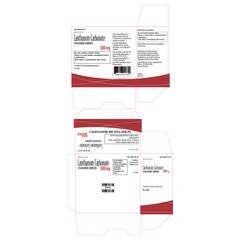
Lanthanum Carbonate
11 DESCRIPTION Lanthanum carbonate chewable tablets contains lanthanum carbonate with molecular formula La 2 (CO3) 3 and molecular weight 457.8 (anhydrous mass). Lanthanum carbonate is described as white to almost-white powder. Lanthanum carbonate is practically insoluble in water and is insoluble in organic solvents; it dissolves in dilute mineral acids with effervescence. Each lanthanum carbonate chewable tablet, off-white to yellowish, chewable tablet contains lanthanum carbonate equivalent to 500, 750, or 1,000 mg of elemental lanthanum and the following inactive ingredients: microcrystalline cellulose, guar gum, sucralose, hydroxypropyl cellulose, dextrates, colloidal silicon dioxide, stearic acid, magnesium stearate.
Information page. Not necessarily available for purchase.
What is Lanthanum Carbonate?
11 DESCRIPTION Lanthanum carbonate chewable tablets contains lanthanum carbonate with molecular formula La 2 (CO3) 3 and molecular weight 457.8 (anhydrous mass). Lanthanum carbonate is described as white to almost-white powder. Lanthanum carbonate is practically insoluble in water and is insoluble in organic solvents; it dissolves in dilute mineral acids with effervescence. Each lanthanum carbonate chewable tablet, off-white to yellowish, chewable tablet contains lanthanum carbonate equivalent to 500, 750, or 1,000 mg of elemental lanthanum and the following inactive ingredients: microcrystalline cellulose, guar gum, sucralose, hydroxypropyl cellulose, dextrates, colloidal silicon dioxide, stearic acid, magnesium stearate.
Uses of Lanthanum Carbonate
Established uses
- 1 INDICATIONS AND USAGE Lanthanum carbonate chewable tablets are phosphate binder indicated to reduce serum phosphate in patients with end- stage renal disease (ESRD).
- Management of elevated serum phosphorus levels in patients with ESRD usually includes all of the following: reduction in dietary intake of phosphate, removal of phosphate by dialysis, and reduction of intestinal phosphate absorption with phosphate binders.
- Lanthanum carbonate chewable tablets are phosphate binder indicated to reduce serum phosphate in patients with end- stage renal disease (ESRD).
- ( 1 )
How Lanthanum Carbonate works
In more detail: 12.1 Mechanism of Action Lanthanum carbonate is a phosphate binder that reduces absorption of phosphate by forming insoluble lanthanum phosphate complexes that pass through the GI tract unabsorbed. Both serum phosphate and calcium phosphate product are reduced as a consequence of the reduced dietary phosphate absorption.
How to take Lanthanum Carbonate
2 DOSAGE AND ADMINISTRATION Divide the total daily dose of lanthanum carbonate chewable tablets and take with or immediately after meals. The recommended initial total daily dose of lanthanum carbonate chewable tablets is 1,500 mg. Titrate the dose every 2 to 3 weeks until an acceptable serum phosphate level is reached. Monitor serum phosphate levels as needed during dose titration and on a regular basis thereafter. Lanthanum Carbonate chewable Tablets has the potential to bind other orally administered drugs: consider separating the administration of other oral medications [ see Drug Interactions (7) ] . In clinical studies of patients with ESRD, lanthanum carbonate chewable tablets doses up to 4,500 mg were evaluated. Most patients required a total daily dose between 1,500 mg and 3,000 mg to reduce plasma phosphate levels to less than 6.0 mg/dL. Doses were generally titrated in increments of 750 mg/day. Information for lanthanum carbonate chewable tablets Chew or crush lanthanum carbonate chewable tablets completely before swallowing. Do not swallow intact lanthanum carbonate chewable tablets. Consider using the oral powder formulation in patients with poor dentition or who have
Dosage
Follow the dose prescribed by your doctor or pharmacist. The ranges below are general information, not a personal prescription.
- Adults
- 2 DOSAGE AND ADMINISTRATION Divide the total daily dose of lanthanum carbonate chewable tablets and take with or immediately after meals. The recommended initial total daily dose of lanthanum carbonate chewable tablets is 1,500 mg. Titrate the dose every 2 to 3 weeks until an acceptable serum phosphate level is reached. Monitor serum phosphate levels as needed during dose titration and on a regular basis thereafter. Lanthanum Carbonate chewable Tablets has the potential to bind other orally administered drugs: consider separating the administration of other oral medications [ see Drug Interactions (7) ] . In clinical studies of patients with ESRD, lanthanum carbonate chewable tablets doses up to 4,500 mg were evaluated. Most patients required a total daily dose between 1,500 mg and 3,000 mg to reduce plasma phosphate levels to less than 6.0 mg/dL. Doses were generally titrated in increments of 750 mg/day. Information for lanthanum carbonate chewable tablets Chew or crush lanthanum carbonate chewable tablets completely before swallowing. Do not swallow intact lanthanum carbonate chewable tablets. Consider using the oral powder formulation in patients with poor dentition or who have
Side effects of Lanthanum Carbonate
Common
- 6 ADVERSE REACTIONS The following adverse reactions are discussed in greater detail in other sections of the labeling: Gastrointestinal Adverse Effects [see Warnings and Precautions (5.1) ] In controlled trials, the most common adverse reactions that were more frequent (≥ 5% difference vs.
- placebo) in lanthanum carbonate were nausea, vomiting, and abdominal pain.
- ( 6.1 ) The following adverse reactions have been identified during post-approval use of lanthanum carbonate: constipation, dyspepsia, allergic skin reactions, and tooth injury while chewing the tablet.
- ( 6.2 ) To report SUSPECTED ADVERSE REACTIONS, contact Exelan pharmaceutical,Inc.
- at 1-866-604-3268 or FDA at 1-800-FDA-1088 or www.fda.gov/medwatch.
- 6.1 Clinical Trials Experience Because clinical trials are conducted under widely varying conditions, adverse reaction rates observed in the clinical trials of a drug cannot be directly compared to rates in the clinical trials of another drug and may not reflect the rates observed in practice.
Warnings and who should not take it
Who should NOT take Lanthanum Carbonate?
- 4 CONTRAINDICATIONS Contraindicated in patients with: hypersensitivity to Lanthanum carbonate or to any ingredient in the formulation.
- bowel obstruction, including ileus and fecal impaction.
- Hypersensitivity to Lanthanum carbonate or to any ingredient in the formulation.
- ( 4 ) Bowel obstruction, ileus, and fecal impaction.
- ( 4 )
Overdose
10 OVERDOSAGE The symptoms associated with overdose are adverse reactions such as headache, nausea and vomiting. In clinical trials in healthy adults, gastrointestinal (GI) symptoms were reported with daily doses up to 6,000 mg/day of lanthanum carbonate administered with food. Given the topical activity of lanthanum in the gut, and the excretion of the majority of the dose in feces, supportive therapy is recommended for overdosage. Lanthanum carbonate was not acutely toxic in animals by the oral route. No deaths and no adverse effects occurred in mice, rats, or dogs after single oral doses of 2,000 mg/kg (1.7, 3.4, and 11.3 times the MRHD, respectively, on a mg/m 2 basis).
Safety at a glance
8.1 Pregnancy Risk Summary Available data from case reports with use of lanthanum carbonate in pregnant women are insufficient to identify a drug-associated risk of major birth defects, miscarriage, or adverse maternal or fetal outcomes. In animal reproduction studies, oral administration of lanthanum carbonate to pregnant rats and rabbits during organogenesis at doses 3 and 2.5 times, respectively, the maximum recommended human dose (MRHD), resulted in no adverse developmental effects. In rabbits, lanthanum carbonate doses 5 times the MRHD was associated with maternal toxicity and resulted in increased post-implantation loss, reduced fetal weights, and delayed fetal ossification (see Data ) . Deposition of lanthanum into developing bone, including growth plate, was observed in juvenile animals in long-term animal studies with lanthanum carbonate [see Use in Specific Populations (8.4) ] . Use a non-lanthanum containing phosphate binder in a pregnant woman. The estimated background risk of major birth defects and miscarriage for the indicated population is unknown. All pregnancies have a background risk of birth defect, loss, or other adverse outcomes. In the U.S. general population
Children and elderly
Children
8.4 Pediatric Use The safety and efficacy of lanthanum carbonate in pediatric patients have not been established. While growth abnormalities were not identified in long-term animal studies, lanthanum was deposited into developing bone, including growth plate. The consequences of such deposition in developing bone in pediatric patients are unknown; therefore, the use of lanthanum carbonate in this population is not recommended.
Elderly
8.5 Geriatric Use Of the total number of patients in clinical studies of lanthanum carbonate, 32% (538) were ≥65 years of age, while 9.3% (159) were ≥75 years of age. No overall differences in safety or effectiveness were observed between patients ≥75 years of age and younger patients.
Interactions
Medicine and medicine
- 7 DRUG INTERACTIONS There is a potential for lanthanum carbonate to interact with compounds that bind to cationic antacids (i.e., aluminum-, magnesium-, or calcium-based);
- therefore, do not take such compounds within 2 hours of dosing with lanthanum carbonate chewable tablets.
- ( 7.1 ) Oral quinolone antibiotics must be taken at least 1 hour before or 4 hours after lanthanum carbonate chewable tablets.
- ( 7.2 ) Do not take thyroid hormone replacement therapy within 2 hours of dosing with lanthanum carbonate chewable tablets.
- Monitoring of TSH levels is recommended in patients receiving both medicinal agents.
- ( 7.3 ) For oral medications where a reduction in the bioavailability of that medication would have a clinically significant effect on its safety or efficacy, consider separation of the timing of the administration of the two drugs.
Frequently asked questions
What is Lanthanum Carbonate used for?
1 INDICATIONS AND USAGE Lanthanum carbonate chewable tablets are phosphate binder indicated to reduce serum phosphate in patients with end- stage renal disease (ESRD)., Management of elevated serum phosphorus levels in patients with ESRD usually includes all of the following: reduction in dietary intake of phosphate, removal of phosphate by dialysis, and reduction of intestinal phosphate absorption with phosphate binders., Lanthanum carbonate chewable tablets are phosphate binder indicated to reduce serum phosphate in patients with end- stage renal disease (ESRD)., ( 1 ).
How should I take Lanthanum Carbonate?
2 DOSAGE AND ADMINISTRATION Divide the total daily dose of lanthanum carbonate chewable tablets and take with or immediately after meals. The recommended initial total daily dose of lanthanum carbonate chewable tablets is 1,500 mg. Titrate the dose every 2 to 3 weeks until an acceptable serum phosphate level is reached. Monitor serum phosphate levels as needed during dose titration and on a regular basis thereafter. Lanthanum Carbonate chewable Tablets has the potential to bind other orally administered drugs: consider separating the administration of other oral medications [ see Drug Interactions (7) ] . In clinical studies of patients with ESRD, lanthanum carbonate chewable tablets doses up to 4,500 mg were evaluated. Most patients required a total daily dose between 1,500 mg and 3,000 mg to reduce plasma phosphate levels to less than 6.0 mg/dL. Doses were generally titrated in increments of 750 mg/day. Information for lanthanum carbonate chewable tablets Chew or crush lanthanum carbonate chewable tablets completely before swallowing. Do not swallow intact lanthanum carbonate chewable tablets. Consider using the oral powder formulation in patients with poor dentition or who have
What are the common side effects?
6 ADVERSE REACTIONS The following adverse reactions are discussed in greater detail in other sections of the labeling: Gastrointestinal Adverse Effects [see Warnings and Precautions (5.1) ] In controlled trials, the most common adverse reactions that were more frequent (≥ 5% difference vs., placebo) in lanthanum carbonate were nausea, vomiting, and abdominal pain., ( 6.1 ) The following adverse reactions have been identified during post-approval use of lanthanum carbonate: constipation, dyspepsia, allergic skin reactions, and tooth injury while chewing the tablet., ( 6.2 ) To report SUSPECTED ADVERSE REACTIONS, contact Exelan pharmaceutical,Inc., at 1-866-604-3268 or FDA at 1-800-FDA-1088 or www.fda.gov/medwatch., 6.1 Clinical Trials Experience Because clinical trials are conducted under widely varying conditions, adverse reaction rates observed in the clinical trials of a drug cannot be directly compared to rates in the clinical trials of another drug and may not reflect the rates observed in practice..
Who should not take Lanthanum Carbonate?
4 CONTRAINDICATIONS Contraindicated in patients with: hypersensitivity to Lanthanum carbonate or to any ingredient in the formulation.; bowel obstruction, including ileus and fecal impaction.; Hypersensitivity to Lanthanum carbonate or to any ingredient in the formulation.; ( 4 ) Bowel obstruction, ileus, and fecal impaction.; ( 4 ).
Can I take Lanthanum Carbonate during pregnancy?
8.1 Pregnancy Risk Summary Available data from case reports with use of lanthanum carbonate in pregnant women are insufficient to identify a drug-associated risk of major birth defects, miscarriage, or adverse maternal or fetal outcomes. In animal reproduction studies, oral administration of lanthanum carbonate to pregnant rats and rabbits during organogenesis at doses 3 and 2.5 times, respectively, the maximum recommended human dose (MRHD), resulted in no adverse developmental effects. In rabbits, lanthanum carbonate doses 5 times the MRHD was associated with maternal toxicity and resulted in increased post-implantation loss, reduced fetal weights, and delayed fetal ossification (see Data ) . Deposition of lanthanum into developing bone, including growth plate, was observed in juvenile animals in long-term animal studies with lanthanum carbonate [see Use in Specific Populations (8.4) ] . Use a non-lanthanum containing phosphate binder in a pregnant woman. The estimated background risk of major birth defects and miscarriage for the indicated population is unknown. All pregnancies have a background risk of birth defect, loss, or other adverse outcomes. In the U.S. general population
Can children take Lanthanum Carbonate?
8.4 Pediatric Use The safety and efficacy of lanthanum carbonate in pediatric patients have not been established. While growth abnormalities were not identified in long-term animal studies, lanthanum was deposited into developing bone, including growth plate. The consequences of such deposition in developing bone in pediatric patients are unknown; therefore, the use of lanthanum carbonate in this population is not recommended.
Does Lanthanum Carbonate interact with other medicines?
7 DRUG INTERACTIONS There is a potential for lanthanum carbonate to interact with compounds that bind to cationic antacids (i.e., aluminum-, magnesium-, or calcium-based);; therefore, do not take such compounds within 2 hours of dosing with lanthanum carbonate chewable tablets.; ( 7.1 ) Oral quinolone antibiotics must be taken at least 1 hour before or 4 hours after lanthanum carbonate chewable tablets.; ( 7.2 ) Do not take thyroid hormone replacement therapy within 2 hours of dosing with lanthanum carbonate chewable tablets.; Monitoring of TSH levels is recommended in patients receiving both medicinal agents.; ( 7.3 ) For oral medications where a reduction in the bioavailability of that medication would have a clinically significant effect on its safety or efficacy, consider separation of the timing of the administration of the two drugs..
Medicine information on IMCURE is provided for educational purposes and is not a substitute for diagnosis, prescription or medical advice. Always follow your doctor’s or pharmacist’s instructions. Real product image from the U.S. National Library of Medicine's DailyMed listing for Lanthanum Carbonate Tablet, Chewable. Packaging varies by brand and manufacturer.