
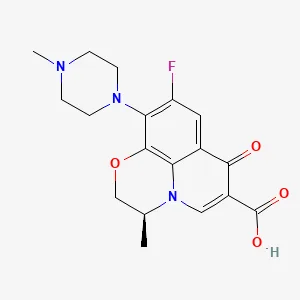
Fluoroquinolone antibacterialPrescription only (Schedule H1)Boxed warning: tendon, nerve and brain effectsOn NLEM 2022NPPA price ceilingJan Aushadhi listed
Levofloxacin
लेवोफ्लॉक्सासिन
Prescription only (Schedule H1 in the Drugs Rules).
Levofloxacin is a fluoroquinolone antibiotic taken by mouth for bacterial infections such as pneumonia, skin, urinary and prostate infections. It is a prescription medicine in India (Schedule H1). The US label carries a boxed warning about tendon rupture, nerve damage and effects on the brain.
- Generic name
- Levofloxacin
- Used for
- Certain bacterial infections in adults, including pneumonia, skin, urinary tract, prostate and sinus infections
- Label used
- Tablet label, oral, DailyMed set 5a65b2bc, effective 2026-09
- Prescription status (India)
- Listed in Schedule H1 (prescription medicine)
- On NLEM 2022
- Yes
- NPPA price ceiling
- Yes (scheduled formulation)
More facts
- Jan Aushadhi
- Listed
- Banned combinations
- Appears in 5 entries of the banned combination list we checked
Compiled from official drug labels and Indian government sources. Always follow your doctor's or pharmacist's advice.
Safety at a glance
- AlcoholNot mentioned in label text
- PregnancyCaution in label textSee wording
- BreastfeedingNot mentioned in label text
- DrivingNot mentioned in label text
- KidneyCaution in label textSee wording
- LiverCaution in label textSee wording
Taken only from the label text cited on this page. "Not mentioned" does not mean safe. Ask your doctor or pharmacist.
What is levofloxacin used for?
The US label for levofloxacin tablets lists treatment of infections caused by susceptible bacteria in adults aged 18 and older. It also lists some uses in children.
The infections include pneumonia, skin and skin structure infections, chronic bacterial prostatitis, urinary tract infections, kidney infection, bronchitis flare-ups and sinusitis. It is also listed for post-exposure anthrax and plague.
Antibiotics work only against bacteria, not viruses such as colds or flu. Using them when not needed can lead to resistant bacteria.
- Pneumonia, community acquired and hospital acquired
- Skin and skin structure infections
- Chronic bacterial prostatitis
- Urinary tract infections and acute kidney infection
- Acute bacterial bronchitis flare-ups and sinusitis
- Anthrax (after exposure) and plague
It is an antibiotic for certain bacterial infections. It does not work on viruses.
Source1
How does levofloxacin work?
The label places levofloxacin in the fluoroquinolone class of antibacterial medicines.
The label text we reviewed gives no further detail on how it works, so we do not add any.
It is an antibiotic from the fluoroquinolone class.
Source1
How is levofloxacin usually taken?
This page covers the US label for levofloxacin tablets taken by mouth, with the adult dosing the label gives.
This is label-level information, not personal advice. Indian pack labels may differ, and your prescriber's instruction always comes first.
For adults with normal kidney function, the label lists 250 mg, 500 mg or 750 mg once every 24 hours. The amount and the length of treatment depend on the infection.
Examples from the label include 500 mg for 7 to 14 days for one type of pneumonia and 750 mg for 5 days for another. Prostatitis is listed at 500 mg for 28 days.
The label says doses need adjusting when kidney function is reduced. It also says to separate the tablets from antacids, iron and similar products by about 2 hours.
Ask your doctor or pharmacist about how long to continue. Do not stop or restart on your own.
- Once every 24 hours in adults with normal kidney function
- Strength and number of days depend on the infection
- Kidney impairment needs a dose change
- Keep tablets 2 hours apart from antacids, iron and zinc products
It is usually taken once a day for a set number of days. The prescriber decides.
Source1
What are the side effects of levofloxacin?
Common
- They can start within hours or weeks of starting treatment. The label says to stop the medicine immediately at the first sign and contact a doctor.
- Muscle weakness may worsen in myasthenia gravis
- Heart rhythm (QT) changes and low or high blood sugar
- Sensitivity to sunlight
Serious: get help
- The label lists serious effects first. Fluoroquinolones can cause disabling and sometimes lasting problems, including tendon inflammation or rupture, nerve damage, and effects on the brain such as hallucinations, anxiety, depression and confusion.
- Other warnings include severe allergic reactions, liver injury, bowel infection with diarrhoea, heart rhythm changes, blood sugar changes, sensitivity to sunlight and aortic aneurysm.
- Get help now if you have tendon pain or swelling, numbness or tingling, a rash, trouble breathing, yellow eyes, severe diarrhoea, fainting or a racing heartbeat.
- Boxed warning: tendon inflammation or rupture, nerve damage, effects on the brain
- Allergic reactions, liver injury, severe diarrhoea
- Get help now: tendon pain, numbness, rash, breathing trouble, yellow eyes, fainting
Serious tendon, nerve and brain effects can occur. Seek medical help at once if you notice them.
Source1
Who should be careful with levofloxacin?
It must not be used by anyone allergic to levofloxacin or other quinolone antibiotics. People with myasthenia gravis should avoid it, as it can worsen muscle weakness.
The label advises extra care in older adults, who face a higher risk of tendon problems, especially with corticosteroids. It also names people with kidney disease, known heart rhythm problems, low potassium and diabetes.
In pregnancy, the label says published reports have not shown a clear risk of major birth defects, while animal studies showed some effects at high doses. Talk to your doctor.
The label warns of musculoskeletal problems in children. Tablets are for children weighing 30 kg or more and only for certain uses.
- Allergy to quinolones: do not use
- Myasthenia gravis: avoid
- Older adults and steroid users: higher tendon risk
- Kidney disease: dose change
- Heart rhythm problems, low potassium: QT risk
- Diabetes: watch blood sugar
- Children: only where the label allows
Avoid in quinolone allergy or myasthenia gravis. Be careful in older adults, kidney, heart and diabetes conditions.
Source1
What medicines interact with levofloxacin?
- Antacids, sucralfate, iron, zinc: separate by 2 hours
- Warfarin: monitor clotting
- Diabetes medicines: check blood sugar
- Other QT-prolonging medicines: avoid together
- The label says antacids with magnesium or aluminium, sucralfate, iron, zinc multivitamins and didanosine can reduce absorption.
- Take them at least 2 hours before or after the tablet.
- Warfarin effects may be stronger, so clotting tests and watching for bleeding are advised.
- Medicines for diabetes may need closer blood sugar checks.
- The label also advises avoiding use with other medicines that prolong the QT interval.
- Tell your doctor and pharmacist about all your medicines.
No match in this label text. Ask your pharmacist about any medicine you take.
Antacids, iron and zinc reduce absorption. Warfarin and diabetes medicines need monitoring.
Source1
What if too much levofloxacin is taken?
The label says that after an overdose the stomach should be emptied, and the person observed and kept hydrated.
Dialysis does not remove levofloxacin well. Seek emergency care or contact a poison control centre.
An overdose needs emergency care. Dialysis does not remove it well.
Source1
How should levofloxacin be stored?
The label says to store tablets at 20 to 25 degrees C, in well-closed containers.
Follow the storage line on your own Indian pack and keep medicines away from children.
Store at room temperature in a well-closed container.
Source1
Is levofloxacin a prescription medicine in India?
Yes. We found levofloxacin in Schedule H1 of the Drugs Rules (serial 32, rules 65 and 97), so it is a prescription medicine.
It is on the National List of Essential Medicines 2022 as 300, 500 and 750 mg tablets (page 73).
The Jan Aushadhi list we checked includes 250 mg and 500 mg tablets, an infusion and eye drops. Levofloxacin appears in 5 entries of the banned-combination list we checked, so check any combination product.
| List | Strength | Unit | Ceiling price (Rs) |
|---|---|---|---|
| Anti-TB list, as on March 2026, page 3 | 250 mg tablet | 1 tablet | 4.93 |
| Anti-TB list, as on March 2026, page 3 | 500 mg tablet | 1 tablet | 9.21 |
| Anti-TB list, as on March 2026, page 3 | 750 mg tablet | 1 tablet | 12.75 |
| All scheduled (NLEM 2015), as on 30.09.2020, page 12 | 250 mg tablet | 1 tablet | 4.40 |
| All scheduled (NLEM 2015), as on 30.09.2020, page 12 | 500 mg tablet | 1 tablet | 8.04 |
| All scheduled (NLEM 2015), as on 30.09.2020, page 12 | 750 mg tablet | 1 tablet | 10.90 |
It is a Schedule H1 prescription medicine on the NLEM 2022, with NPPA ceilings.
What is the price ceiling for levofloxacin?
NPPA lists per-tablet ceilings for 250, 500 and 750 mg tablets in two lists, shown above. They are ceilings, not the price you will always pay.
Jan Aushadhi lists levofloxacin 250 mg and 500 mg tablets, an infusion and eye drops. Check the pack and the seller for the actual price.
NPPA lists per-tablet ceilings. Check the pack and seller.
Frequently asked questions
Can I take levofloxacin with alcohol?
The label text we reviewed does not address alcohol. Ask your doctor or pharmacist.
Source1
Can levofloxacin damage tendons?
Yes. The boxed warning says it can cause tendon inflammation and rupture, sometimes in people with no risk factors. Stop and call a doctor if you have tendon pain.
Source1
Can I take antacids with levofloxacin?
The label says antacids with magnesium or aluminium, iron and zinc products reduce absorption. Take them at least 2 hours before or after levofloxacin.
Source1
Is levofloxacin a prescription medicine in India?
Yes. We found it in Schedule H1 of the Drugs Rules, so it is sold on prescription.
Source2
Does levofloxacin work for colds and flu?
No. It is an antibacterial and does not treat viral infections. Unneeded antibiotics can promote resistant bacteria.
Source1
Sources
- 1U.S. FDA-approved label (DailyMed) (5a65b2bc-9edc-f193-e063-6394a90a0104) Open source · 2026-10-15
- 2Drugs Rules 1945, Schedules (2022 consolidation) (Schedule H1, serial 32 (rules 65 and 97)) Open source · 2026-10-15
- 3National List of Essential Medicines 2022 (73) Open source · 2026-10-15
- 4NPPA price ceiling list (Anti-TB 3) Open source · 2026-10-15
- 5PMBJP (Jan Aushadhi) product list (p4:sno89) Open source · 2026-10-15
Compiled by software from the sources above and checked by automated rules. Last checked: 2026-10-15 · How we use sources · Report a correction
This information is educational and is not a substitute for advice from your doctor or pharmacist. It does not tell you what dose you personally should take. In an emergency call 112.