
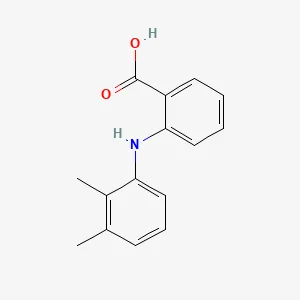
Nonsteroidal anti-inflammatory drug (NSAID), fenamate groupPrescription only (Schedule H)On NLEM 2022NPPA price ceiling listedJan Aushadhi listed
Mefenamic acid
मेफेनैमिक एसिड
Mefenamic acid is an NSAID used for short-term relief of mild to moderate pain, for up to 7 days, and for painful periods. In India it is a Schedule H prescription medicine. The label carries a boxed warning about heart attack, stroke and stomach bleeding.
- Generic name
- Mefenamic acid
- Used for
- Mild to moderate pain (up to 7 days) and primary dysmenorrhea (painful periods)
- Prescription status (India)
- Prescription medicine: listed in Schedule H of the Drugs Rules schedules we checked.
- On NLEM 2022
- Yes
- NPPA price ceiling
- Yes (scheduled formulation)
- Jan Aushadhi
- Listed (5 product rows)
More facts
- Banned combinations
- Mentioned in 4 entries of the banned-combination list we checked; use the checker for your exact combination.
Compiled from official drug labels and Indian government sources. Always follow your doctor's or pharmacist's advice.
Safety at a glance
- AlcoholCaution in label textSee wording
- PregnancyAvoid, per label textSee wording
- BreastfeedingNot mentioned in label text
- DrivingCaution in label textSee wording
- KidneyAvoid, per label textSee wording
- LiverCaution in label textSee wording
Taken only from the label text cited on this page. "Not mentioned" does not mean safe. Ask your doctor or pharmacist.
What is mefenamic acid used for?
The US label for mefenamic acid capsules says it is an NSAID for managing mild to moderate pain in people aged 14 and older, when treatment will not last more than 7 days.
It is also used for treating primary dysmenorrhea, which means period pain without another underlying cause.
- Mild to moderate pain, up to 7 days (age 14 and older)
- Primary dysmenorrhea
It eases mild to moderate pain for a short time and period pain.
Source1
How does mefenamic acid work?
The label says mefenamic acid has pain-relieving, anti-inflammatory and fever-reducing properties.
Like other NSAIDs, it inhibits the cyclooxygenase (COX) enzymes and lowers prostaglandin production. The label says the exact mechanism is not fully understood.
It lowers the body's prostaglandins, which cause pain and inflammation.
Source1
How is mefenamic acid taken? Dosage information
The US label for adults and adolescents aged 14 and older lists an initial dose of 500 mg, then 250 mg every 6 hours as needed.
For period pain, the same pattern is listed, starting with the onset of bleeding and symptoms.
The label says to use the lowest effective dose for the shortest duration, and for pain not beyond 7 days.
Indian pack labels may differ from the US label. Your prescriber's instruction always comes first.
Use for the shortest time at the lowest dose that works. Do not use it for more than 7 days for pain unless your doctor says so.
Source1
What are the side effects of mefenamic acid?
Common
- The label lists stomach pain, constipation, diarrhoea, indigestion, gas, heartburn, nausea, vomiting and ulcers among the commonly reported effects, along with ringing in the ears.
- Common: stomach pain, heartburn, nausea, diarrhoea, constipation, ringing in the ears
Serious: get help
- Serious effects include heart attack and stroke, stomach and intestinal bleeding or perforation, liver injury, kidney problems, severe allergic and skin reactions, and blood disorders.
- Serious: black or bloody stools, vomiting blood
- Serious: chest pain, weakness on one side, slurred speech
- Serious: yellow skin or eyes, dark urine
- Serious: rash, blisters, swelling of face or throat
Stomach upset is common. Bleeding, chest pain or a skin rash need urgent care.
Source1
Who should be careful with mefenamic acid?
Boxed warning: NSAIDs raise the risk of serious cardiovascular events, including heart attack and stroke, and of serious bleeding, ulcers and perforation of the stomach or intestines. These can be fatal and can occur without warning.
Older adults and people with a history of ulcers or stomach bleeding are at higher risk. It is contraindicated in coronary artery bypass graft (CABG) surgery.
Contraindicated in people with allergy to mefenamic acid, or who have had asthma, hives or allergic reactions after aspirin or other NSAIDs.
Caution for liver or kidney disease, high blood pressure, heart failure and dehydration. Avoid in advanced kidney disease unless benefits outweigh risks.
Pregnancy: the label says to limit use between about 20 and 30 weeks and avoid it from about 30 weeks onward, because of risks to the baby's kidneys and heart vessel.
Fertility: NSAIDs may delay ovulation and are associated with reversible infertility. Children: not established below age 14.
Short-term use only. Avoid it in late pregnancy and tell your doctor about ulcers, heart, kidney or liver disease.
Source1
What medicines interact with mefenamic acid?
- Blood thinners such as warfarin raise the risk of serious bleeding.
- Antiplatelet agents such as aspirin, and SSRIs or SNRIs, also add to bleeding risk.
- The label says using it with analgesic doses of aspirin is generally not recommended because of more bleeding and stomach effects.
- Blood pressure medicines may work less well with NSAIDs.
- Tell your doctor about all your medicines.
No match in this label text. Ask your pharmacist about any medicine you take.
Blood thinners, aspirin, certain antidepressants and BP medicines can interact.
Source1
What if too much mefenamic acid is taken?
The label says overdose usually causes drowsiness, nausea, vomiting and upper stomach pain, and these are generally reversible with supportive care.
Stomach bleeding has occurred, and rarely high blood pressure, kidney failure, breathing depression and coma. There is no specific antidote.
Too much can cause stomach bleeding and kidney injury. Seek urgent care.
Source1
How should mefenamic acid be stored?
The US label says to store at room temperature, 20 to 25 degrees C, with excursions permitted between 15 and 30 degrees C, in a tight container.
Follow the instructions on your pack.
Store at room temperature in a tight container.
Source1
Is Mefenamic acid prescription-only? Legal status in India
In the Drugs Rules 1945 schedules we checked, Mefenamic acid appears as Schedule H, serial 302 (rules 65 and 97).
The National List of Essential Medicines 2022 lists these forms: Tablet 250 mg; Oral liquid 100 mg/5 mL (p).
The National Pharmaceutical Pricing Authority (NPPA) lists ceiling prices for the formulations in the table below. A seller cannot charge more than the ceiling per unit.
The banned-combination list we checked mentions Mefenamic acid in 4 entries. Fixed-dose combinations differ, so check your exact product.
| Formulation | Strength | Unit | Ceiling price per unit | List date |
|---|---|---|---|---|
| Oral Liquid | 100 mg/5ml | 1 ml | Rs 0.52 | As on 30.09.2020 |
| Tablet | 250 mg | 1 Tablet | Rs 1.93 | As on 30.09.2020 |
| Tablet | 500 mg | 1 Tablet | Rs 2.45 | As on 30.09.2020 |
In India, check the pack and ask your pharmacist. Listed ceiling prices are shown where found.
Mefenamic acid price ceilings and Jan Aushadhi options
The ceiling price is the most a seller may charge per unit for a scheduled formulation. Actual brand prices are usually at or below it. Check the pack and seller for the real price.
Jan Aushadhi (PMBJP) product rows we found are listed next.
Mefenamic Acid Suspension 100mg per 5ml, pack 60 ml.
Mefenamic Acid 500mg and Paracetamol 325mg Tablets, pack 10's.
Mefenamic Acid 50mg and Paracetamol 125mg Suspension per 5ml, pack 60 ml.
Mefenamic Acid Tablets 250 mg, pack 10's.
Mefenamic Acid Tablets 500 mg, pack 10's.
We do not show a brand price here. Prices change, so confirm with the seller.
Ceiling prices and Jan Aushadhi rows are listed. Always check the pack and seller.
Frequently asked questions
Can I take mefenamic acid with alcohol?
The label we reviewed does not describe alcohol. Ask your doctor or pharmacist.
Source1
How long can I take mefenamic acid?
For pain, the US label covers treatment that will not exceed one week (7 days). Use the lowest dose for the shortest time.
Source1
Should mefenamic acid be taken on an empty stomach?
The label we reviewed does not give meal timing. NSAIDs can upset the stomach, so ask your doctor or pharmacist.
Source1
Is mefenamic acid safe in pregnancy?
The label says to limit use between about 20 and 30 weeks and avoid it from about 30 weeks, due to risks to the baby. Ask your doctor.
Source1
Can children take mefenamic acid?
The label establishes safety and effectiveness for pain in patients aged 14 and above, and not below 14.
Source1
Sources
- 1U.S. FDA-approved label (DailyMed) (9b8b3e03-4801-4ae8-b44e-e01d1ab1e34b) Open source · 2026-10-15
- 2Drugs Rules 1945, Schedules (2022 consolidation) (Schedule H, serial 302 (rules 65 and 97)) Open source · 2026-10-15
- 3National List of Essential Medicines 2022 (page 62) Open source · 2026-10-15
- 4NPPA price ceiling list (All scheduled (NLEM 2015), page 12) Open source · 2026-10-15
- 5PMBJP (Jan Aushadhi) product list (p18:sno401) Open source · 2026-10-15
- 6PMBJP (Jan Aushadhi) product list (p21:sno477) Open source · 2026-10-15
- 7PMBJP (Jan Aushadhi) product list (p28:sno630) Open source · 2026-10-15
- 8PMBJP (Jan Aushadhi) product list (p31:sno705) Open source · 2026-10-15
- 9PMBJP (Jan Aushadhi) product list (p31:sno706) Open source · 2026-10-15
Compiled by software from the sources above and checked by automated rules. Last checked: 2026-10-15 · How we use sources · Report a correction
This information is educational and is not a substitute for advice from your doctor or pharmacist. It does not tell you what dose you personally should take. In an emergency call 112.