
Mesalamine
11 DESCRIPTION Each mesalamine delayed-release tablet, USP for oral administration contains 800 mg of mesalamine, USP, an aminosalicylate. Mesalamine delayed-release tablets, USP have an outer protective coat consisting of a combination of acrylic based resins, methacrylic acid copolymer type A and methacrylic acid copolymer type B. The inner coat consists of an acrylic based resin, Eudragit S, which dissolves at pH 7 or greater, releasing mesalamine, USP in the terminal ileum and beyond for topical anti-inflammatory action in the colon. Mesalamine, USP (also referred to as 5-aminosalicylic acid or 5-ASA) has the chemical name 5-amino-2-hydroxybenzoic acid; its structural formula is: Inactive Ingredients: Each tablet contains colloidal silicon dioxide, dibutyl sebacate, hypromellose, iron oxide red, iron oxide yellow, lactose monohydrate, magnesium stearate, methacrylic acid copolymer type A, methacrylic acid copolymer type B, polyethylene glycol, povidone, sodium starch glycolate, and talc. The black imprinting ink contains the following ingredients: ammonium hydroxide, iron oxide black, propylene glycol and shellac glaze. Structural formula
Information page. Not necessarily available for purchase.
What is Mesalamine?
11 DESCRIPTION Each mesalamine delayed-release tablet, USP for oral administration contains 800 mg of mesalamine, USP, an aminosalicylate. Mesalamine delayed-release tablets, USP have an outer protective coat consisting of a combination of acrylic based resins, methacrylic acid copolymer type A and methacrylic acid copolymer type B. The inner coat consists of an acrylic based resin, Eudragit S, which dissolves at pH 7 or greater, releasing mesalamine, USP in the terminal ileum and beyond for topical anti-inflammatory action in the colon. Mesalamine, USP (also referred to as 5-aminosalicylic acid or 5-ASA) has the chemical name 5-amino-2-hydroxybenzoic acid; its structural formula is: Inactive Ingredients: Each tablet contains colloidal silicon dioxide, dibutyl sebacate, hypromellose, iron oxide red, iron oxide yellow, lactose monohydrate, magnesium stearate, methacrylic acid copolymer type A, methacrylic acid copolymer type B, polyethylene glycol, povidone, sodium starch glycolate, and talc. The black imprinting ink contains the following ingredients: ammonium hydroxide, iron oxide black, propylene glycol and shellac glaze. Structural formula
Uses of Mesalamine
Established uses
- 1 INDICATIONS AND USAGE Mesalamine delayed-release tablets are indicated for the treatment of moderately active ulcerative colitis in adults.
- Limitations of Use : Safety and effectiveness of mesalamine delayed-release tablets beyond 6 weeks have not been established.
- Mesalamine delayed-release tablets are an aminosalicylate indicated for the treatment of moderately active ulcerative colitis in adults.
- (1) Limitation of Use : Safety and effectiveness of mesalamine delayed-release tablets beyond 6 weeks have not been established (1)
How Mesalamine works
In more detail: 12.1 Mechanism of Action The mechanism of action of mesalamine is not fully understood, but appears to be a topical anti-inflammatory effect on colonic epithelial cells. Mucosal production of arachidonic acid metabolites, both through the cyclooxygenase pathways, that is, prostanoids, and through the lipoxygenase pathways, that is, leukotrienes and hydroxyeicosatetraenoic acids, is increased in patients with ulcerative colitis, and it is possible that mesalamine diminishes inflammation by blocking cyclooxygenase and inhibiting prostaglandin production in the colon.
How to take Mesalamine
2 DOSAGE AND ADMINISTRATION Important Administration Instructions : Do not substitute one mesalamine delayed-release tablets 800 mg tablet for two mesalamine delayed-release 400 mg oral products. (2.1) Evaluate renal function prior to initiation of mesalamine delayed-release tablets. (2.1, 5.1) Take on an empty stomach, at least 1 hour before and 2 hours after a meal. (2.1) Swallow whole; do not cut, break or chew the tablets. (2.1) Drink an adequate amount of fluids. (2.1, 5.7) Treatment of Moderately Active Ulcerative Colitis : Recommended dosage is 1,600 mg (two 800 mg tablets) three times daily for 6 weeks. (2.2) 2.1 Important Administration Instructions Do not substitute one mesalamine delayed-release 800 mg tablet for two mesalamine delayed-release 400 mg oral products [see Clinical Pharmacology (12.3) ] . Evaluate renal function prior to initiation of mesalamine delayed-release tablets. Take mesalamine delayed-release tablets on an empty stomach, at least 1 hour before and 2 hours after a meal [see Clinical Pharmacology (12.3) ] . Swallow mesalamine delayed-release tablets whole. Do not cut, break or chew the tablets. Drink an adequate amount of fluids [see Warnings and Prec
Dosage
Follow the dose prescribed by your doctor or pharmacist. The ranges below are general information, not a personal prescription.
- Adults
- 2 DOSAGE AND ADMINISTRATION Important Administration Instructions : Do not substitute one mesalamine delayed-release tablets 800 mg tablet for two mesalamine delayed-release 400 mg oral products. (2.1) Evaluate renal function prior to initiation of mesalamine delayed-release tablets. (2.1, 5.1) Take on an empty stomach, at least 1 hour before and 2 hours after a meal. (2.1) Swallow whole; do not cut, break or chew the tablets. (2.1) Drink an adequate amount of fluids. (2.1, 5.7) Treatment of Moderately Active Ulcerative Colitis : Recommended dosage is 1,600 mg (two 800 mg tablets) three times daily for 6 weeks. (2.2) 2.1 Important Administration Instructions Do not substitute one mesalamine delayed-release 800 mg tablet for two mesalamine delayed-release 400 mg oral products [see Clinical Pharmacology (12.3) ] . Evaluate renal function prior to initiation of mesalamine delayed-release tablets. Take mesalamine delayed-release tablets on an empty stomach, at least 1 hour before and 2 hours after a meal [see Clinical Pharmacology (12.3) ] . Swallow mesalamine delayed-release tablets whole. Do not cut, break or chew the tablets. Drink an adequate amount of fluids [see Warnings and Prec
Side effects of Mesalamine
Common
- 6 ADVERSE REACTIONS The following serious or clinically significant adverse reactions described elsewhere in labeling are: Renal Impairment [see Warnings and Precautions (5.1) ] Mesalamine-Induced Acute Intolerance Syndrome [see Warnings and Precautions (5.2) ] Hypersensitivity Reactions [see Warnings and Precautions (5.3) ] Hepatic Failure [see Warnings and Precautions (5.4) ] Severe Cutaneous Adverse Reactions [see Warnings and Precautions (5.5) ] Photosensitivity [see Warnings and Precautions (5.6) ] Nephrolithiasis [see Warnings and Precautions (5.7) ] The most common adverse reactions (≥2%) are headache, nausea, nasopharyngitis, abdominal pain, and worsening of ulcerative colitis.
- (6.1) To report SUSPECTED ADVERSE REACTIONS, contact Amneal Pharmaceuticals at 1-877-835-5472 or FDA at 1-800-FDA-1088 or www.fda.gov/medwatch 6.1 Clinical Trials Experience Because clinical trials are conducted under widely varying conditions, adverse reaction rates observed in the clinical trials of a drug cannot be directly compared to rates in the clinical trials of another drug and may not reflect the rates observed in practice.
- Mesalamine delayed-release 800 mg tablets have been evaluated in 89
Warnings and who should not take it
Who should NOT take Mesalamine?
- 4 CONTRAINDICATIONS Mesalamine delayed-release tablets are contraindicated in patients with known or suspected hypersensitivity to salicylates or aminosalicylates or to any of the ingredients of mesalamine delayed-release tablets [see Warnings and Precautions (5.3) , Adverse Reactions (6.2) , and Description (11) ] .
- Known or suspected hypersensitivity to salicylates or aminosalicylates or to any of the ingredients of mesalamine delayed-release tablets (4, 5.3)
Overdose
10 OVERDOSAGE Mesalamine delayed-release is an aminosalicylate, and symptoms of salicylate toxicity include nausea, vomiting and abdominal pain, tachypnea, hyperpnea, tinnitus, and neurologic symptoms (headache, dizziness, confusion, seizures). Severe salicylate intoxication may lead to electrolyte and blood pH imbalance and potentially to other organ (e.g., renal and liver) involvement. There is no specific antidote for mesalamine overdose; however, conventional therapy for salicylate toxicity may be beneficial in the event of acute overdosage and may include gastrointestinal tract decontamination to prevent of further absorption. Correct fluid and electrolyte imbalance by the administration of appropriate intravenous therapy and maintain adequate renal function. Mesalamine delayed-release tablets are a pH dependent product and this factor should be considered when treating a suspected overdose.
Safety at a glance
8.1 Pregnancy Risk Summary Limited published data on mesalamine use in pregnant women are insufficient to inform a drug-associated risk. No fetal harm was observed in animal reproduction studies of mesalamine in rats and rabbits at oral doses approximately 0.97 times (rat) and 1.95 times (rabbit) the recommended human dose (see Data ). The estimated background risk of major birth defects and miscarriage for the indicated populations is unknown. In the U.S. general population, the estimated background risk of major birth defects and miscarriage in clinically recognized pregnancies is 2% to 4% and 15% to 20%, respectively. Data Animal Data Reproduction studies with mesalamine were performed during organogenesis in rats and rabbits at oral doses up to 480 mg/kg/day. There was no evidence of harm to the fetus. These mesalamine doses were about 0.97 times (rat) and 1.95 times (rabbit) the recommended human dose of 4.8 grams per day, based on body surface area.
Children and elderly
Children
8.4 Pediatric Use Safety and effectiveness of mesalamine delayed-release in pediatric patients have not been established. See the prescribing information for other approved mesalamine products for the safety and effectiveness of these products in pediatric patients.
Elderly
8.5 Geriatric Use Clinical studies of mesalamine delayed-release did not include sufficient numbers of patients aged 65 years and over to determine whether they respond differently than younger patients. Reports from uncontrolled clinical studies and postmarketing reporting systems suggested a higher incidence of blood dyscrasias (i.e., agranulocytosis, neutropenia, and pancytopenia) in patients who were 65 years or older compared to younger patients taking mesalamine-containing products such as mesalamine delayed-release. Monitor complete blood cell counts and platelet counts in elderly patients during therapy with mesalamine delayed-release. In general, consider the greater frequency of decreased hepatic, renal, or cardiac function, and of concomitant disease or other drug therapy in elderly patients when prescribing mesalamine delayed-release [see Use in Specific Populations (8.6) ] .
Interactions
Medicine and medicine
- 7 DRUG INTERACTIONS Nephrotoxic Agents including NSAIDs : Increased risk of nephrotoxicity;
- monitor for changes in renal function and mesalamine-related adverse reactions.
- (7.1) Azathioprine or 6-Mercaptopurine : Increased risk of blood disorders;
- monitor complete blood cell counts and platelet counts.
- (7.2) 7.1 Nephrotoxic Agents, Including Non-Steroidal Anti-Inflammatory Drugs The concurrent use of mesalamine with known nephrotoxic agents, including nonsteroidal anti-inflammatory drugs (NSAIDs) may increase the risk of nephrotoxicity.
- Monitor patients taking nephrotoxic drugs for changes in renal function and mesalamine-related adverse reactions [see Warnings and Precautions (5.1) ].
Frequently asked questions
What is Mesalamine used for?
1 INDICATIONS AND USAGE Mesalamine delayed-release tablets are indicated for the treatment of moderately active ulcerative colitis in adults., Limitations of Use : Safety and effectiveness of mesalamine delayed-release tablets beyond 6 weeks have not been established., Mesalamine delayed-release tablets are an aminosalicylate indicated for the treatment of moderately active ulcerative colitis in adults., (1) Limitation of Use : Safety and effectiveness of mesalamine delayed-release tablets beyond 6 weeks have not been established (1).
How should I take Mesalamine?
2 DOSAGE AND ADMINISTRATION Important Administration Instructions : Do not substitute one mesalamine delayed-release tablets 800 mg tablet for two mesalamine delayed-release 400 mg oral products. (2.1) Evaluate renal function prior to initiation of mesalamine delayed-release tablets. (2.1, 5.1) Take on an empty stomach, at least 1 hour before and 2 hours after a meal. (2.1) Swallow whole; do not cut, break or chew the tablets. (2.1) Drink an adequate amount of fluids. (2.1, 5.7) Treatment of Moderately Active Ulcerative Colitis : Recommended dosage is 1,600 mg (two 800 mg tablets) three times daily for 6 weeks. (2.2) 2.1 Important Administration Instructions Do not substitute one mesalamine delayed-release 800 mg tablet for two mesalamine delayed-release 400 mg oral products [see Clinical Pharmacology (12.3) ] . Evaluate renal function prior to initiation of mesalamine delayed-release tablets. Take mesalamine delayed-release tablets on an empty stomach, at least 1 hour before and 2 hours after a meal [see Clinical Pharmacology (12.3) ] . Swallow mesalamine delayed-release tablets whole. Do not cut, break or chew the tablets. Drink an adequate amount of fluids [see Warnings and Prec
What are the common side effects?
6 ADVERSE REACTIONS The following serious or clinically significant adverse reactions described elsewhere in labeling are: Renal Impairment [see Warnings and Precautions (5.1) ] Mesalamine-Induced Acute Intolerance Syndrome [see Warnings and Precautions (5.2) ] Hypersensitivity Reactions [see Warnings and Precautions (5.3) ] Hepatic Failure [see Warnings and Precautions (5.4) ] Severe Cutaneous Adverse Reactions [see Warnings and Precautions (5.5) ] Photosensitivity [see Warnings and Precautions (5.6) ] Nephrolithiasis [see Warnings and Precautions (5.7) ] The most common adverse reactions (≥2%) are headache, nausea, nasopharyngitis, abdominal pain, and worsening of ulcerative colitis., (6.1) To report SUSPECTED ADVERSE REACTIONS, contact Amneal Pharmaceuticals at 1-877-835-5472 or FDA at 1-800-FDA-1088 or www.fda.gov/medwatch 6.1 Clinical Trials Experience Because clinical trials are conducted under widely varying conditions, adverse reaction rates observed in the clinical trials of a drug cannot be directly compared to rates in the clinical trials of another drug and may not reflect the rates observed in practice., Mesalamine delayed-release 800 mg tablets have been evaluated in 89.
Who should not take Mesalamine?
4 CONTRAINDICATIONS Mesalamine delayed-release tablets are contraindicated in patients with known or suspected hypersensitivity to salicylates or aminosalicylates or to any of the ingredients of mesalamine delayed-release tablets [see Warnings and Precautions (5.3) , Adverse Reactions (6.2) , and Description (11) ] .; Known or suspected hypersensitivity to salicylates or aminosalicylates or to any of the ingredients of mesalamine delayed-release tablets (4, 5.3).
Can I take Mesalamine during pregnancy?
8.1 Pregnancy Risk Summary Limited published data on mesalamine use in pregnant women are insufficient to inform a drug-associated risk. No fetal harm was observed in animal reproduction studies of mesalamine in rats and rabbits at oral doses approximately 0.97 times (rat) and 1.95 times (rabbit) the recommended human dose (see Data ). The estimated background risk of major birth defects and miscarriage for the indicated populations is unknown. In the U.S. general population, the estimated background risk of major birth defects and miscarriage in clinically recognized pregnancies is 2% to 4% and 15% to 20%, respectively. Data Animal Data Reproduction studies with mesalamine were performed during organogenesis in rats and rabbits at oral doses up to 480 mg/kg/day. There was no evidence of harm to the fetus. These mesalamine doses were about 0.97 times (rat) and 1.95 times (rabbit) the recommended human dose of 4.8 grams per day, based on body surface area.
Can children take Mesalamine?
8.4 Pediatric Use Safety and effectiveness of mesalamine delayed-release in pediatric patients have not been established. See the prescribing information for other approved mesalamine products for the safety and effectiveness of these products in pediatric patients.
Does Mesalamine interact with other medicines?
7 DRUG INTERACTIONS Nephrotoxic Agents including NSAIDs : Increased risk of nephrotoxicity;; monitor for changes in renal function and mesalamine-related adverse reactions.; (7.1) Azathioprine or 6-Mercaptopurine : Increased risk of blood disorders;; monitor complete blood cell counts and platelet counts.; (7.2) 7.1 Nephrotoxic Agents, Including Non-Steroidal Anti-Inflammatory Drugs The concurrent use of mesalamine with known nephrotoxic agents, including nonsteroidal anti-inflammatory drugs (NSAIDs) may increase the risk of nephrotoxicity.; Monitor patients taking nephrotoxic drugs for changes in renal function and mesalamine-related adverse reactions [see Warnings and Precautions (5.1) ]..
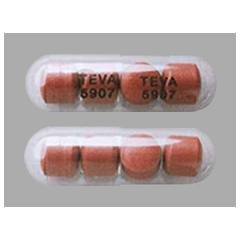
Medicine information on IMCURE is provided for educational purposes and is not a substitute for diagnosis, prescription or medical advice. Always follow your doctor’s or pharmacist’s instructions. Real product image from the U.S. National Library of Medicine's DailyMed listing for Mesalamine Capsule, Delayed Release. Packaging varies by brand and manufacturer.