
Naproxen And Esomeprazole Magnesium
11 DESCRIPTION The active ingredients of naproxen and esomeprazole magnesium delayed-release tablets are naproxen which is an NSAID and esomeprazole magnesium which is a Proton Pump Inhibitor (PPI). Naproxen and esomeprazole magnesium delayed-release tablets (naproxen and esomeprazole magnesium) is combination of a nonsteroidal anti-inflammatory drug and a PPI available as an oval, yellow, multi-layer, delayed-release tablet combining an enteric-coated naproxen core and an immediate-release esomeprazole magnesium layer surrounding the core. Each strength contains either 375 mg of naproxen and 20 mg of esomeprazole (equivalent to 22.3 mg esomeprazole magnesium trihydrate) or 500 mg of naproxen and 20 mg of esomeprazole (equivalent to 22.3 mg esomeprazole magnesium trihydrate) for oral administration. The inactive ingredients are colloidal silicon dioxide, croscarmellose sodium, hypromellose, iron oxide yellow, magnesium oxide, magnesium stearate, methacrylic acid and ethyl acrylate copolymer dispersion, talc, plasacryl, polyethylene glycol, polysorbate 80, povidone, titanium dioxide. The imprinting ink contains ammonium hydroxide, iron oxide black, propylene glycol, shellac glaze. T
Information page. Not necessarily available for purchase.
What is Naproxen And Esomeprazole Magnesium?
11 DESCRIPTION The active ingredients of naproxen and esomeprazole magnesium delayed-release tablets are naproxen which is an NSAID and esomeprazole magnesium which is a Proton Pump Inhibitor (PPI). Naproxen and esomeprazole magnesium delayed-release tablets (naproxen and esomeprazole magnesium) is combination of a nonsteroidal anti-inflammatory drug and a PPI available as an oval, yellow, multi-layer, delayed-release tablet combining an enteric-coated naproxen core and an immediate-release esomeprazole magnesium layer surrounding the core. Each strength contains either 375 mg of naproxen and 20 mg of esomeprazole (equivalent to 22.3 mg esomeprazole magnesium trihydrate) or 500 mg of naproxen and 20 mg of esomeprazole (equivalent to 22.3 mg esomeprazole magnesium trihydrate) for oral administration. The inactive ingredients are colloidal silicon dioxide, croscarmellose sodium, hypromellose, iron oxide yellow, magnesium oxide, magnesium stearate, methacrylic acid and ethyl acrylate copolymer dispersion, talc, plasacryl, polyethylene glycol, polysorbate 80, povidone, titanium dioxide. The imprinting ink contains ammonium hydroxide, iron oxide black, propylene glycol, shellac glaze. T
Uses of Naproxen And Esomeprazole Magnesium
Established uses
- 1 INDICATIONS AND USAGE Naproxen and esomeprazole magnesium delayed-release tablets, a combination of naproxen and esomeprazole magnesium, is indicated in adult and adolescent patients 12 years of age and older weighing at least 38 kg, requiring naproxen for symptomatic relief of arthritis and esomeprazole magnesium to decrease the risk for developing naproxen-associated gastric ulcers.
- The naproxen component of naproxen and esomeprazole magnesium delayed-release tablets are indicated for relief of signs and symptoms of: osteoarthritis, rheumatoid arthritis and ankylosing spondylitis in adults.
- juvenile idiopathic arthritis (JIA) in adolescent patients.
- The esomeprazole magnesium component of naproxen and esomeprazole magnesium delayed-release tablets are indicated to decrease the risk of developing naproxen-associated gastric ulcers.
- Limitations of Use: Do not substitute naproxen and esomeprazole magnesium delayed-release tablets with the single-ingredient products of naproxen and esomeprazole magnesium.
- Naproxen and esomeprazole magnesium delayed-release tablets are not recommended for initial treatment of acute pain because the absorption of naproxen is delayed compared to absor
How Naproxen And Esomeprazole Magnesium works
In more detail: 12.1 Mechanism of Action Naproxen and esomeprazole magnesium delayed-release tablets consists of an immediate-release esomeprazole magnesium layer and an enteric-coated naproxen core. As a result, esomeprazole is released first in the stomach, prior to the dissolution of naproxen in the small intestine. The enteric coating prevents naproxen release at pH levels below 5.5. The mechanism of action of the naproxen anion, like that of other NSAIDs, is not completely understood but inhibition of cyclooxygenase (COX-1 and COX-2). Naproxen and esomeprazole magnesium delayed-release tablets has analgesic, anti-inflammatory, and antipyretic properties contributed by the naproxen component. Naproxen is a potent inhibitor of prostaglandin synthesis in vitro. Naproxen concentrations reached during therapy have produced in vivo effects. Prostaglandins sensitize afferent nerves and potentiate the action of bradykinin in inducing pain in animal models. Prostaglandins are mediators of inflammation. Because naproxen is an inhibitor of prostaglandin synthesis, its mode of action may be due to an increase of prostaglandins in peripheral tissues. Esomeprazole is a proton pump inhibitor that suppresses
How to take Naproxen And Esomeprazole Magnesium
2 DOSAGE AND ADMINISTRATION Administration Use the lowest naproxen dose for the shortest duration consistent with individual patient treatment goals. ( 2.1 , 5.1 ). If a total daily dose of less than 40 mg esomeprazole is more appropriate, a different treatment should be considered. ( 2.1 ) Swallow naproxen and Esomeprazole magnesium delayed-release tablets whole with liquid at least 30 minutes before meals. ( 2.1 ) Recommended Dosage ( 2.2 ) Adolescents 12 years of age and older weighing 38 kg to less than 50 kg : One naproxen and esomeprazole magnesium delayed-release tablet twice daily of 375 mg naproxen/20 mg of esomeprazole Adults and adolescents 12 years of age and older greater than 50 kg : One naproxen and esomeprazole magnesium delayed-release tablet twice daily of either: 375 mg naproxen/20 mg of esomeprazole; or 500 mg of naproxen/20 mg of esomeprazole Renal or Hepatic Impairment ( 2.3 ) Avoid in moderate/severe renal impairment or severe hepatic impairment. Consider dose reduction in mild/moderate hepatic impairment. 2.1 Important Administration Instructions Use the lowest naproxen dose for the shortest duration consistent with individual patient treatment goals [see Wa
Dosage
Follow the dose prescribed by your doctor or pharmacist. The ranges below are general information, not a personal prescription.
- Adults
- 2 DOSAGE AND ADMINISTRATION Administration Use the lowest naproxen dose for the shortest duration consistent with individual patient treatment goals. ( 2.1 , 5.1 ). If a total daily dose of less than 40 mg esomeprazole is more appropriate, a different treatment should be considered. ( 2.1 ) Swallow naproxen and Esomeprazole magnesium delayed-release tablets whole with liquid at least 30 minutes before meals. ( 2.1 ) Recommended Dosage ( 2.2 ) Adolescents 12 years of age and older weighing 38 kg to less than 50 kg : One naproxen and esomeprazole magnesium delayed-release tablet twice daily of 375 mg naproxen/20 mg of esomeprazole Adults and adolescents 12 years of age and older greater than 50 kg : One naproxen and esomeprazole magnesium delayed-release tablet twice daily of either: 375 mg naproxen/20 mg of esomeprazole; or 500 mg of naproxen/20 mg of esomeprazole Renal or Hepatic Impairment ( 2.3 ) Avoid in moderate/severe renal impairment or severe hepatic impairment. Consider dose reduction in mild/moderate hepatic impairment. 2.1 Important Administration Instructions Use the lowest naproxen dose for the shortest duration consistent with individual patient treatment goals [see Wa
Side effects of Naproxen And Esomeprazole Magnesium
Common
- 6 ADVERSE REACTIONS The following adverse reactions are discussed in greater detail in other sections of the labeling: Cardiovascular Thrombotic Events [see Warnings and Precautions (5.1) ] GI Bleeding, Ulceration and Perforations [see Warnings and Precautions (5.2) ] Hepatotoxicity [see Warnings and Precautions (5.3) ] Hypertension [see Warnings and Precautions (5.4) ] Heart Failure and Edema [see Warnings and Precautions (5.5) ] Renal Toxicity and Hyperkalemia [see Warnings and Precautions (5.6) ] Anaphylactic Reactions [see Warnings and Precautions (5.7) ] Serious Skin Reactions [see Warnings and Precautions (5.9) ] Drug Reaction with Eosinophilia and Systemic Symptoms (DRESS) [see Warnings and Precautions (5.10) ] Fetal Toxicity [see Warnings and Precautions (5.11) ] Hematologic Toxicity [see Warnings and Precautions (5.12) ] Active Bleeding [see Warnings and Precautions (5.15) ] Acute Tubulointerstitial Nephritis [see Warnings and Precautions (5.18) ] Clostridium difficile- Associated Diarrhea [see Warnings and Precautions (5.19) ] Bone Fracture [see Warnings and Precautions (5.20) ] Cutaneous and Systemic Lupus Erythematosus [see Warnings and Precautions (5.21) ] Cyanocobalam
Warnings and who should not take it
Who should NOT take Naproxen And Esomeprazole Magnesium?
- 4 CONTRAINDICATIONS Naproxen and esomeprazole magnesium delayed-release tablets are contraindicated in the following patients: Known hypersensitivity (e.g., anaphylactic reactions and serious skin reactions) to naproxen, esomeprazole magnesium, substituted benzimidazoles, or to any components of the drug product, including omeprazole.
- Hypersensitivity reactions to esomeprazole may include anaphylaxis, anaphylactic shock, angioedema, bronchospasm, acute tubulointerstitial nephritis, and urticaria [see Warnings and Precautions (5.7 , 5.8 , 5.9 , 5.18 ), Adverse Reactions (6.2) ] .
- History of asthma, urticaria, or allergic-type reactions after taking aspirin or other NSAIDs.
- Severe, sometimes fatal, anaphylactic reactions to NSAIDs have been reported in such patients [see Warnings and Precautions (5.7 , 5.8 )] .
- In the setting of coronary artery bypass graft (CABG) surgery [see Warnings and Precautions (5.1) ] .
- Proton pump inhibitors (PPIs), including esomeprazole magnesium, are contraindicated in patients receiving rilpivirine-containing products [see Drug Interactions (7) ] .
Overdose
10 OVERDOSAGE There is no clinical data on overdosage with naproxen and esomeprazole magnesium delayed-release tablets. Overdosage of naproxen: Symptoms following acute NSAID overdosages have been typically limited to lethargy, drowsiness, nausea, vomiting, and epigastric pain, which have been generally reversible with supportive care. Gastrointestinal bleeding has occurred. Hypertension, acute renal failure, respiratory depression, and coma have occurred but were rare [see Warnings and Precautions (5.1 , 5.2 , 5.4 , 5.6) ] . A few patients have experienced seizures, but it is not clear whether or not these were drug-related. It is not known what dose of the drug would be life threatening. The oral LD50 of the drug is 500 mg/kg in rats, 1200 mg/kg in mice, 4000 mg/kg in hamsters and greater than 1000 mg/kg in dogs. In animals 0.5 g/kg of activated charcoal was effective in reducing plasma levels of naproxen. Manage patients with symptomatic and supportive care following an NSAID overdosage. There are no specific antidotes. Hemodialysis does not decrease the plasma concentration of naproxen because of the high degree of its protein binding. Consider emesis and/or activated charcoal
Safety at a glance
8.1 Pregnancy Risk Summary Use of NSAIDs, including naproxen and esomeprazole magnesium delayed-release tablets, can cause premature closure of the fetal ductus arteriosus and fetal and renal dysfunction leading to oligohydramnios and, in some cases, neonatal renal impairment. Because of these risks, limit dose and duration of naproxen and esomeprazole magnesium delayed-release tablets use between about 20 and 30 weeks of gestation and avoid naproxen and esomeprazole magnesium delayed-release tablets use at about 30 weeks of gestation and later in pregnancy (see Clinical Considerations , Data ) . Premature Closure of the Fetal Ductus Arteriosus Use of NSAIDs, including naproxen and esomeprazole magnesium delayed-release tablets, at about 30 weeks gestation or later in pregnancy increases the risk of premature closure of the fetal ductus arteriosus. Oligohydramnios/Neonatal Renal Impairment Use of NSAIDs at about 20 weeks gestation or later in pregnancy has been associated with cases of fetal renal dysfunction leading to oligohydramnios, and in some cases, neonatal renal impairment. Naproxen and esomeprazole magnesium delayed-release tablets contain naproxen and esomeprazole magnesi
Children and elderly
Children
8.4 Pediatric Use The safety and effectiveness of naproxen and esomeprazole magnesium delayed-release tablets have been established in adolescent patients 12 years of age and older weighing at least 38 kg for the symptomatic relief of JIA and to decrease the risk of developing naproxen-associated gastric ulcers. Use of naproxen and esomeprazole magnesium delayed-release tablets in this age group is based on extrapolation of adequate and well-controlled studies in adults and supported by a 6 month safety study including pharmacokinetic assessment of naproxen and esomeprazole magnesium in 36 adolescent patients with JIA. Based on the limited data, the plasma naproxen and plasma esomeprazole concentrations were found to be within the range to that observed to those found in healthy adults. The safety profile of naproxen and esomeprazole magnesium delayed-release tablets in adolescent patients with JIA was similar to adults with RA. The safety and effectiveness of naproxen and esomeprazole magnesium delayed-release tablets in pediatric patients less than 12 years of age or less than 38 kg with JIA have not been established. Juvenile Animal Data In a juvenile rat toxicity study, esomepr
Elderly
8.5 Geriatric Use Elderly patients, compared to younger patients, are at greater risk for NSAID-associated serious cardiovascular, gastrointestinal, and/or renal adverse reactions. If the anticipated benefit for the elderly patient outweighs these potential risks, start dosing at the low end of the dosing range, and monitor patients for adverse effects [see Warnings and Precautions (5.1 , 5.2 , 5.3 , 5.6 , 5.14 )] . Of the total number of patients who received naproxen and esomeprazole magnesium delayed-release tablets (n=1157) in clinical trials, 387 were ≥ 65 years of age, of which 85 patients were 75 years and over. No meaningful differences in efficacy or safety were observed between these subjects and younger subjects [see Adverse Reactions (6) ]. Studies indicate that although total plasma concentration of naproxen is unchanged, the unbound plasma fraction of naproxen is increased in the elderly. Caution is advised when high doses are required and some adjustment of dosage may be required in elderly patients. As with other drugs used in the elderly, it is prudent to use the lowest effective dose [see Dosage and Administration (2) , Clinical Pharmacology (12.3) ]. Experience i
Interactions
Medicine and medicine
- 7 DRUG INTERACTIONS See Table 3 and Table 4 for clinically significant drug interactions and interactions with diagnostics with naproxen and esomeprazole magnesium.
- Table 3: Clinically Significant Drug Interactions with Naproxen and Esomeprazole Magnesium – Affecting Drugs Co-Administered with Naproxen and Esomeprazole magnesium delayed-release tablets and Interactions with Diagnostics Clinical Impact: Naproxen • Naproxen and anticoagulants such as warfarin have a synergistic effect on bleeding.
- The concomitant use of naproxen and anticoagulants have increased the risk of serious bleeding compared to the use of either drug alone • Serotonin release by platelets plays an important role in hemostasis.
- Case-control and cohort epidemiological studies showed that concomitant use of drugs that interfere with serotonin reuptake and an NSAID may potentiate the risk of bleeding more than an NSAID alone.
- Esomeprazole Magnesium • Increased INR and prothrombin time in patients treated with PPIs, including esomeprazole, and warfarin concomitantly.
- Increases in INR and prothrombin time may lead to abnormal bleeding and even death.
Frequently asked questions
What is Naproxen And Esomeprazole Magnesium used for?
1 INDICATIONS AND USAGE Naproxen and esomeprazole magnesium delayed-release tablets, a combination of naproxen and esomeprazole magnesium, is indicated in adult and adolescent patients 12 years of age and older weighing at least 38 kg, requiring naproxen for symptomatic relief of arthritis and esomeprazole magnesium to decrease the risk for developing naproxen-associated gastric ulcers., The naproxen component of naproxen and esomeprazole magnesium delayed-release tablets are indicated for relief of signs and symptoms of: osteoarthritis, rheumatoid arthritis and ankylosing spondylitis in adults., juvenile idiopathic arthritis (JIA) in adolescent patients., The esomeprazole magnesium component of naproxen and esomeprazole magnesium delayed-release tablets are indicated to decrease the risk of developing naproxen-associated gastric ulcers., Limitations of Use: Do not substitute naproxen and esomeprazole magnesium delayed-release tablets with the single-ingredient products of naproxen and esomeprazole magnesium., Naproxen and esomeprazole magnesium delayed-release tablets are not recommended for initial treatment of acute pain because the absorption of naproxen is delayed compared to absor.
How should I take Naproxen And Esomeprazole Magnesium?
2 DOSAGE AND ADMINISTRATION Administration Use the lowest naproxen dose for the shortest duration consistent with individual patient treatment goals. ( 2.1 , 5.1 ). If a total daily dose of less than 40 mg esomeprazole is more appropriate, a different treatment should be considered. ( 2.1 ) Swallow naproxen and Esomeprazole magnesium delayed-release tablets whole with liquid at least 30 minutes before meals. ( 2.1 ) Recommended Dosage ( 2.2 ) Adolescents 12 years of age and older weighing 38 kg to less than 50 kg : One naproxen and esomeprazole magnesium delayed-release tablet twice daily of 375 mg naproxen/20 mg of esomeprazole Adults and adolescents 12 years of age and older greater than 50 kg : One naproxen and esomeprazole magnesium delayed-release tablet twice daily of either: 375 mg naproxen/20 mg of esomeprazole; or 500 mg of naproxen/20 mg of esomeprazole Renal or Hepatic Impairment ( 2.3 ) Avoid in moderate/severe renal impairment or severe hepatic impairment. Consider dose reduction in mild/moderate hepatic impairment. 2.1 Important Administration Instructions Use the lowest naproxen dose for the shortest duration consistent with individual patient treatment goals [see Wa
What are the common side effects?
6 ADVERSE REACTIONS The following adverse reactions are discussed in greater detail in other sections of the labeling: Cardiovascular Thrombotic Events [see Warnings and Precautions (5.1) ] GI Bleeding, Ulceration and Perforations [see Warnings and Precautions (5.2) ] Hepatotoxicity [see Warnings and Precautions (5.3) ] Hypertension [see Warnings and Precautions (5.4) ] Heart Failure and Edema [see Warnings and Precautions (5.5) ] Renal Toxicity and Hyperkalemia [see Warnings and Precautions (5.6) ] Anaphylactic Reactions [see Warnings and Precautions (5.7) ] Serious Skin Reactions [see Warnings and Precautions (5.9) ] Drug Reaction with Eosinophilia and Systemic Symptoms (DRESS) [see Warnings and Precautions (5.10) ] Fetal Toxicity [see Warnings and Precautions (5.11) ] Hematologic Toxicity [see Warnings and Precautions (5.12) ] Active Bleeding [see Warnings and Precautions (5.15) ] Acute Tubulointerstitial Nephritis [see Warnings and Precautions (5.18) ] Clostridium difficile- Associated Diarrhea [see Warnings and Precautions (5.19) ] Bone Fracture [see Warnings and Precautions (5.20) ] Cutaneous and Systemic Lupus Erythematosus [see Warnings and Precautions (5.21) ] Cyanocobalam.
Who should not take Naproxen And Esomeprazole Magnesium?
4 CONTRAINDICATIONS Naproxen and esomeprazole magnesium delayed-release tablets are contraindicated in the following patients: Known hypersensitivity (e.g., anaphylactic reactions and serious skin reactions) to naproxen, esomeprazole magnesium, substituted benzimidazoles, or to any components of the drug product, including omeprazole.; Hypersensitivity reactions to esomeprazole may include anaphylaxis, anaphylactic shock, angioedema, bronchospasm, acute tubulointerstitial nephritis, and urticaria [see Warnings and Precautions (5.7 , 5.8 , 5.9 , 5.18 ), Adverse Reactions (6.2) ] .; History of asthma, urticaria, or allergic-type reactions after taking aspirin or other NSAIDs.; Severe, sometimes fatal, anaphylactic reactions to NSAIDs have been reported in such patients [see Warnings and Precautions (5.7 , 5.8 )] .; In the setting of coronary artery bypass graft (CABG) surgery [see Warnings and Precautions (5.1) ] .; Proton pump inhibitors (PPIs), including esomeprazole magnesium, are contraindicated in patients receiving rilpivirine-containing products [see Drug Interactions (7) ] ..
Can I take Naproxen And Esomeprazole Magnesium during pregnancy?
8.1 Pregnancy Risk Summary Use of NSAIDs, including naproxen and esomeprazole magnesium delayed-release tablets, can cause premature closure of the fetal ductus arteriosus and fetal and renal dysfunction leading to oligohydramnios and, in some cases, neonatal renal impairment. Because of these risks, limit dose and duration of naproxen and esomeprazole magnesium delayed-release tablets use between about 20 and 30 weeks of gestation and avoid naproxen and esomeprazole magnesium delayed-release tablets use at about 30 weeks of gestation and later in pregnancy (see Clinical Considerations , Data ) . Premature Closure of the Fetal Ductus Arteriosus Use of NSAIDs, including naproxen and esomeprazole magnesium delayed-release tablets, at about 30 weeks gestation or later in pregnancy increases the risk of premature closure of the fetal ductus arteriosus. Oligohydramnios/Neonatal Renal Impairment Use of NSAIDs at about 20 weeks gestation or later in pregnancy has been associated with cases of fetal renal dysfunction leading to oligohydramnios, and in some cases, neonatal renal impairment. Naproxen and esomeprazole magnesium delayed-release tablets contain naproxen and esomeprazole magnesi
Can children take Naproxen And Esomeprazole Magnesium?
8.4 Pediatric Use The safety and effectiveness of naproxen and esomeprazole magnesium delayed-release tablets have been established in adolescent patients 12 years of age and older weighing at least 38 kg for the symptomatic relief of JIA and to decrease the risk of developing naproxen-associated gastric ulcers. Use of naproxen and esomeprazole magnesium delayed-release tablets in this age group is based on extrapolation of adequate and well-controlled studies in adults and supported by a 6 month safety study including pharmacokinetic assessment of naproxen and esomeprazole magnesium in 36 adolescent patients with JIA. Based on the limited data, the plasma naproxen and plasma esomeprazole concentrations were found to be within the range to that observed to those found in healthy adults. The safety profile of naproxen and esomeprazole magnesium delayed-release tablets in adolescent patients with JIA was similar to adults with RA. The safety and effectiveness of naproxen and esomeprazole magnesium delayed-release tablets in pediatric patients less than 12 years of age or less than 38 kg with JIA have not been established. Juvenile Animal Data In a juvenile rat toxicity study, esomepr
Does Naproxen And Esomeprazole Magnesium interact with other medicines?
7 DRUG INTERACTIONS See Table 3 and Table 4 for clinically significant drug interactions and interactions with diagnostics with naproxen and esomeprazole magnesium.; Table 3: Clinically Significant Drug Interactions with Naproxen and Esomeprazole Magnesium – Affecting Drugs Co-Administered with Naproxen and Esomeprazole magnesium delayed-release tablets and Interactions with Diagnostics Clinical Impact: Naproxen • Naproxen and anticoagulants such as warfarin have a synergistic effect on bleeding.; The concomitant use of naproxen and anticoagulants have increased the risk of serious bleeding compared to the use of either drug alone • Serotonin release by platelets plays an important role in hemostasis.; Case-control and cohort epidemiological studies showed that concomitant use of drugs that interfere with serotonin reuptake and an NSAID may potentiate the risk of bleeding more than an NSAID alone.; Esomeprazole Magnesium • Increased INR and prothrombin time in patients treated with PPIs, including esomeprazole, and warfarin concomitantly.; Increases in INR and prothrombin time may lead to abnormal bleeding and even death..
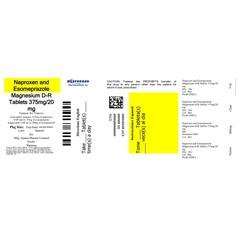
Medicine information on IMCURE is provided for educational purposes and is not a substitute for diagnosis, prescription or medical advice. Always follow your doctor’s or pharmacist’s instructions. Real product image from the U.S. National Library of Medicine's DailyMed listing for Naproxen And Esomeprazole Magnesium Tablet, Delayed Release. Packaging varies by brand and manufacturer.