
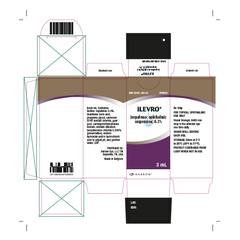
Ilevro
11 DESCRIPTION ILEVRO ® 0.3% is a sterile, topical, NSAID prodrug for ophthalmic use. Each mL of ILEVRO ® 0.3% contains 3 mg of nepafenac. Nepafenac is designated chemically as 2-amino-3-benzoylbenzeneacetamide with an empirical formula of C 15 H 14 N 2 O 2 . The structural formula of nepafenac is: Nepafenac is a yellow crystalline powder. The molecular weight of nepafenac is 254.28 g/mol. ILEVRO ® 0.3% is supplied as a sterile, aqueous suspension with a pH approximately of 6.8. The osmolality of ILEVRO ® 0.3% is approximately 300 mOsm/kg. Each mL of ILEVRO ® 0.3% contains: Active: nepafenac 0.3%. Inactives: boric acid, propylene glycol, carbomer 974P, sodium chloride, guar gum, carboxymethylcellulose sodium, edetate disodium, benzalkonium chloride 0.005% (preservative), sodium hydroxide and/or hydrochloric acid to adjust pH and purified water, USP. structural formula of nepafenac
Information page. Not necessarily available for purchase.
What is Ilevro?
11 DESCRIPTION ILEVRO ® 0.3% is a sterile, topical, NSAID prodrug for ophthalmic use. Each mL of ILEVRO ® 0.3% contains 3 mg of nepafenac. Nepafenac is designated chemically as 2-amino-3-benzoylbenzeneacetamide with an empirical formula of C 15 H 14 N 2 O 2 . The structural formula of nepafenac is: Nepafenac is a yellow crystalline powder. The molecular weight of nepafenac is 254.28 g/mol. ILEVRO ® 0.3% is supplied as a sterile, aqueous suspension with a pH approximately of 6.8. The osmolality of ILEVRO ® 0.3% is approximately 300 mOsm/kg. Each mL of ILEVRO ® 0.3% contains: Active: nepafenac 0.3%. Inactives: boric acid, propylene glycol, carbomer 974P, sodium chloride, guar gum, carboxymethylcellulose sodium, edetate disodium, benzalkonium chloride 0.005% (preservative), sodium hydroxide and/or hydrochloric acid to adjust pH and purified water, USP. structural formula of nepafenac
Uses of Ilevro
Established uses
- 1 INDICATIONS AND USAGE ILEVRO ® 0.3% is indicated for the treatment of pain and inflammation associated with cataract surgery.
- ILEVRO ® 0.3% is a nonsteroidal, anti-inflammatory prodrug indicated for the treatment of pain and inflammation associated with cataract surgery ( 1 ).
How Ilevro works
In more detail: 12.1 Mechanism of Action After topical ocular dosing, nepafenac penetrates the cornea and is converted by ocular tissue hydrolases to amfenac, a NSAID. Nepafenac and amfenac are thought to inhibit the action of prostaglandin H synthase (cyclooxygenase), an enzyme required for prostaglandin production.
How to take Ilevro
2 DOSAGE AND ADMINISTRATION One drop of ILEVRO ® 0.3% should be applied to the affected eye one-time-daily beginning 1 day prior to cataract surgery, continued on the day of surgery and through the first 2 weeks of the postoperative period. An additional drop should be administered 30 to 120 minutes prior to surgery. ( 2 ) 2.1 Recommended Dosing One drop of ILEVRO ® 0.3% should be applied to the affected eye one time daily beginning 1 day prior to cataract surgery, continued on the day of surgery and through the first 2 weeks of the postoperative period. An additional drop should be administered 30 to 120 minutes prior to surgery. 2.2 Use with Other Topical Ophthalmic Medications ILEVRO ® 0.3% may be administered in conjunction with other topical ophthalmic medications such as beta-blockers, carbonic anhydrase inhibitors, alpha-agonists, cycloplegics, and mydriatics. If more than one topical ophthalmic medication is being used, the medicines must be administered at least 5 minutes apart.
Dosage
Follow the dose prescribed by your doctor or pharmacist. The ranges below are general information, not a personal prescription.
- Adults
- 2 DOSAGE AND ADMINISTRATION One drop of ILEVRO ® 0.3% should be applied to the affected eye one-time-daily beginning 1 day prior to cataract surgery, continued on the day of surgery and through the first 2 weeks of the postoperative period. An additional drop should be administered 30 to 120 minutes prior to surgery. ( 2 ) 2.1 Recommended Dosing One drop of ILEVRO ® 0.3% should be applied to the affected eye one time daily beginning 1 day prior to cataract surgery, continued on the day of surgery and through the first 2 weeks of the postoperative period. An additional drop should be administered 30 to 120 minutes prior to surgery. 2.2 Use with Other Topical Ophthalmic Medications ILEVRO ® 0.3% may be administered in conjunction with other topical ophthalmic medications such as beta-blockers, carbonic anhydrase inhibitors, alpha-agonists, cycloplegics, and mydriatics. If more than one topical ophthalmic medication is being used, the medicines must be administered at least 5 minutes apart.
Side effects of Ilevro
Common
- 6 ADVERSE REACTIONS Because clinical studies are conducted under widely varying conditions, adverse reaction rates observed in the clinical studies of a drug cannot be directly compared to the rates in the clinical studies of another drug and may not reflect the rates observed in practice.
- Most common adverse reactions (5% to 10%) are capsular opacity, decreased visual acuity, foreign body sensation, increased intraocular pressure, and sticky sensation.
- ( 6.1 ) To report SUSPECTED ADVERSE REACTIONS, contact Harrow Eye, LLC at 1-833-4HARROW or FDA at 1-800-FDA-1088 or www.fda.gov/medwatch .
- 6.1 Serious and Otherwise Important Adverse Reactions The following adverse reactions are discussed in greater detail in other sections of labeling.
- Increased Bleeding Time [see Warnings and Precautions (5.1) ] Delayed Healing [see Warnings and Precautions (5.2) ] Corneal Effects [see Warnings and Precautions (5.3) ] 6.2 Ocular Adverse Reactions The most frequently reported ocular adverse reactions following cataract surgery were capsular opacity, decreased visual acuity, foreign body sensation, increased intraocular pressure (IOP), and sticky sensation.
- These reactions occurred in approximately
Warnings and who should not take it
Who should NOT take Ilevro?
- 4 CONTRAINDICATIONS ILEVRO ® 0.3% is contraindicated in patients with previously demonstrated hypersensitivity to any of the ingredients in the formula or to other nonsteroidal anti-inflammatory drugs (NSAIDs).
- Hypersensitivity to any of the ingredients in the formula or to other non-steroidal anti-inflammatory drugs (NSAIDS).
- ( 4 )
Safety at a glance
8.1 Pregnancy Teratogenic Effects. Pregnancy Category C: Reproduction studies performed with nepafenac in rabbits and rats at oral doses up to 10 mg/kg/day have revealed no evidence of teratogenicity due to nepafenac, despite the induction of maternal toxicity. At this dose, the animal plasma exposure to nepafenac and amfenac was approximately 70 and 630 times human plasma exposure at the recommended human topical ophthalmic dose for rats and 20 and 180 times human plasma exposure for rabbits, respectively. In rats, maternally toxic doses greater than or equal to 10 mg/kg were associated with dystocia, increased postimplantation loss, reduced fetal weights and growth, and reduced fetal survival. Nepafenac has been shown to cross the placental barrier in rats. There are no adequate and well-controlled studies in pregnant women. Because animal reproduction studies are not always predictive of human response, ILEVRO ® 0.3% should be used during pregnancy only if the potential benefit justifies the potential risk to the fetus. Non-teratogenic Effects Because of the known effects of prostaglandin biosynthesis inhibiting drugs on the fetal cardiovascular system (closure of the ductus art
8.3 Nursing Mothers Nepafenac is excreted in the milk of lactating rats. It is not known whether this drug is excreted in human milk. Because many drugs are excreted in human milk, caution should be exercised when ILEVRO ® 0.3% is administered to a nursing woman.
Children and elderly
Children
8.4 Pediatric Use The safety and effectiveness of ILEVRO ® 0.3% in pediatric patients below the age of 10 years have not been established.
Elderly
8.5 Geriatric Use No overall differences in safety and effectiveness have been observed between elderly and younger patients.
Frequently asked questions
What is Ilevro used for?
1 INDICATIONS AND USAGE ILEVRO ® 0.3% is indicated for the treatment of pain and inflammation associated with cataract surgery., ILEVRO ® 0.3% is a nonsteroidal, anti-inflammatory prodrug indicated for the treatment of pain and inflammation associated with cataract surgery ( 1 )..
How should I take Ilevro?
2 DOSAGE AND ADMINISTRATION One drop of ILEVRO ® 0.3% should be applied to the affected eye one-time-daily beginning 1 day prior to cataract surgery, continued on the day of surgery and through the first 2 weeks of the postoperative period. An additional drop should be administered 30 to 120 minutes prior to surgery. ( 2 ) 2.1 Recommended Dosing One drop of ILEVRO ® 0.3% should be applied to the affected eye one time daily beginning 1 day prior to cataract surgery, continued on the day of surgery and through the first 2 weeks of the postoperative period. An additional drop should be administered 30 to 120 minutes prior to surgery. 2.2 Use with Other Topical Ophthalmic Medications ILEVRO ® 0.3% may be administered in conjunction with other topical ophthalmic medications such as beta-blockers, carbonic anhydrase inhibitors, alpha-agonists, cycloplegics, and mydriatics. If more than one topical ophthalmic medication is being used, the medicines must be administered at least 5 minutes apart.
What are the common side effects?
6 ADVERSE REACTIONS Because clinical studies are conducted under widely varying conditions, adverse reaction rates observed in the clinical studies of a drug cannot be directly compared to the rates in the clinical studies of another drug and may not reflect the rates observed in practice., Most common adverse reactions (5% to 10%) are capsular opacity, decreased visual acuity, foreign body sensation, increased intraocular pressure, and sticky sensation., ( 6.1 ) To report SUSPECTED ADVERSE REACTIONS, contact Harrow Eye, LLC at 1-833-4HARROW or FDA at 1-800-FDA-1088 or www.fda.gov/medwatch ., 6.1 Serious and Otherwise Important Adverse Reactions The following adverse reactions are discussed in greater detail in other sections of labeling., Increased Bleeding Time [see Warnings and Precautions (5.1) ] Delayed Healing [see Warnings and Precautions (5.2) ] Corneal Effects [see Warnings and Precautions (5.3) ] 6.2 Ocular Adverse Reactions The most frequently reported ocular adverse reactions following cataract surgery were capsular opacity, decreased visual acuity, foreign body sensation, increased intraocular pressure (IOP), and sticky sensation., These reactions occurred in approximately.
Who should not take Ilevro?
4 CONTRAINDICATIONS ILEVRO ® 0.3% is contraindicated in patients with previously demonstrated hypersensitivity to any of the ingredients in the formula or to other nonsteroidal anti-inflammatory drugs (NSAIDs).; Hypersensitivity to any of the ingredients in the formula or to other non-steroidal anti-inflammatory drugs (NSAIDS).; ( 4 ).
Can I take Ilevro during pregnancy?
8.1 Pregnancy Teratogenic Effects. Pregnancy Category C: Reproduction studies performed with nepafenac in rabbits and rats at oral doses up to 10 mg/kg/day have revealed no evidence of teratogenicity due to nepafenac, despite the induction of maternal toxicity. At this dose, the animal plasma exposure to nepafenac and amfenac was approximately 70 and 630 times human plasma exposure at the recommended human topical ophthalmic dose for rats and 20 and 180 times human plasma exposure for rabbits, respectively. In rats, maternally toxic doses greater than or equal to 10 mg/kg were associated with dystocia, increased postimplantation loss, reduced fetal weights and growth, and reduced fetal survival. Nepafenac has been shown to cross the placental barrier in rats. There are no adequate and well-controlled studies in pregnant women. Because animal reproduction studies are not always predictive of human response, ILEVRO ® 0.3% should be used during pregnancy only if the potential benefit justifies the potential risk to the fetus. Non-teratogenic Effects Because of the known effects of prostaglandin biosynthesis inhibiting drugs on the fetal cardiovascular system (closure of the ductus art
Can I take Ilevro while breastfeeding?
8.3 Nursing Mothers Nepafenac is excreted in the milk of lactating rats. It is not known whether this drug is excreted in human milk. Because many drugs are excreted in human milk, caution should be exercised when ILEVRO ® 0.3% is administered to a nursing woman.
Can children take Ilevro?
8.4 Pediatric Use The safety and effectiveness of ILEVRO ® 0.3% in pediatric patients below the age of 10 years have not been established.
Medicine information on IMCURE is provided for educational purposes and is not a substitute for diagnosis, prescription or medical advice. Always follow your doctor’s or pharmacist’s instructions. Real product image from the U.S. National Library of Medicine's DailyMed listing for Ilevro (Nepafenac) Suspension/ Drops. Packaging varies by brand and manufacturer.