
Nitrofurantoin Macrocrystals
DESCRIPTION Nitrofurantoin capsules, USP (macrocrystals) are a synthetic chemical of controlled crystal size. It is a stable, lemon yellow, crystalline compound. Nitrofurantoin capsules, USP (macrocrystals) are an antibacterial agent for specific urinary tract infections. It is available in 25 mg, 50 mg, and 100 mg capsules for oral administration. Each capsule contains 25 mg, 50 mg, or 100 mg of nitrofurantoin, USP (macrocrystals). Molecular Formula: C 8 H 6 N 4 O 5 Molecular Weight: 238.16 g/mole 1-[[(5-nitro-2-furanyl)methylene] amino]-2,4-imidazolidinedione Inactive Ingredients: Each capsule contains: corn starch, gelatin, lactose monohydrate, talc and titanium dioxide. Additionally, each 50 mg and 100 mg capsule shell contains FD&C Blue no. 1 and FD&C Red no. 3. The capsule is printed with black pharmaceutical ink which contains ferrosoferric oxide, potassium hydroxide, and shellac. structure
Information page. Not necessarily available for purchase.
What is Nitrofurantoin Macrocrystals?
DESCRIPTION Nitrofurantoin capsules, USP (macrocrystals) are a synthetic chemical of controlled crystal size. It is a stable, lemon yellow, crystalline compound. Nitrofurantoin capsules, USP (macrocrystals) are an antibacterial agent for specific urinary tract infections. It is available in 25 mg, 50 mg, and 100 mg capsules for oral administration. Each capsule contains 25 mg, 50 mg, or 100 mg of nitrofurantoin, USP (macrocrystals). Molecular Formula: C 8 H 6 N 4 O 5 Molecular Weight: 238.16 g/mole 1-[[(5-nitro-2-furanyl)methylene] amino]-2,4-imidazolidinedione Inactive Ingredients: Each capsule contains: corn starch, gelatin, lactose monohydrate, talc and titanium dioxide. Additionally, each 50 mg and 100 mg capsule shell contains FD&C Blue no. 1 and FD&C Red no. 3. The capsule is printed with black pharmaceutical ink which contains ferrosoferric oxide, potassium hydroxide, and shellac. structure
Uses of Nitrofurantoin Macrocrystals
Established uses
- INDICATIONS AND USAGE Nitrofurantoin capsules (macrocrystals) are specifically indicated for the treatment of urinary tract infections when due to susceptible strains of Escherichia coli , enterococci, Staphylococcus aureus , and certain susceptible strains of Klebsiella and Enterobacter species.
- Nitrofurantoin is not indicated for the treatment of pyelonephritis or perinephric abscesses.
- To reduce the development of drug-resistant bacteria and maintain the effectiveness of nitrofurantoin capsules (macrocrystals) and other antibacterial drugs, nitrofurantoin capsules (macrocrystals) should be used only to treat or prevent infections that are proven or strongly suspected to be caused by susceptible bacteria.
- When culture and susceptibility information are available, they should be considered in selecting or modifying antibacterial therapy.
- In the absence of such data, local epidemiology and susceptibility patterns may contribute to the empiric selection of therapy.
- Nitrofurantoins lack the broader tissue distribution of other therapeutic agents approved for urinary tract infections.
How to take Nitrofurantoin Macrocrystals
DOSAGE AND ADMINISTRATION Nitrofurantoin capsules, (macrocrystals) should be given with food to improve drug absorption and, in some patients, tolerance. Adults: 50 mg to 100 mg four times a day - the lower dosage level is recommended for uncomplicated urinary tract infections. Pediatric Patients: 5 mg/kg to 7 mg/kg of body weight per 24 hours, given in four divided doses (contraindicated under one month of age). Therapy should be continued for one week or for at least 3 days after sterility of the urine is obtained. Continued infection indicates the need for reevaluation. For long-term suppressive therapy in adults, a reduction of dosage to 50 mg to 100 mg at bedtime may be adequate. For long-term suppressive therapy in pediatric patients, doses as low as 1 mg/kg per 24 hours, given in a single dose or in two divided doses, may be adequate. SEE WARNINGS SECTION REGARDING RISKS ASSOCIATED WITH LONG-TERM THERAPY.
Dosage
Follow the dose prescribed by your doctor or pharmacist. The ranges below are general information, not a personal prescription.
- Adults
- DOSAGE AND ADMINISTRATION Nitrofurantoin capsules, (macrocrystals) should be given with food to improve drug absorption and, in some patients, tolerance. Adults: 50 mg to 100 mg four times a day - the lower dosage level is recommended for uncomplicated urinary tract infections. Pediatric Patients: 5 mg/kg to 7 mg/kg of body weight per 24 hours, given in four divided doses (contraindicated under one month of age). Therapy should be continued for one week or for at least 3 days after sterility of the urine is obtained. Continued infection indicates the need for reevaluation. For long-term suppressive therapy in adults, a reduction of dosage to 50 mg to 100 mg at bedtime may be adequate. For long-term suppressive therapy in pediatric patients, doses as low as 1 mg/kg per 24 hours, given in a single dose or in two divided doses, may be adequate. SEE WARNINGS SECTION REGARDING RISKS ASSOCIATED WITH LONG-TERM THERAPY.
Side effects of Nitrofurantoin Macrocrystals
Common
- ADVERSE REACTIONS Respiratory: CHRONIC, SUBACUTE, OR ACUTE PULMONARY HYPERSENSITIVITY REACTIONS MAY OCCUR.
- CHRONIC PULMONARY REACTIONS OCCUR GENERALLY IN PATIENTS WHO HAVE RECEIVED CONTINUOUS TREATMENT FOR SIX MONTHS OR LONGER.
- MALAISE, DYSPNEA ON EXERTION, COUGH, AND ALTERED PULMONARY FUNCTION ARE COMMON MANIFESTATIONS WHICH CAN OCCUR INSIDIOUSLY.
- RADIOLOGIC AND HISTOLOGIC FINDINGS OF DIFFUSE INTERSTITIAL PNEUMONITIS OR FIBROSIS, OR BOTH, ARE ALSO COMMON MANIFESTATIONS OF THE CHRONIC PULMONARY REACTION.
- FEVER IS RARELY PROMINENT.
- THE SEVERITY OF CHRONIC PULMONARY REACTIONS AND THEIR DEGREE OF RESOLUTION APPEAR TO BE RELATED TO THE DURATION OF THERAPY AFTER THE FIRST CLINICAL SIGNS APPEAR.
Warnings and who should not take it
Who should NOT take Nitrofurantoin Macrocrystals?
- CONTRAINDICATIONS Anuria, oliguria, or significant impairment of renal function (creatinine clearance under 60 mL per minute or clinically significant elevated serum creatinine) are contraindications.
- Treatment of this type of patient carries an increased risk of toxicity because of impaired excretion of the drug.
- Because of the possibility of hemolytic anemia due to immature erythrocyte enzyme systems (glutathione instability), the drug is contraindicated in pregnant patients at term (38 to 42 weeks' gestation), during labor and delivery, or when the onset of labor is imminent.
- For the same reason, the drug is contraindicated in neonates under one month of age.
- Nitrofurantoin capsules (macrocrystals) are contraindicated in patients with a previous history of cholestatic jaundice/hepatic dysfunction associated with nitrofurantoin.
- Nitrofurantoin capsules (macrocrystals) are also contraindicated in those patients with known hypersensitivity to nitrofurantoin.
Warnings and precautions
- WARNINGS Pulmonary reactions: ACUTE, SUBACUTE, OR CHRONIC PULMONARY REACTIONS HAVE BEEN OBSERVED IN PATIENTS TREATED WITH NITROFURANTOIN.
- IF THESE REACTIONS OCCUR, NITROFURANTOIN CAPSULES (MACROCRYSTALS) SHOULD BE DISCONTINUED AND APPROPRIATE MEASURES TAKEN.
- REPORTS HAVE CITED PULMONARY REACTIONS AS A CONTRIBUTING CAUSE OF DEATH.
- CHRONIC PULMONARY REACTIONS (DIFFUSE INTERSTITIAL PNEUMONITIS OR PULMONARY FIBROSIS, OR BOTH) CAN DEVELOP INSIDIOUSLY.
- THESE REACTIONS OCCUR RARELY AND GENERALLY IN PATIENTS RECEIVING THERAPY FOR SIX MONTHS OR LONGER.
- CLOSE MONITORING OF THE PULMONARY CONDITION OF PATIENTS RECEIVING LONG-TERM THERAPY IS WARRANTED AND REQUIRES THAT THE BENEFITS OF THERAPY BE WEIGHED AGAINST POTENTIAL RISKS (SEE RESPIRATORY REACTIONS).
Overdose
OVERDOSAGE Occasional incidents of acute overdosage of nitrofurantoin capsules (macrocrystals) have not resulted in any specific symptoms other than vomiting. Induction of emesis is recommended. There is no specific antidote, but a high fluid intake should be maintained to promote urinary excretion of the drug. It is dialyzable.
Frequently asked questions
What is Nitrofurantoin Macrocrystals used for?
INDICATIONS AND USAGE Nitrofurantoin capsules (macrocrystals) are specifically indicated for the treatment of urinary tract infections when due to susceptible strains of Escherichia coli , enterococci, Staphylococcus aureus , and certain susceptible strains of Klebsiella and Enterobacter species., Nitrofurantoin is not indicated for the treatment of pyelonephritis or perinephric abscesses., To reduce the development of drug-resistant bacteria and maintain the effectiveness of nitrofurantoin capsules (macrocrystals) and other antibacterial drugs, nitrofurantoin capsules (macrocrystals) should be used only to treat or prevent infections that are proven or strongly suspected to be caused by susceptible bacteria., When culture and susceptibility information are available, they should be considered in selecting or modifying antibacterial therapy., In the absence of such data, local epidemiology and susceptibility patterns may contribute to the empiric selection of therapy., Nitrofurantoins lack the broader tissue distribution of other therapeutic agents approved for urinary tract infections..
How should I take Nitrofurantoin Macrocrystals?
DOSAGE AND ADMINISTRATION Nitrofurantoin capsules, (macrocrystals) should be given with food to improve drug absorption and, in some patients, tolerance. Adults: 50 mg to 100 mg four times a day - the lower dosage level is recommended for uncomplicated urinary tract infections. Pediatric Patients: 5 mg/kg to 7 mg/kg of body weight per 24 hours, given in four divided doses (contraindicated under one month of age). Therapy should be continued for one week or for at least 3 days after sterility of the urine is obtained. Continued infection indicates the need for reevaluation. For long-term suppressive therapy in adults, a reduction of dosage to 50 mg to 100 mg at bedtime may be adequate. For long-term suppressive therapy in pediatric patients, doses as low as 1 mg/kg per 24 hours, given in a single dose or in two divided doses, may be adequate. SEE WARNINGS SECTION REGARDING RISKS ASSOCIATED WITH LONG-TERM THERAPY.
What are the common side effects?
ADVERSE REACTIONS Respiratory: CHRONIC, SUBACUTE, OR ACUTE PULMONARY HYPERSENSITIVITY REACTIONS MAY OCCUR., CHRONIC PULMONARY REACTIONS OCCUR GENERALLY IN PATIENTS WHO HAVE RECEIVED CONTINUOUS TREATMENT FOR SIX MONTHS OR LONGER., MALAISE, DYSPNEA ON EXERTION, COUGH, AND ALTERED PULMONARY FUNCTION ARE COMMON MANIFESTATIONS WHICH CAN OCCUR INSIDIOUSLY., RADIOLOGIC AND HISTOLOGIC FINDINGS OF DIFFUSE INTERSTITIAL PNEUMONITIS OR FIBROSIS, OR BOTH, ARE ALSO COMMON MANIFESTATIONS OF THE CHRONIC PULMONARY REACTION., FEVER IS RARELY PROMINENT., THE SEVERITY OF CHRONIC PULMONARY REACTIONS AND THEIR DEGREE OF RESOLUTION APPEAR TO BE RELATED TO THE DURATION OF THERAPY AFTER THE FIRST CLINICAL SIGNS APPEAR..
Who should not take Nitrofurantoin Macrocrystals?
CONTRAINDICATIONS Anuria, oliguria, or significant impairment of renal function (creatinine clearance under 60 mL per minute or clinically significant elevated serum creatinine) are contraindications.; Treatment of this type of patient carries an increased risk of toxicity because of impaired excretion of the drug.; Because of the possibility of hemolytic anemia due to immature erythrocyte enzyme systems (glutathione instability), the drug is contraindicated in pregnant patients at term (38 to 42 weeks' gestation), during labor and delivery, or when the onset of labor is imminent.; For the same reason, the drug is contraindicated in neonates under one month of age.; Nitrofurantoin capsules (macrocrystals) are contraindicated in patients with a previous history of cholestatic jaundice/hepatic dysfunction associated with nitrofurantoin.; Nitrofurantoin capsules (macrocrystals) are also contraindicated in those patients with known hypersensitivity to nitrofurantoin..
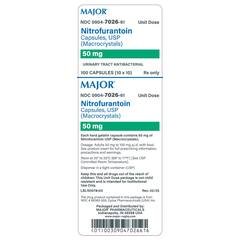
Medicine information on IMCURE is provided for educational purposes and is not a substitute for diagnosis, prescription or medical advice. Always follow your doctor’s or pharmacist’s instructions. Real product image from the U.S. National Library of Medicine's DailyMed listing for Nitrofurantoin Macrocrystals Capsule. Packaging varies by brand and manufacturer.