
Ondansetron Hydrochloride
11 DESCRIPTION The active ingredient in ondansetron tablets is ondansetron hydrochloride as the dihydrate, the racemic form of ondansetron and a selective blocking agent of the serotonin 5-HT 3 receptor type. Chemically it is (±) 1, 2, 3, 9-tetrahydro-9-methyl-3-[(2-methyl-1H-imidazol-1-yl)methyl]-4H-carbazol-4-one, monohydrochloride, dihydrate. It has the following structural formula: The molecular formula is C 18 H 19 N 3 O•HCl•2H 2 O, representing a molecular weight of 365.86 g/mol. Ondansetron HCl dihydrate USP is a white to off-white powder that is soluble in methanol, sparingly soluble in purified water and in alcohol, and slightly soluble in isopropyl alcohol, in dichloromethane, very slightly soluble in acetone, in chloroform and in ethyl acetate. Each 4 mg ondansetron tablets USP for oral administration contains ondansetron HCl dihydrate USP equivalent to 4 mg of ondansetron. Each 8 mg ondansetron tablets USP for oral administration contains ondansetron HCl dihydrate USP equivalent to 8 mg of ondansetron. Each 16 mg ondansetron tablets USP for oral administration contains ondansetron HCl dihydrate USP equivalent to 16 mg of ondansetron. Each 24 mg ondansetron tablets USP f
Information page. Not necessarily available for purchase.
What is Ondansetron Hydrochloride?
11 DESCRIPTION The active ingredient in ondansetron tablets is ondansetron hydrochloride as the dihydrate, the racemic form of ondansetron and a selective blocking agent of the serotonin 5-HT 3 receptor type. Chemically it is (±) 1, 2, 3, 9-tetrahydro-9-methyl-3-[(2-methyl-1H-imidazol-1-yl)methyl]-4H-carbazol-4-one, monohydrochloride, dihydrate. It has the following structural formula: The molecular formula is C 18 H 19 N 3 O•HCl•2H 2 O, representing a molecular weight of 365.86 g/mol. Ondansetron HCl dihydrate USP is a white to off-white powder that is soluble in methanol, sparingly soluble in purified water and in alcohol, and slightly soluble in isopropyl alcohol, in dichloromethane, very slightly soluble in acetone, in chloroform and in ethyl acetate. Each 4 mg ondansetron tablets USP for oral administration contains ondansetron HCl dihydrate USP equivalent to 4 mg of ondansetron. Each 8 mg ondansetron tablets USP for oral administration contains ondansetron HCl dihydrate USP equivalent to 8 mg of ondansetron. Each 16 mg ondansetron tablets USP for oral administration contains ondansetron HCl dihydrate USP equivalent to 16 mg of ondansetron. Each 24 mg ondansetron tablets USP f
Uses of Ondansetron Hydrochloride
Established uses
- 1 INDICATIONS AND USAGE Ondansetron tablets are indicated for the prevention of nausea and vomiting associated with: highly emetogenic cancer chemotherapy, including cisplatin greater than or equal to 50 mg/m 2 .
- initial and repeat courses of moderately emetogenic cancer chemotherapy.
- radiotherapy in patients receiving either total body irradiation, single high-dose fraction to the abdomen, or daily fractions to the abdomen Ondansetron tablets are also indicated for the prevention of postoperative nausea and/or vomiting.
- Ondansetron tablets are 5-HT 3 receptor antagonist indicated for the prevention of: nausea and vomiting associated with highly emetogenic cancer chemotherapy, including cisplatin greater than or equal to 50 mg/m 2 (1) nausea and vomiting associated with initial and repeat courses of moderately emetogenic cancer chemotherapy (1) nausea and vomiting associated with radiotherapy in patients receiving either total body irradiation, single high-dose fraction to the abdomen, or daily fractions to the abdomen (1) postoperative nausea and/or vomiting (1)
How Ondansetron Hydrochloride works
In more detail: 12.1 Mechanism of Action Ondansetron is a selective 5-HT 3 receptor antagonist. While its mechanism of action has not been fully characterized, ondansetron is not a dopamine-receptor antagonist. Serotonin receptors of the 5-HT 3 type are present both peripherally on vagal nerve terminals and centrally in the chemoreceptor trigger zone of the area postrema. It is not certain whether ondansetron’s antiemetic action is mediated centrally, peripherally, or in both sites. However, cytotoxic chemotherapy appears to be associated with release of serotonin from the enterochromaffin cells of the small intestine. In humans, urinary 5-hydroxyindoleacetic acid (5-HIAA) excretion increases after cisplatin administration in parallel with the onset of emesis. The released serotonin may stimulate the vagal afferents through the 5-HT 3 receptors and initiate the vomiting reflex.
How to take Ondansetron Hydrochloride
2 DOSAGE AND ADMINISTRATION See full prescribing information for the recommended dosage in adults and pediatrics (2) Patients with severe hepatic impairment: do not exceed a total daily dose of 8 mg ( 2.2 , 8.6 ) 2.1 Dosage The recommended dosage regimens for adult and pediatric patients are described in Table 1 and Table 2, respectively. Corresponding doses of ondansetron tablets may be used interchangeably. Table 1: Adult Recommended Dosage Regimen for Prevention of Nausea and Vomiting Indication Dosage Regimen Highly Emetogenic Cancer Chemotherapy A single 24 mg dose administered 30 minutes before the start of single-day highly emetogenic chemotherapy, including cisplatin greater than or equal to 50 mg/m 2 Moderately Emetogenic Cancer Chemotherapy 8 mg administered 30 minutes before the start of chemotherapy, with a subsequent 8 mg dose 8 hours after the first dose. Then administer 8 mg twice a day (every 12 hours) for 1 to 2 days after completion of chemotherapy. Radiotherapy For total body irradiation : 8 mg administered 1 to 2 hours before each fraction of radiotherapy each day. For single high-dose fraction radiotherapy to the abdomen : 8 mg administered 1 to 2 hours before
Dosage
Follow the dose prescribed by your doctor or pharmacist. The ranges below are general information, not a personal prescription.
- Adults
- 2 DOSAGE AND ADMINISTRATION See full prescribing information for the recommended dosage in adults and pediatrics (2) Patients with severe hepatic impairment: do not exceed a total daily dose of 8 mg ( 2.2 , 8.6 ) 2.1 Dosage The recommended dosage regimens for adult and pediatric patients are described in Table 1 and Table 2, respectively. Corresponding doses of ondansetron tablets may be used interchangeably. Table 1: Adult Recommended Dosage Regimen for Prevention of Nausea and Vomiting Indication Dosage Regimen Highly Emetogenic Cancer Chemotherapy A single 24 mg dose administered 30 minutes before the start of single-day highly emetogenic chemotherapy, including cisplatin greater than or equal to 50 mg/m 2 Moderately Emetogenic Cancer Chemotherapy 8 mg administered 30 minutes before the start of chemotherapy, with a subsequent 8 mg dose 8 hours after the first dose. Then administer 8 mg twice a day (every 12 hours) for 1 to 2 days after completion of chemotherapy. Radiotherapy For total body irradiation : 8 mg administered 1 to 2 hours before each fraction of radiotherapy each day. For single high-dose fraction radiotherapy to the abdomen : 8 mg administered 1 to 2 hours before
Side effects of Ondansetron Hydrochloride
Common
- 6 ADVERSE REACTIONS The following clinically significant adverse reactions are described elsewhere in the labeling: Hypersensitivity Reactions [see Warnings and Precautions ( 5.1 )] QT Prolongation [see Warnings and Precautions (5.2 )] Serotonin Syndrome [see Warnings and Precautions ( 5.3 )] Myocardial Ischemia [see Warnings and Precautions ( 5.4 )] Masking of Progressive Ileus and Gastric Distension [see Warnings and Precautions [see Warnings and Precautions ( 5.5 )] The most common adverse reactions in adults for the: prevention of chemotherapy-induced (≥5%) are: headache, malaise/fatigue, constipation, diarrhea ( 6.1 ) prevention of radiation-induced nausea and vomiting (≥2%) are: headache, constipation, and diarrhea ( 6.1 ) prevention of postoperative nausea and vomiting (≥9%) are: headache and hypoxia ( 6.1 ) To report SUSPECTED ADVERSE REACTIONS, contact Dr.
- Reddy's Laboratories Inc., at 1-888-375-3784 or FDA at 1-800-FDA-1088 or www.fda.gov/medwatch .
- 6.1 Clinical Trials Experience Because clinical trials are conducted under widely varying conditions, adverse reaction rates observed in the clinical trials of a drug cannot be directly compared with rates in the clinical tria
Warnings and who should not take it
Who should NOT take Ondansetron Hydrochloride?
- 4 CONTRAINDICATIONS Ondansetron is contraindicated in patients: known to have hypersensitivity (e.g., anaphylaxis) to ondansetron or any of the components of the formulation [see Adverse Reactions (6.2) ] receiving concomitant apomorphine due to the risk of profound hypotension and loss of consciousness Patients known to have hypersensitivity (e.g., anaphylaxis) to ondansetron or any components of the formulation.
- (4) Concomitant use of apomorphine (4)
Overdose
10 OVERDOSAGE There is no specific antidote for ondansetron overdose. Patients should be managed with appropriate supportive therapy. In addition to the adverse reactions listed above, the following adverse reactions have been described in the setting of ondansetron overdose: “Sudden blindness” (amaurosis) of 2 to 3 minutes’ duration plus severe constipation occurred in one patient that was administered 72 mg of ondansetron intravenously as a single dose. Hypotension (and faintness) occurred in a patient that took 48 mg of ondansetron tablets. Following infusion of 32 mg over only a 4-minute period, a vasovagal episode with transient second-degree heart block was observed. In all instances, the adverse reactions resolved completely. Pediatric cases consistent with serotonin syndrome have been reported after inadvertent oral overdoses of ondansetron (exceeding estimated ingestion of 5 mg per kg) in young children. Reported symptoms included somnolence, agitation, tachycardia, tachypnea, hypertension, flushing, mydriasis, diaphoresis, myoclonic movements, horizontal nystagmus, hyperreflexia, and seizure. Patients required supportive care, including intubation in some cases, with comp
Safety at a glance
8.1 Pregnancy Risk Summary Published epidemiological studies on the association between ondansetron use and major birth defects have reported inconsistent findings and have important methodological limitations that preclude conclusions about the safety of ondansetron use in pregnancy ( see Data ). Available postmarketing data have not identified a drug-associated risk of miscarriage or adverse maternal outcomes. Reproductive studies in rats and rabbits did not show evidence of harm to the fetus when ondansetron was administered during organogenesis at approximately 6 and 24 times the maximum recommended human oral dose of 24 mg/day, based on body surface area (BSA), respectively ( see Data ). The background risk of major birth defects and miscarriage for the indicated population is unknown. All pregnancies have a background risk of birth defect, miscarriages, or other adverse outcomes. In the US general population, the estimated background risk of major birth defects and miscarriages in clinically recognized pregnancies is 2% to 4% and 15% to 20%, respectively. Data Human Data Available data on ondansetron use in pregnant women from several published epidemiological studies preclud
Children and elderly
Children
8.4 Pediatric Use The safety and effectiveness of orally administered ondansetron have been established in pediatric patients 4 years and older for the prevention of nausea and vomiting associated with moderately emetogenic cancer chemotherapy. Use of ondansetron in these age-groups is supported by evidence from adequate and well-controlled studies of ondansetron in adults with additional data from 3 open-label, uncontrolled, non-US trials in 182 pediatric patients aged 4 to 18 years with cancer who were given a variety of cisplatin or noncisplatin regimens [see Dosage and Administration ( 2.2) , Clinical Studies (14.1 )]. Additional information on the use of ondansetron in pediatric patients may be found in ondansetron Injection prescribing information. The safety and effectiveness of orally administered ondansetron have not been established in pediatric patients for: • prevention of nausea and vomiting associated with highly emetogenic cancer chemotherapy • prevention of nausea and vomiting associated with radiotherapy • prevention of postoperative nausea and/or vomiting
Elderly
8.5 Geriatric Use Of the total number of subjects enrolled in cancer chemotherapy-induced and postoperative nausea and vomiting in US-and foreign-controlled clinical trials, for which there were subgroup analyses, 938 (19%) were aged 65 years and older. No overall differences in safety or effectiveness were observed between subjects 65 years of age and older and younger subjects. A reduction in clearance and increase in elimination half-life were seen in patients older than 75 years compared with younger subjects [see Clinical Pharmacology ( 12.3) ] . There were an insufficient number of patients older than 75 years of age and older in the clinical trials to permit safety or efficacy conclusions in this age-group. Other reported clinical experience has not identified differences in responses between the elderly and younger patients, but greater sensitivity of some older individuals cannot be ruled out. No dosage adjustment is needed in elderly patients.
Interactions
Medicine and medicine
- 7 DRUG INTERACTIONS 7.1 Serotonergic Drugs Serotonin syndrome (including altered mental status, autonomic instability, and neuromuscular symptoms) has been described following the concomitant use of 5-HT 3 receptor antagonists and other serotonergic drugs, including SSRIs and SNRIs.
- Monitor for the emergence of serotonin syndrome.
- If symptoms occur, discontinue ondansetron and initiate supportive treatment [see Warnings and Precautions ( 5.3) ].
- 7.2 Drugs Affecting Cytochrome P-450 Enzymes Ondansetron does not itself appear to induce or inhibit the cytochrome P-450 drug-metabolizing enzyme system of the liver [see Clinical Pharmacology (12.3)].
- Because ondansetron is metabolized by hepatic cytochrome P-450 drug-metabolizing enzymes (CYP3A4, CYP2D6, CYP1A2), inducers or inhibitors of these enzymes may change the clearance and, hence, the half-life of ondansetron.
- In patients treated with potent inducers of CYP3A4 (i.e., phenytoin, carbamazepine, and rifampin), the clearance of ondansetron was significantly increased and ondansetron blood concentrations were decreased.
Frequently asked questions
What is Ondansetron Hydrochloride used for?
1 INDICATIONS AND USAGE Ondansetron tablets are indicated for the prevention of nausea and vomiting associated with: highly emetogenic cancer chemotherapy, including cisplatin greater than or equal to 50 mg/m 2 ., initial and repeat courses of moderately emetogenic cancer chemotherapy., radiotherapy in patients receiving either total body irradiation, single high-dose fraction to the abdomen, or daily fractions to the abdomen Ondansetron tablets are also indicated for the prevention of postoperative nausea and/or vomiting., Ondansetron tablets are 5-HT 3 receptor antagonist indicated for the prevention of: nausea and vomiting associated with highly emetogenic cancer chemotherapy, including cisplatin greater than or equal to 50 mg/m 2 (1) nausea and vomiting associated with initial and repeat courses of moderately emetogenic cancer chemotherapy (1) nausea and vomiting associated with radiotherapy in patients receiving either total body irradiation, single high-dose fraction to the abdomen, or daily fractions to the abdomen (1) postoperative nausea and/or vomiting (1).
How should I take Ondansetron Hydrochloride?
2 DOSAGE AND ADMINISTRATION See full prescribing information for the recommended dosage in adults and pediatrics (2) Patients with severe hepatic impairment: do not exceed a total daily dose of 8 mg ( 2.2 , 8.6 ) 2.1 Dosage The recommended dosage regimens for adult and pediatric patients are described in Table 1 and Table 2, respectively. Corresponding doses of ondansetron tablets may be used interchangeably. Table 1: Adult Recommended Dosage Regimen for Prevention of Nausea and Vomiting Indication Dosage Regimen Highly Emetogenic Cancer Chemotherapy A single 24 mg dose administered 30 minutes before the start of single-day highly emetogenic chemotherapy, including cisplatin greater than or equal to 50 mg/m 2 Moderately Emetogenic Cancer Chemotherapy 8 mg administered 30 minutes before the start of chemotherapy, with a subsequent 8 mg dose 8 hours after the first dose. Then administer 8 mg twice a day (every 12 hours) for 1 to 2 days after completion of chemotherapy. Radiotherapy For total body irradiation : 8 mg administered 1 to 2 hours before each fraction of radiotherapy each day. For single high-dose fraction radiotherapy to the abdomen : 8 mg administered 1 to 2 hours before
What are the common side effects?
6 ADVERSE REACTIONS The following clinically significant adverse reactions are described elsewhere in the labeling: Hypersensitivity Reactions [see Warnings and Precautions ( 5.1 )] QT Prolongation [see Warnings and Precautions (5.2 )] Serotonin Syndrome [see Warnings and Precautions ( 5.3 )] Myocardial Ischemia [see Warnings and Precautions ( 5.4 )] Masking of Progressive Ileus and Gastric Distension [see Warnings and Precautions [see Warnings and Precautions ( 5.5 )] The most common adverse reactions in adults for the: prevention of chemotherapy-induced (≥5%) are: headache, malaise/fatigue, constipation, diarrhea ( 6.1 ) prevention of radiation-induced nausea and vomiting (≥2%) are: headache, constipation, and diarrhea ( 6.1 ) prevention of postoperative nausea and vomiting (≥9%) are: headache and hypoxia ( 6.1 ) To report SUSPECTED ADVERSE REACTIONS, contact Dr., Reddy's Laboratories Inc., at 1-888-375-3784 or FDA at 1-800-FDA-1088 or www.fda.gov/medwatch ., 6.1 Clinical Trials Experience Because clinical trials are conducted under widely varying conditions, adverse reaction rates observed in the clinical trials of a drug cannot be directly compared with rates in the clinical tria.
Who should not take Ondansetron Hydrochloride?
4 CONTRAINDICATIONS Ondansetron is contraindicated in patients: known to have hypersensitivity (e.g., anaphylaxis) to ondansetron or any of the components of the formulation [see Adverse Reactions (6.2) ] receiving concomitant apomorphine due to the risk of profound hypotension and loss of consciousness Patients known to have hypersensitivity (e.g., anaphylaxis) to ondansetron or any components of the formulation.; (4) Concomitant use of apomorphine (4).
Can I take Ondansetron Hydrochloride during pregnancy?
8.1 Pregnancy Risk Summary Published epidemiological studies on the association between ondansetron use and major birth defects have reported inconsistent findings and have important methodological limitations that preclude conclusions about the safety of ondansetron use in pregnancy ( see Data ). Available postmarketing data have not identified a drug-associated risk of miscarriage or adverse maternal outcomes. Reproductive studies in rats and rabbits did not show evidence of harm to the fetus when ondansetron was administered during organogenesis at approximately 6 and 24 times the maximum recommended human oral dose of 24 mg/day, based on body surface area (BSA), respectively ( see Data ). The background risk of major birth defects and miscarriage for the indicated population is unknown. All pregnancies have a background risk of birth defect, miscarriages, or other adverse outcomes. In the US general population, the estimated background risk of major birth defects and miscarriages in clinically recognized pregnancies is 2% to 4% and 15% to 20%, respectively. Data Human Data Available data on ondansetron use in pregnant women from several published epidemiological studies preclud
Can children take Ondansetron Hydrochloride?
8.4 Pediatric Use The safety and effectiveness of orally administered ondansetron have been established in pediatric patients 4 years and older for the prevention of nausea and vomiting associated with moderately emetogenic cancer chemotherapy. Use of ondansetron in these age-groups is supported by evidence from adequate and well-controlled studies of ondansetron in adults with additional data from 3 open-label, uncontrolled, non-US trials in 182 pediatric patients aged 4 to 18 years with cancer who were given a variety of cisplatin or noncisplatin regimens [see Dosage and Administration ( 2.2) , Clinical Studies (14.1 )]. Additional information on the use of ondansetron in pediatric patients may be found in ondansetron Injection prescribing information. The safety and effectiveness of orally administered ondansetron have not been established in pediatric patients for: • prevention of nausea and vomiting associated with highly emetogenic cancer chemotherapy • prevention of nausea and vomiting associated with radiotherapy • prevention of postoperative nausea and/or vomiting
Does Ondansetron Hydrochloride interact with other medicines?
7 DRUG INTERACTIONS 7.1 Serotonergic Drugs Serotonin syndrome (including altered mental status, autonomic instability, and neuromuscular symptoms) has been described following the concomitant use of 5-HT 3 receptor antagonists and other serotonergic drugs, including SSRIs and SNRIs.; Monitor for the emergence of serotonin syndrome.; If symptoms occur, discontinue ondansetron and initiate supportive treatment [see Warnings and Precautions ( 5.3) ].; 7.2 Drugs Affecting Cytochrome P-450 Enzymes Ondansetron does not itself appear to induce or inhibit the cytochrome P-450 drug-metabolizing enzyme system of the liver [see Clinical Pharmacology (12.3)].; Because ondansetron is metabolized by hepatic cytochrome P-450 drug-metabolizing enzymes (CYP3A4, CYP2D6, CYP1A2), inducers or inhibitors of these enzymes may change the clearance and, hence, the half-life of ondansetron.; In patients treated with potent inducers of CYP3A4 (i.e., phenytoin, carbamazepine, and rifampin), the clearance of ondansetron was significantly increased and ondansetron blood concentrations were decreased..
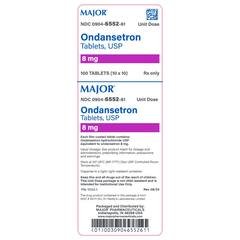
Medicine information on IMCURE is provided for educational purposes and is not a substitute for diagnosis, prescription or medical advice. Always follow your doctor’s or pharmacist’s instructions. Real product image from the U.S. National Library of Medicine's DailyMed listing for Ondansetron (Ondansetron Hydrochloride) Tablet, Film Coated. Packaging varies by brand and manufacturer.