
Pantoprazole Sodium
11 DESCRIPTION The active ingredient in Pantoprazole Sodium for Injection, a PPI, is a substituted benzimidazole, sodium 5-(difluoromethoxy)-2-[[(3,4-dimethoxy-2-pyridinyl)methyl] sulfinyl]-1 H -benzimidazole, a compound that inhibits gastric acid secretion. Its empirical formula is C 16 H 14 F 2 N 3 NaO 4 S, with a molecular weight of 405.4. The structural formula is: Pantoprazole sodium, USP is a white to off-white crystalline powder and is racemic. Pantoprazole sodium, USP has weakly basic and acidic properties. Pantoprazole sodium, USP is freely soluble in water, very slightly soluble in phosphate buffer at pH 7.4, and practically insoluble in n-hexane. The reconstituted solution of Pantoprazole Sodium for Injection is in the pH range of 9.0 to 10.5. Pantoprazole Sodium for Injection is supplied for intravenous administration as a sterile, freeze-dried powder in a single-dose clear glass vial fitted with a rubber stopper and crimp seal. Each vial contains 40 mg pantoprazole (equivalent to 45.1 mg of pantoprazole sodium, USP), edetate disodium dihydrate, USP (1 mg), and sodium hydroxide, NF to adjust pH. Structural Formula
Information page. Not necessarily available for purchase.
What is Pantoprazole Sodium?
11 DESCRIPTION The active ingredient in Pantoprazole Sodium for Injection, a PPI, is a substituted benzimidazole, sodium 5-(difluoromethoxy)-2-[[(3,4-dimethoxy-2-pyridinyl)methyl] sulfinyl]-1 H -benzimidazole, a compound that inhibits gastric acid secretion. Its empirical formula is C 16 H 14 F 2 N 3 NaO 4 S, with a molecular weight of 405.4. The structural formula is: Pantoprazole sodium, USP is a white to off-white crystalline powder and is racemic. Pantoprazole sodium, USP has weakly basic and acidic properties. Pantoprazole sodium, USP is freely soluble in water, very slightly soluble in phosphate buffer at pH 7.4, and practically insoluble in n-hexane. The reconstituted solution of Pantoprazole Sodium for Injection is in the pH range of 9.0 to 10.5. Pantoprazole Sodium for Injection is supplied for intravenous administration as a sterile, freeze-dried powder in a single-dose clear glass vial fitted with a rubber stopper and crimp seal. Each vial contains 40 mg pantoprazole (equivalent to 45.1 mg of pantoprazole sodium, USP), edetate disodium dihydrate, USP (1 mg), and sodium hydroxide, NF to adjust pH. Structural Formula
Uses of Pantoprazole Sodium
Established uses
- 1 INDICATIONS AND USAGE Pantoprazole Sodium for Injection is indicated for treatment of: gastroesophageal reflux disease (GERD) and a history of erosive esophagitis (EE) for up to 10 days in adults.
- pathological hypersecretory conditions including Zollinger-Ellison (ZE) Syndrome in adults.
- Limitations of Use The safety and effectiveness of Pantoprazole Sodium for Injection for the treatment of upper gastrointestinal bleeding have not been established in adult or pediatric patients.
- Pediatric use information is approved for Pfizer Inc.'s PROTONIX® I.V.
- (pantoprazole sodium) for Injection.
- However, due to Pfizer Inc.'s marketing exclusivity rights, this drug product is not labeled with that information.
How Pantoprazole Sodium works
In more detail: 12.1 Mechanism of Action Pantoprazole is a PPI that suppresses the final step in gastric acid production by covalently binding to the (H + , K + )-ATPase enzyme system at the secretory surface of the gastric parietal cell. This effect leads to inhibition of both basal and stimulated gastric acid secretion irrespective of the stimulus. The binding to the (H + , K + )-ATPase results in a duration of antisecretory effect that persists longer than 24 hours for all doses tested (20 mg to 120 mg).
How to take Pantoprazole Sodium
2 DOSAGE AND ADMINISTRATION GERD and a History of EE Adults: The recommended dosage is 40 mg once daily by intravenous injection (over at least 2 minutes) or intravenous infusion (for 15 minutes) for up to 10 days. ( 2.1 ) Discontinue as soon as the patient is able to receive oral treatment. Switch to an appropriate oral medication within 10 days of starting pantoprazole sodium for injection. ( 2.1 ) Pathological Hypersecretion Conditions, Including ZE Syndrome The recommended adult dosage is 80 mg every 12 hours by intravenous injection (over at least 2 minutes) or intravenous infusion (for 15 minutes). ( 2.2 ) For information on how to adjust dosing for individual patient needs, see the full prescribing information. ( 2.2 ) When switching between intravenous to oral formulations of gastric acid inhibitors, consider the pharmacodynamic action of the drugs to ensure continuity of acid suppression. ( 2.2 ) Preparation and Administration Instructions See full prescribing information for preparation and administration instructions by indication. ( 2.3 , 2.4 ) 2.1 Recommended Dosage for GERD Associated with a History of EE Adult Patients The recommended adult dosage of pantoprazole sod
Dosage
Follow the dose prescribed by your doctor or pharmacist. The ranges below are general information, not a personal prescription.
- Adults
- 2 DOSAGE AND ADMINISTRATION GERD and a History of EE Adults: The recommended dosage is 40 mg once daily by intravenous injection (over at least 2 minutes) or intravenous infusion (for 15 minutes) for up to 10 days. ( 2.1 ) Discontinue as soon as the patient is able to receive oral treatment. Switch to an appropriate oral medication within 10 days of starting pantoprazole sodium for injection. ( 2.1 ) Pathological Hypersecretion Conditions, Including ZE Syndrome The recommended adult dosage is 80 mg every 12 hours by intravenous injection (over at least 2 minutes) or intravenous infusion (for 15 minutes). ( 2.2 ) For information on how to adjust dosing for individual patient needs, see the full prescribing information. ( 2.2 ) When switching between intravenous to oral formulations of gastric acid inhibitors, consider the pharmacodynamic action of the drugs to ensure continuity of acid suppression. ( 2.2 ) Preparation and Administration Instructions See full prescribing information for preparation and administration instructions by indication. ( 2.3 , 2.4 ) 2.1 Recommended Dosage for GERD Associated with a History of EE Adult Patients The recommended adult dosage of pantoprazole sod
Side effects of Pantoprazole Sodium
Common
- 6 ADVERSE REACTIONS The following serious adverse reactions are described below and elsewhere in labeling: Injection Site Reactions [see Warnings and Precautions (5.2) ] Potential for Exacerbation of Zinc Deficiency [see Warnings and Precautions (5.3) ] Acute Tubulointerstitial Nephritis [see Warnings and Precautions (5.4) ] Clostridioides difficile -Associated Diarrhea [see Warnings and Precautions (5.5) ] Bone Fracture [see Warnings and Precautions (5.6) ] Severe Cutaneous Adverse Reactions [see Warnings and Precautions (5.7) ] Cutaneous and Systemic Lupus Erythematosus [see Warnings and Precautions (5.8) ] Hepatic Effects [see Warnings and Precautions (5.9) ] Hypomagnesemia and Mineral Metabolism [see Warnings and Precautions (5.10) ] Fundic Gland Polyps [see Warnings and Precautions (5.11) ] Most common adverse reactions (> 2%) are: headache, diarrhea, nausea, abdominal pain, vomiting, flatulence, dizziness, and arthralgia.
- ( 6.1 ) To report SUSPECTED ADVERSE REACTIONS, contact Meitheal Pharmaceuticals Inc.
- at 1-844-824-8426 or FDA at 1-800-FDA-1088 or www.fda.gov/medwatch .
- 6.1 Clinical Trials Experience Because clinical trials are conducted under widely varying conditions, ad
Warnings and who should not take it
Who should NOT take Pantoprazole Sodium?
- 4 CONTRAINDICATIONS Pantoprazole sodium is contraindicated in patients with known hypersensitivity reactions including anaphylaxis to the formulation or any substituted benzimidazole.
- Hypersensitivity reactions may include anaphylaxis, anaphylactic shock, angioedema, bronchospasm, acute tubulointerstitial nephritis, and urticaria [see Warnings and Precautions (5.2 , 5.4 ) and Adverse Reactions (6) ] .
- Proton pump inhibitors (PPIs), including pantoprazole sodium, are contraindicated in patients receiving rilpivirine-containing products [see Drug Interactions (7) ] .
- Known hypersensitivity to any component of the formulation or to substituted benzimidazoles.
- ( 4 ) Patients receiving rilpivirine-containing products.
- ( 4 , 7 )
Overdose
10 OVERDOSAGE Experience in patients taking very high doses of pantoprazole (greater than 240 mg) is limited. Adverse reactions seen in spontaneous reports of overdose generally reflect the known safety profile of pantoprazole sodium. Pantoprazole is not removed by hemodialysis. In case of overdose, treatment should be symptomatic and supportive. Single intravenous doses of pantoprazole at 378, 230, and 266 mg/kg (38, 46, and 177 times the recommended human dose based on body surface area) were lethal to mice, rats and dogs, respectively. The symptoms of acute toxicity were hypoactivity, ataxia, hunched sitting, limb-splay, lateral position, segregation, absence of ear reflex, and tremor.
Safety at a glance
8.1 Pregnancy Risk Summary Available data from published observational studies did not demonstrate an association of major malformations or other adverse pregnancy outcomes with pantoprazole. In animal reproduction studies, no evidence of adverse development outcomes was observed with pantoprazole sodium. Reproduction studies have been performed in rats at intravenous doses up to 20 mg/kg/day (4 times the recommended human dose) and rabbits at intravenous doses up to 15 mg/kg/day (6 times the recommended human dose) with administration of pantoprazole sodium during organogenesis in pregnant animals and have revealed no evidence of harm to the fetus due to pantoprazole in this study (see Data ) . A pre-and post-natal development toxicity study in rats with additional endpoints to evaluate the effect on bone development was performed with pantoprazole sodium. Oral pantoprazole doses of 5, 15, and 30 mg/kg/day (approximately 1, 3, and 6 times the human dose of 40 mg/day) were administered to pregnant females from gestation day (GD) 6 through lactation day (LD) 21. Changes in bone morphology were observed in pups exposed to pantoprazole in utero and through milk during the period of la
Children and elderly
Children
8.4 Pediatric Use The safety and effectiveness of pantoprazole sodium for injection have not been established in patients less than 3 months of age for the treatment of GERD and a history of EE. The safety and effectiveness of pantoprazole sodium for injection have not been established in pediatric patients for the treatment of pathological hypersecretory conditions including ZE syndrome. Animal Toxicity Data In neonatal/juvenile animals (rats and dogs) toxicities were similar to those observed in adult animals, including gastric alterations, decreases in red cell mass, increases in lipids, enzyme induction and hepatocellular hypertrophy. An increased incidence of eosinophilic chief cells in adult and neonatal/juvenile rats, and atrophy of chief cells in adult rats and in neonatal/juvenile dogs, was observed in the fundic mucosa of stomachs in repeated-dose studies. Full to partial recovery of these effects were noted in animals of both age groups following a recovery period. Pediatric use information is approved for Pfizer Inc.'s PROTONIX® I.V. (pantoprazole sodium) for Injection. However, due to Pfizer Inc.'s marketing exclusivity rights, this drug product is not labeled with tha
Elderly
8.5 Geriatric Use Of 286 patients in clinical studies of intravenous pantoprazole sodium in patients with GERD and a history of EE, 86 (43%) were 65 years of age and over. No overall differences in safety or effectiveness were observed between these geriatric and younger adult patients, and other reported clinical experience with oral pantoprazole sodium has not identified differences in responses between geriatric and younger adult patients, but greater sensitivity of some older individuals cannot be ruled out. No clinically meaningful differences in the pharmacokinetics of pantoprazole were observed in geriatric subjects compared to younger adult subjects [see Clinical Pharmacology (12.3) ] .
Interactions
Medicine and medicine
- 7 DRUG INTERACTIONS See the full prescribing information for a list of clinically important drug interactions.
- ( 7 ) Table 3 includes drugs with clinically important drug interactions and interaction with diagnostics when administered concomitantly with pantoprazole sodium and instructions for preventing or managing them.
- Consult the labeling of concomitantly used drugs to obtain further information about interactions with PPIs.
- Table 3: Clinically Relevant Interactions Affecting Drugs Co-Administered with Pantoprazole Sodium and Interaction with Diagnostics Antiretrovirals Clinical Impact: The effect of PPIs on antiretroviral drugs is variable.
- The clinical importance and the mechanisms behind these interactions are not always known.
- Decreased exposure of some antiretroviral drugs (e.g., rilpivirine atazanavir, and nelfinavir) when used concomitantly with pantoprazole sodium may reduce antiviral effect and promote the development of drug resistance.
Frequently asked questions
What is Pantoprazole Sodium used for?
1 INDICATIONS AND USAGE Pantoprazole Sodium for Injection is indicated for treatment of: gastroesophageal reflux disease (GERD) and a history of erosive esophagitis (EE) for up to 10 days in adults., pathological hypersecretory conditions including Zollinger-Ellison (ZE) Syndrome in adults., Limitations of Use The safety and effectiveness of Pantoprazole Sodium for Injection for the treatment of upper gastrointestinal bleeding have not been established in adult or pediatric patients., Pediatric use information is approved for Pfizer Inc.'s PROTONIX® I.V., (pantoprazole sodium) for Injection., However, due to Pfizer Inc.'s marketing exclusivity rights, this drug product is not labeled with that information..
How should I take Pantoprazole Sodium?
2 DOSAGE AND ADMINISTRATION GERD and a History of EE Adults: The recommended dosage is 40 mg once daily by intravenous injection (over at least 2 minutes) or intravenous infusion (for 15 minutes) for up to 10 days. ( 2.1 ) Discontinue as soon as the patient is able to receive oral treatment. Switch to an appropriate oral medication within 10 days of starting pantoprazole sodium for injection. ( 2.1 ) Pathological Hypersecretion Conditions, Including ZE Syndrome The recommended adult dosage is 80 mg every 12 hours by intravenous injection (over at least 2 minutes) or intravenous infusion (for 15 minutes). ( 2.2 ) For information on how to adjust dosing for individual patient needs, see the full prescribing information. ( 2.2 ) When switching between intravenous to oral formulations of gastric acid inhibitors, consider the pharmacodynamic action of the drugs to ensure continuity of acid suppression. ( 2.2 ) Preparation and Administration Instructions See full prescribing information for preparation and administration instructions by indication. ( 2.3 , 2.4 ) 2.1 Recommended Dosage for GERD Associated with a History of EE Adult Patients The recommended adult dosage of pantoprazole sod
What are the common side effects?
6 ADVERSE REACTIONS The following serious adverse reactions are described below and elsewhere in labeling: Injection Site Reactions [see Warnings and Precautions (5.2) ] Potential for Exacerbation of Zinc Deficiency [see Warnings and Precautions (5.3) ] Acute Tubulointerstitial Nephritis [see Warnings and Precautions (5.4) ] Clostridioides difficile -Associated Diarrhea [see Warnings and Precautions (5.5) ] Bone Fracture [see Warnings and Precautions (5.6) ] Severe Cutaneous Adverse Reactions [see Warnings and Precautions (5.7) ] Cutaneous and Systemic Lupus Erythematosus [see Warnings and Precautions (5.8) ] Hepatic Effects [see Warnings and Precautions (5.9) ] Hypomagnesemia and Mineral Metabolism [see Warnings and Precautions (5.10) ] Fundic Gland Polyps [see Warnings and Precautions (5.11) ] Most common adverse reactions (> 2%) are: headache, diarrhea, nausea, abdominal pain, vomiting, flatulence, dizziness, and arthralgia., ( 6.1 ) To report SUSPECTED ADVERSE REACTIONS, contact Meitheal Pharmaceuticals Inc., at 1-844-824-8426 or FDA at 1-800-FDA-1088 or www.fda.gov/medwatch ., 6.1 Clinical Trials Experience Because clinical trials are conducted under widely varying conditions, ad.
Who should not take Pantoprazole Sodium?
4 CONTRAINDICATIONS Pantoprazole sodium is contraindicated in patients with known hypersensitivity reactions including anaphylaxis to the formulation or any substituted benzimidazole.; Hypersensitivity reactions may include anaphylaxis, anaphylactic shock, angioedema, bronchospasm, acute tubulointerstitial nephritis, and urticaria [see Warnings and Precautions (5.2 , 5.4 ) and Adverse Reactions (6) ] .; Proton pump inhibitors (PPIs), including pantoprazole sodium, are contraindicated in patients receiving rilpivirine-containing products [see Drug Interactions (7) ] .; Known hypersensitivity to any component of the formulation or to substituted benzimidazoles.; ( 4 ) Patients receiving rilpivirine-containing products.; ( 4 , 7 ).
Can I take Pantoprazole Sodium during pregnancy?
8.1 Pregnancy Risk Summary Available data from published observational studies did not demonstrate an association of major malformations or other adverse pregnancy outcomes with pantoprazole. In animal reproduction studies, no evidence of adverse development outcomes was observed with pantoprazole sodium. Reproduction studies have been performed in rats at intravenous doses up to 20 mg/kg/day (4 times the recommended human dose) and rabbits at intravenous doses up to 15 mg/kg/day (6 times the recommended human dose) with administration of pantoprazole sodium during organogenesis in pregnant animals and have revealed no evidence of harm to the fetus due to pantoprazole in this study (see Data ) . A pre-and post-natal development toxicity study in rats with additional endpoints to evaluate the effect on bone development was performed with pantoprazole sodium. Oral pantoprazole doses of 5, 15, and 30 mg/kg/day (approximately 1, 3, and 6 times the human dose of 40 mg/day) were administered to pregnant females from gestation day (GD) 6 through lactation day (LD) 21. Changes in bone morphology were observed in pups exposed to pantoprazole in utero and through milk during the period of la
Can children take Pantoprazole Sodium?
8.4 Pediatric Use The safety and effectiveness of pantoprazole sodium for injection have not been established in patients less than 3 months of age for the treatment of GERD and a history of EE. The safety and effectiveness of pantoprazole sodium for injection have not been established in pediatric patients for the treatment of pathological hypersecretory conditions including ZE syndrome. Animal Toxicity Data In neonatal/juvenile animals (rats and dogs) toxicities were similar to those observed in adult animals, including gastric alterations, decreases in red cell mass, increases in lipids, enzyme induction and hepatocellular hypertrophy. An increased incidence of eosinophilic chief cells in adult and neonatal/juvenile rats, and atrophy of chief cells in adult rats and in neonatal/juvenile dogs, was observed in the fundic mucosa of stomachs in repeated-dose studies. Full to partial recovery of these effects were noted in animals of both age groups following a recovery period. Pediatric use information is approved for Pfizer Inc.'s PROTONIX® I.V. (pantoprazole sodium) for Injection. However, due to Pfizer Inc.'s marketing exclusivity rights, this drug product is not labeled with tha
Does Pantoprazole Sodium interact with other medicines?
7 DRUG INTERACTIONS See the full prescribing information for a list of clinically important drug interactions.; ( 7 ) Table 3 includes drugs with clinically important drug interactions and interaction with diagnostics when administered concomitantly with pantoprazole sodium and instructions for preventing or managing them.; Consult the labeling of concomitantly used drugs to obtain further information about interactions with PPIs.; Table 3: Clinically Relevant Interactions Affecting Drugs Co-Administered with Pantoprazole Sodium and Interaction with Diagnostics Antiretrovirals Clinical Impact: The effect of PPIs on antiretroviral drugs is variable.; The clinical importance and the mechanisms behind these interactions are not always known.; Decreased exposure of some antiretroviral drugs (e.g., rilpivirine atazanavir, and nelfinavir) when used concomitantly with pantoprazole sodium may reduce antiviral effect and promote the development of drug resistance..
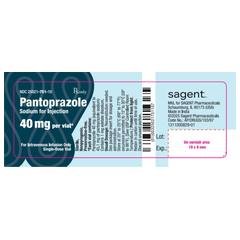
Medicine information on IMCURE is provided for educational purposes and is not a substitute for diagnosis, prescription or medical advice. Always follow your doctor’s or pharmacist’s instructions. Real product image from the U.S. National Library of Medicine's DailyMed listing for Pantoprazole Sodium Injection, Powder, Lyophilized, For Solution. Packaging varies by brand and manufacturer.