
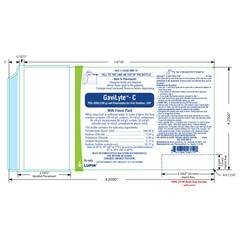
Polyethylene Glycol-3350 And Electrolytes
11 DESCRIPTION PEG-3350 and electrolytes for oral solution is a combination of polyethylene glycol 3350, an osmotic laxative, and electrolytes (sodium sulfate, sodium chloride, sodium bicarbonate and potassium chloride) for oral solution supplied in a 4 liter disposable jug containing 236 g polyethylene glycol 3350, 22.74 g sodium sulfate (anhydrous), 6.74 g sodium bicarbonate, 5.86 g sodium chloride, and 2.97 g potassium chloride as a white to off-white powder. Sodium Sulfate, USP The chemical name is Na2SO4. The average Molecular Weight is 142.04. The structural formula is: Sodium Bicarbonate, USP The chemical name is NaHCO3. The average Molecular Weight is 84.01. The structural formula is: Sodium Chloride, USP The chemical name is NaCl. The average Molecular Weight: 58.44. The structural formula is: Na+ Cl- Potassium Chloride, USP The chemical name is KCl. The average Molecular Weight: 74.55. The structural formula is: K-Cl a b c
Information page. Not necessarily available for purchase.
What is Polyethylene Glycol-3350 And Electrolytes?
11 DESCRIPTION PEG-3350 and electrolytes for oral solution is a combination of polyethylene glycol 3350, an osmotic laxative, and electrolytes (sodium sulfate, sodium chloride, sodium bicarbonate and potassium chloride) for oral solution supplied in a 4 liter disposable jug containing 236 g polyethylene glycol 3350, 22.74 g sodium sulfate (anhydrous), 6.74 g sodium bicarbonate, 5.86 g sodium chloride, and 2.97 g potassium chloride as a white to off-white powder. Sodium Sulfate, USP The chemical name is Na2SO4. The average Molecular Weight is 142.04. The structural formula is: Sodium Bicarbonate, USP The chemical name is NaHCO3. The average Molecular Weight is 84.01. The structural formula is: Sodium Chloride, USP The chemical name is NaCl. The average Molecular Weight: 58.44. The structural formula is: Na+ Cl- Potassium Chloride, USP The chemical name is KCl. The average Molecular Weight: 74.55. The structural formula is: K-Cl a b c
Uses of Polyethylene Glycol-3350 And Electrolytes
Established uses
- 1 INDICATIONS AND USAGE PEG-3350 and electrolytes for oral solution, USP is a combination of PEG 3350, an osmotic laxative, and electrolytes indicated for cleansing of the colon in preparation for colonoscopy and barium enema X-ray examination in adults ( 1 ) PEG-3350 and electrolytes for oral solution is indicated for bowel cleansing prior to colonoscopy and barium enema X-ray examination in adults.
How Polyethylene Glycol-3350 And Electrolytes works
In more detail: 12.1 Mechanism of Action The primary mode of action is thought to be through the osmotic effect of polyethylene glycol 3350 which causes water to be retained in the colon and produces a watery stool.
How to take Polyethylene Glycol-3350 And Electrolytes
2 DOSAGE AND ADMINISTRATION Preparation and Administration (2.1): Correct fluid and electrolyte abnormalities before treatment with PEG-3350 and electrolytes for oral solution. Reconstitute PEG-3350 and electrolytes for oral solution with water prior to ingestion. Do not take oral medications within 1 hour before the start or during administration of PEG-3350 and electrolytes for oral solution. (2.1) Do not take other laxatives while taking PEG-3350 and electrolytes for oral solution. Consume only clear liquids; avoid red and purple liquids. Consume water or other clear liquids up until 2 hours before the time of the colonoscopy. Do not consume solid food within 2 hours before starting PEG-3350 and electrolytes for oral solution. Adult Dosing Regimen (2.2): On day prior to colonoscopy, instruct patients to consume a light breakfast at least 2 hours before starting PEG-3350 and electrolytes for oral solution. Begin the recommended dosage regimen for PEG-3350 and electrolytes for oral solution early in the evening on the day before colonoscopy Drink reconstituted solution at a rate of 8 ounces every 10 minutes, until 4 liters are consumed, or rectal effluent is clear. For complete in
Dosage
Follow the dose prescribed by your doctor or pharmacist. The ranges below are general information, not a personal prescription.
- Adults
- 2 DOSAGE AND ADMINISTRATION Preparation and Administration (2.1): Correct fluid and electrolyte abnormalities before treatment with PEG-3350 and electrolytes for oral solution. Reconstitute PEG-3350 and electrolytes for oral solution with water prior to ingestion. Do not take oral medications within 1 hour before the start or during administration of PEG-3350 and electrolytes for oral solution. (2.1) Do not take other laxatives while taking PEG-3350 and electrolytes for oral solution. Consume only clear liquids; avoid red and purple liquids. Consume water or other clear liquids up until 2 hours before the time of the colonoscopy. Do not consume solid food within 2 hours before starting PEG-3350 and electrolytes for oral solution. Adult Dosing Regimen (2.2): On day prior to colonoscopy, instruct patients to consume a light breakfast at least 2 hours before starting PEG-3350 and electrolytes for oral solution. Begin the recommended dosage regimen for PEG-3350 and electrolytes for oral solution early in the evening on the day before colonoscopy Drink reconstituted solution at a rate of 8 ounces every 10 minutes, until 4 liters are consumed, or rectal effluent is clear. For complete in
Side effects of Polyethylene Glycol-3350 And Electrolytes
Common
- 6 ADVERSE REACTIONS Most common adverse reactions (≥3%) are: nausea, abdominal fullness and bloating abdominal cramps, vomiting and anal irritation ( 6 ) To report SUSPECTED ADVERSE REACTIONS, contact Novel Laboratories, Inc.
- at 1-866-403-7592 or FDA at 1-800-FDA-1088 or www.fda.gov/medwatch .
- The following clinically significant adverse reactions are described elsewhere in the labeling: Renal impairment [see Warnings and Precautions ( 5.4 )] Colonic mucosal ulcerations and ischemic colitis [see Warnings and Precautions ( 5.5 )] Patients with significant gastrointestinal disease [see Warnings and Precautions ( 5.6 )] Aspiration [see Warnings and Precautions ( 5.7 )] The following adverse reactions associated with the use of PEG-3350 and electrolytes for oral solution were identified in clinical trials or postmarketing reports.
- Because these reactions are reported voluntarily from a population of uncertain size, it is not always possible to estimate their frequency, reliably, or establish a causal relationship to drug exposure.
- Cardiovascular: arrhythmia, atrial fibrillation, peripheral edema, asystole, and acute pulmonary edema after aspiration [see Warnings and Precautions ( 5.2 )
Warnings and who should not take it
Who should NOT take Polyethylene Glycol-3350 And Electrolytes?
- 4 CONTRAINDICATIONS Gastrointestinal (GI) obstruction ( 4 , 5.6 ) Bowel perforation ( 4 , 5.6 ) Toxic colitis or toxic megacolon ( 4 ) Gastric retention ( 4 ) Ileus ( 4 ) Hypersensitivity to components of PEG-3350 and electrolytes for oral solution ( 4 , 5.8 ) PEG-3350 and electrolytes for oral solution is contraindicated in the following conditions: Gastrointestinal (GI) obstruction ( 5.6 ) Bowel perforation ( 5.6 ) Toxic colitis or toxic megacolon Gastric retention Ileus Hypersensitivity to components of PEG-3350 and electrolytes for oral solution ( 5.8 )
Safety at a glance
8.1 Pregnancy Animal reproduction studies have not been conducted with PEG-3350 and electrolytes for oral solution. It is also not known whether PEG-3350 and electrolytes for oral solution can cause fetal harm when administered to a pregnant woman or can affect reproductive capacity. PEG-3350 and electrolytes for oral solution should be given to a pregnant woman only if clearly needed.
8.3 Nursing Mothers It is not known whether this drug is excreted in human milk. Because many drugs are excreted in human milk, caution should be exercised when PEG-3350 and electrolytes for oral solution is administered to a nursing woman.
Children and elderly
Children
8.4 Pediatric Use Safety and effectiveness of PEG-3350 and electrolytes for oral solution in pediatric patients have not been established.
Elderly
8.5 Geriatric Use Clinical studies of PEG-3350 and electrolytes for oral solution did not include sufficient numbers of subjects aged 65 and over to determine whether they respond differently from younger subjects. Other reported clinical experience has not identified differences in responses between the elderly and younger patients.
Interactions
Medicine and medicine
- 7 DRUG INTERACTIONS Some drugs increase risks due to fluid and electrolyte changes ( 7.1 ) 7.1 Drugs that May Increase Risks Due to Fluid and Electrolyte Abnormalities Use caution when prescribing PEG-3350 and electrolytes for oral solution for patients with conditions and/or who are using medications that increase the risk for fluid and electrolyte disturbances or may increase the risk of renal impairment, seizure, arrhythmias, and prolonged QT in the setting of fluid and electrolyte abnormalities [see Warnings and Precautions ( 5.1 , 5.2 , 5.3 , 5.4 )].
- Consider additional patient evaluations as appropriate.
- 7.2 Potential for Reduced Drug Absorption PEG-3350 and electrolytes for oral solution can reduce the absorption of other administered drugs.
- Administer oral medications within one hour before the start of administration of PEG-3350 and electrolytes for oral solution [see Dosage and Administration ( 2.1 )] .
- 7.3 Stimulant Laxatives Concurrent use of stimulant laxatives and PEG-3350 and electrolytes for oral solution may increase the risk of mucosal ulceration or ischemic colitis.
- Avoid use of stimulant laxatives (e.g., bisacodyl, sodium picosulfate) while taking PEG-3350 and e
Frequently asked questions
What is Polyethylene Glycol-3350 And Electrolytes used for?
1 INDICATIONS AND USAGE PEG-3350 and electrolytes for oral solution, USP is a combination of PEG 3350, an osmotic laxative, and electrolytes indicated for cleansing of the colon in preparation for colonoscopy and barium enema X-ray examination in adults ( 1 ) PEG-3350 and electrolytes for oral solution is indicated for bowel cleansing prior to colonoscopy and barium enema X-ray examination in adults..
How should I take Polyethylene Glycol-3350 And Electrolytes?
2 DOSAGE AND ADMINISTRATION Preparation and Administration (2.1): Correct fluid and electrolyte abnormalities before treatment with PEG-3350 and electrolytes for oral solution. Reconstitute PEG-3350 and electrolytes for oral solution with water prior to ingestion. Do not take oral medications within 1 hour before the start or during administration of PEG-3350 and electrolytes for oral solution. (2.1) Do not take other laxatives while taking PEG-3350 and electrolytes for oral solution. Consume only clear liquids; avoid red and purple liquids. Consume water or other clear liquids up until 2 hours before the time of the colonoscopy. Do not consume solid food within 2 hours before starting PEG-3350 and electrolytes for oral solution. Adult Dosing Regimen (2.2): On day prior to colonoscopy, instruct patients to consume a light breakfast at least 2 hours before starting PEG-3350 and electrolytes for oral solution. Begin the recommended dosage regimen for PEG-3350 and electrolytes for oral solution early in the evening on the day before colonoscopy Drink reconstituted solution at a rate of 8 ounces every 10 minutes, until 4 liters are consumed, or rectal effluent is clear. For complete in
What are the common side effects?
6 ADVERSE REACTIONS Most common adverse reactions (≥3%) are: nausea, abdominal fullness and bloating abdominal cramps, vomiting and anal irritation ( 6 ) To report SUSPECTED ADVERSE REACTIONS, contact Novel Laboratories, Inc., at 1-866-403-7592 or FDA at 1-800-FDA-1088 or www.fda.gov/medwatch ., The following clinically significant adverse reactions are described elsewhere in the labeling: Renal impairment [see Warnings and Precautions ( 5.4 )] Colonic mucosal ulcerations and ischemic colitis [see Warnings and Precautions ( 5.5 )] Patients with significant gastrointestinal disease [see Warnings and Precautions ( 5.6 )] Aspiration [see Warnings and Precautions ( 5.7 )] The following adverse reactions associated with the use of PEG-3350 and electrolytes for oral solution were identified in clinical trials or postmarketing reports., Because these reactions are reported voluntarily from a population of uncertain size, it is not always possible to estimate their frequency, reliably, or establish a causal relationship to drug exposure., Cardiovascular: arrhythmia, atrial fibrillation, peripheral edema, asystole, and acute pulmonary edema after aspiration [see Warnings and Precautions ( 5.2 ).
Who should not take Polyethylene Glycol-3350 And Electrolytes?
4 CONTRAINDICATIONS Gastrointestinal (GI) obstruction ( 4 , 5.6 ) Bowel perforation ( 4 , 5.6 ) Toxic colitis or toxic megacolon ( 4 ) Gastric retention ( 4 ) Ileus ( 4 ) Hypersensitivity to components of PEG-3350 and electrolytes for oral solution ( 4 , 5.8 ) PEG-3350 and electrolytes for oral solution is contraindicated in the following conditions: Gastrointestinal (GI) obstruction ( 5.6 ) Bowel perforation ( 5.6 ) Toxic colitis or toxic megacolon Gastric retention Ileus Hypersensitivity to components of PEG-3350 and electrolytes for oral solution ( 5.8 ).
Can I take Polyethylene Glycol-3350 And Electrolytes during pregnancy?
8.1 Pregnancy Animal reproduction studies have not been conducted with PEG-3350 and electrolytes for oral solution. It is also not known whether PEG-3350 and electrolytes for oral solution can cause fetal harm when administered to a pregnant woman or can affect reproductive capacity. PEG-3350 and electrolytes for oral solution should be given to a pregnant woman only if clearly needed.
Can I take Polyethylene Glycol-3350 And Electrolytes while breastfeeding?
8.3 Nursing Mothers It is not known whether this drug is excreted in human milk. Because many drugs are excreted in human milk, caution should be exercised when PEG-3350 and electrolytes for oral solution is administered to a nursing woman.
Can children take Polyethylene Glycol-3350 And Electrolytes?
8.4 Pediatric Use Safety and effectiveness of PEG-3350 and electrolytes for oral solution in pediatric patients have not been established.
Does Polyethylene Glycol-3350 And Electrolytes interact with other medicines?
7 DRUG INTERACTIONS Some drugs increase risks due to fluid and electrolyte changes ( 7.1 ) 7.1 Drugs that May Increase Risks Due to Fluid and Electrolyte Abnormalities Use caution when prescribing PEG-3350 and electrolytes for oral solution for patients with conditions and/or who are using medications that increase the risk for fluid and electrolyte disturbances or may increase the risk of renal impairment, seizure, arrhythmias, and prolonged QT in the setting of fluid and electrolyte abnormalities [see Warnings and Precautions ( 5.1 , 5.2 , 5.3 , 5.4 )].; Consider additional patient evaluations as appropriate.; 7.2 Potential for Reduced Drug Absorption PEG-3350 and electrolytes for oral solution can reduce the absorption of other administered drugs.; Administer oral medications within one hour before the start of administration of PEG-3350 and electrolytes for oral solution [see Dosage and Administration ( 2.1 )] .; 7.3 Stimulant Laxatives Concurrent use of stimulant laxatives and PEG-3350 and electrolytes for oral solution may increase the risk of mucosal ulceration or ischemic colitis.; Avoid use of stimulant laxatives (e.g., bisacodyl, sodium picosulfate) while taking PEG-3350 and e.
Medicine information on IMCURE is provided for educational purposes and is not a substitute for diagnosis, prescription or medical advice. Always follow your doctor’s or pharmacist’s instructions. Real product image from the U.S. National Library of Medicine's DailyMed listing for Gavilyte - C Tm (Polyethylene Glycol-3350 And Electrolytes With Flavor Pack) Powder, For S. Packaging varies by brand and manufacturer.