
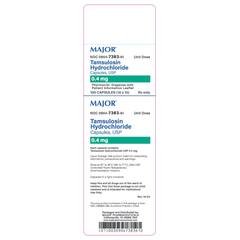
Tamsulosin Hydrochloride
11 DESCRIPTION Tamsulosin hydrochloride is an antagonist of alpha 1A adrenoceptors in the prostate. Tamsulosin hydrochloride is 5-[(2R)-2-[[2-(2-Ethoxyphenoxy)ethyl]amino]propyl]-2-methoxybenzenzenesulfonamide Hydrochloride. Tamsulosin hydrochloride is a white or almost white powder, melts with decomposition at approximately 230°C. It is freely soluble in formic acid, sparingly soluble in methanol, slightly soluble in water and in dehydrated alcohol and practically insoluble in ether. The empirical formula of tamsulosin hydrochloride is C 20 H 28 N 2 O 5 S·HCl. The molecular weight of tamsulosin hydrochloride is 444.97. Its structural formula is: Each tamsulosin hydrochloride capsules for oral administration contains tamsulosin hydrochloride, USP 0.4 mg, and the following inactive ingredients: sugar spheres (corn starch and sucrose), propyl gallate, methacrylic acid and ethyl acrylate copolymer, ethylcellulose, polyethylene glycol, talc, methacrylic acid and ethyl acrylate copolymer dispersion, hypromellose, colloidal silicon dioxide, gelatin, sodium lauryl sulphate and titanium dioxide. The capsules are printed with Black Ink TEK SW 9008 containing black iron oxide, potassium hydr
Information page. Not necessarily available for purchase.
What is Tamsulosin Hydrochloride?
11 DESCRIPTION Tamsulosin hydrochloride is an antagonist of alpha 1A adrenoceptors in the prostate. Tamsulosin hydrochloride is 5-[(2R)-2-[[2-(2-Ethoxyphenoxy)ethyl]amino]propyl]-2-methoxybenzenzenesulfonamide Hydrochloride. Tamsulosin hydrochloride is a white or almost white powder, melts with decomposition at approximately 230°C. It is freely soluble in formic acid, sparingly soluble in methanol, slightly soluble in water and in dehydrated alcohol and practically insoluble in ether. The empirical formula of tamsulosin hydrochloride is C 20 H 28 N 2 O 5 S·HCl. The molecular weight of tamsulosin hydrochloride is 444.97. Its structural formula is: Each tamsulosin hydrochloride capsules for oral administration contains tamsulosin hydrochloride, USP 0.4 mg, and the following inactive ingredients: sugar spheres (corn starch and sucrose), propyl gallate, methacrylic acid and ethyl acrylate copolymer, ethylcellulose, polyethylene glycol, talc, methacrylic acid and ethyl acrylate copolymer dispersion, hypromellose, colloidal silicon dioxide, gelatin, sodium lauryl sulphate and titanium dioxide. The capsules are printed with Black Ink TEK SW 9008 containing black iron oxide, potassium hydr
Uses of Tamsulosin Hydrochloride
Established uses
- 1 INDICATIONS AND USAGE Tamsulosin hydrochloride capsules are indicated for the treatment of the signs and symptoms of benign prostatic hyperplasia (BPH) [see Clinical Studies (14)].
- Tamsulosin hydrochloride capsules are not indicated for the treatment of hypertension.
- Tamsulosin hydrochloride capsules are an alpha 1 adrenoceptor antagonist indicated for treatment of the signs and symptoms of benign prostatic hyperplasia (1) Tamsulosin hydrochloride capsules are not indicated for the treatment of hypertension (1)
How Tamsulosin Hydrochloride works
In more detail: 12.1 Mechanism of Action The symptoms associated with benign prostatic hyperplasia (BPH) are related to bladder outlet obstruction, which is comprised of two underlying components: static and dynamic. The static component is related to an increase in prostate size caused, in part, by a proliferation of smooth muscle cells in the prostatic stroma. However, the severity of BPH symptoms and the degree of urethral obstruction do not correlate well with the size of the prostate. The dynamic component is a function of an increase in smooth muscle tone in the prostate and bladder neck leading to constriction of the bladder outlet. Smooth muscle tone is mediated by the sympathetic nervous stimulation of alpha 1 adrenoceptors, which are abundant in the prostate, prostatic capsule, prostatic urethra, and bladder neck. Blockade of these adrenoceptors can cause smooth muscles in the bladder neck and prostate to relax, resulting in an improvement in urine flow rate and a reduction in symptoms of BPH. Tamsulosin, an alpha 1 adrenoceptor blocking agent, exhibits selectivity for alpha 1 receptors in the human prostate. At least three discrete alpha 1 adrenoceptor subtypes have been identified: alp
How to take Tamsulosin Hydrochloride
2 DOSAGE AND ADMINISTRATION Tamsulosin hydrochloride capsules 0.4 mg once daily is recommended as the dose for the treatment of the signs and symptoms of BPH. It should be administered approximately one-half hour following the same meal each day. Tamsulosin hydrochloride capsules should not be crushed, chewed or opened. For those patients who fail to respond to the 0.4 mg dose after 2 to 4 weeks of dosing, the dose of tamsulosin hydrochloride capsules can be increased to 0.8 mg once daily. Tamsulosin hydrochloride capsules 0.4 mg should not be used in combination with strong inhibitors of CYP3A4 (e.g., ketoconazole) [see Warnings and Precautions (5.2)]. If tamsulosin hydrochloride capsules administration is discontinued or interrupted for several days at either the 0.4 mg or 0.8 mg dose, therapy should be started again with the 0.4 mg once-daily dose. 0.4 mg once daily taken approximately one-half hour following the same meal each day. Tamsulosin hydrochloride capsules should not be crushed, chewed or opened. (2) Can be increased to 0.8 mg once daily for patients who fail to respond to the 0.4 mg dose after 2 to 4 weeks of dosing (2) If discontinued or interrupted for several days,
Dosage
Follow the dose prescribed by your doctor or pharmacist. The ranges below are general information, not a personal prescription.
- Adults
- 2 DOSAGE AND ADMINISTRATION Tamsulosin hydrochloride capsules 0.4 mg once daily is recommended as the dose for the treatment of the signs and symptoms of BPH. It should be administered approximately one-half hour following the same meal each day. Tamsulosin hydrochloride capsules should not be crushed, chewed or opened. For those patients who fail to respond to the 0.4 mg dose after 2 to 4 weeks of dosing, the dose of tamsulosin hydrochloride capsules can be increased to 0.8 mg once daily. Tamsulosin hydrochloride capsules 0.4 mg should not be used in combination with strong inhibitors of CYP3A4 (e.g., ketoconazole) [see Warnings and Precautions (5.2)]. If tamsulosin hydrochloride capsules administration is discontinued or interrupted for several days at either the 0.4 mg or 0.8 mg dose, therapy should be started again with the 0.4 mg once-daily dose. 0.4 mg once daily taken approximately one-half hour following the same meal each day. Tamsulosin hydrochloride capsules should not be crushed, chewed or opened. (2) Can be increased to 0.8 mg once daily for patients who fail to respond to the 0.4 mg dose after 2 to 4 weeks of dosing (2) If discontinued or interrupted for several days,
Side effects of Tamsulosin Hydrochloride
Common
- 6 ADVERSE REACTIONS The most common adverse events (≥2% of patients and at a higher incidence than placebo) with the 0.4 mg dose or 0.8 mg dose were headache, dizziness, rhinitis, infection, abnormal ejaculation, asthenia, back pain, diarrhea, pharyngitis, chest pain, cough increased, somnolence, nausea, sinusitis, insomnia, libido decreased, tooth disorder, and blurred vision (6.1) To report SUSPECTED ADVERSE REACTIONS, contact XLCare Pharmaceuticals, Inc.
- at 1-866-495-1995 or FDA at 1-800-FDA-1088 or www.fda.gov/medwatch.
- 6.1 Clinical Trials Experience Because clinical studies are conducted under widely varying conditions, adverse reactions rates observed in the clinical studies of a drug cannot be directly compared to rates in the clinical studies of another drug and may not reflect the rates observed in practice.
- The incidence of treatment-emergent adverse events has been ascertained from six short-term U.S.
- and European placebo-controlled clinical trials in which daily doses of 0.1 to 0.8 mg tamsulosin hydrochloride capsules were used.
- These studies evaluated safety in 1783 patients treated with tamsulosin hydrochloride capsules and 798 patients administered placebo.
Warnings and who should not take it
Who should NOT take Tamsulosin Hydrochloride?
- 4 CONTRAINDICATIONS Tamsulosin hydrochloride capsules are contraindicated in patients known to be hypersensitive to tamsulosin hydrochloride or any component of tamsulosin hydrochloride capsules.
- Reactions have included skin rash, urticaria, pruritus, angioedema, and respiratory symptoms [see Adverse Reactions (6.2)] .
- Contraindicated in patients known to be hypersensitive to tamsulosin hydrochloride or any component of tamsulosin hydrochloride capsules (4, 6.2)
Overdose
10 OVERDOSAGE Should overdosage of tamsulosin hydrochloride capsules lead to hypotension [see Warnings and Precautions (5.1) and Adverse Reactions (6.1)], support of the cardiovascular system is of first importance. Restoration of blood pressure and normalization of heart rate may be accomplished by keeping the patient in the supine position. If this measure is inadequate, then administration of intravenous fluids should be considered. If necessary, vasopressors should then be used and renal function should be monitored and supported as needed. Laboratory data indicate that tamsulosin hydrochloride is 94% to 99% protein bound; therefore, dialysis is unlikely to be of benefit.
Safety at a glance
8.1 Pregnancy Risk Summary Tamsulosin hydrochloride is not indicated for use in women. There are no adequate data on the developmental risk associated with the use of tamsulosin hydrochloride in pregnant women. No adverse developmental effects were observed in animal studies in which tamsulosin hydrochloride was administered to rats or rabbits during the period of organogenesis (GD 7 to 17 in the rat and GD 6 to 18 in the rabbit) [see Data]. In the U.S. general population, the estimated background risk of major birth defects and of miscarriage in clinically recognized pregnancies is 2%–4% and 15%–20%, respectively. Data Administration of tamsulosin hydrochloride to pregnant female rats during the period of organogenesis at dose levels up to approximately 50 times the human therapeutic AUC exposure (300 mg/kg/day) revealed no evidence of harm to the fetus. Administration of tamsulosin hydrochloride to pregnant rabbits during the period of organogenesis at dose levels up to 50 mg/kg/day produced no evidence of fetal harm.
Children and elderly
Children
8.4 Pediatric Use Tamsulosin hydrochloride capsules are not indicated for use in pediatric populations. Efficacy and positive benefit/risk of tamsulosin hydrochloride was not demonstrated in two studies conducted in patients 2 years to 16 years of age with elevated detrusor leak point pressure (>40 cm H 2 O) associated with known neurological disorder (e.g., spina bifida). Patients in both studies were treated on a weight-based mg/kg schema (0.025 mg, 0.05 mg, 0.1 mg, 0.2 mg, or 0.4 mg tamsulosin hydrochloride) for the reduction in detrusor leak point pressure below 40 cm H 2 O. In a randomized, double-blind, placebo-controlled, 14-week, pharmacokinetic, safety and efficacy study in 161 patients, no statistically significant difference in the proportion of responders was observed between groups receiving tamsulosin hydrochloride and placebo. In an open-label, 12-month safety study, 87 patients were treated with tamsulosin hydrochloride. The most frequently reported adverse events (≥5%) from the pooled data of both studies were urinary tract infection, vomiting, pyrexia, headache, nasopharyngitis, cough, pharyngitis, influenza, diarrhea, abdominal pain, and constipation.
Elderly
8.5 Geriatric Use Of the total number of subjects (1783) in clinical studies of tamsulosin, 36% were 65 years of age and over. No overall differences in safety or effectiveness were observed between these subjects and younger subjects, and the other reported clinical experience has not identified differences in responses between the elderly and younger patients, but greater sensitivity of some older individuals cannot be ruled out [see Clinical Pharmacology (12.3)].
Interactions
Medicine and medicine
- 7 DRUG INTERACTIONS • Tamsulosin hydrochloride capsules 0.4 mg should not be used with strong inhibitors of CYP3A4 (e.g., ketoconazole).
- Tamsulosin hydrochloride capsules should be used with caution in combination with moderate inhibitors of CYP3A4 (e.g., erythromycin), in combination with strong (e.g., paroxetine) or moderate (e.g., terbinafine) inhibitors of CYP2D6, or in patients known to be CYP2D6 poor metabolizers, particularly at a dose higher than 0.4 mg (e.g., 0.8 mg).
- ( 5.2 , 7.1 , 12.3 ) • Concomitant use of PDE5 inhibitors with tamsulosin can potentially cause symptomatic hypotension ( 5.2 , 7.3 , 12.3 ).
- 7.1 Cytochrome P450 Inhibition Strong and Moderate Inhibitors of CYP3A4 or CYP2D6 Tamsulosin is extensively metabolized, mainly by CYP3A4 and CYP2D6.
- Concomitant treatment with ketoconazole (a strong inhibitor of CYP3A4) resulted in an increase in the C max and AUC of tamsulosin by a factor of 2.2 and 2.8, respectively [see Warnings and Precautions (5.2) and Clinical Pharmacology (12.3)].
- The effects of concomitant administration of a moderate CYP3A4 inhibitor (e.g., erythromycin) on the pharmacokinetics of tamsulosin hydrochloride have not been evaluated [see Warnings
Frequently asked questions
What is Tamsulosin Hydrochloride used for?
1 INDICATIONS AND USAGE Tamsulosin hydrochloride capsules are indicated for the treatment of the signs and symptoms of benign prostatic hyperplasia (BPH) [see Clinical Studies (14)]., Tamsulosin hydrochloride capsules are not indicated for the treatment of hypertension., Tamsulosin hydrochloride capsules are an alpha 1 adrenoceptor antagonist indicated for treatment of the signs and symptoms of benign prostatic hyperplasia (1) Tamsulosin hydrochloride capsules are not indicated for the treatment of hypertension (1).
How should I take Tamsulosin Hydrochloride?
2 DOSAGE AND ADMINISTRATION Tamsulosin hydrochloride capsules 0.4 mg once daily is recommended as the dose for the treatment of the signs and symptoms of BPH. It should be administered approximately one-half hour following the same meal each day. Tamsulosin hydrochloride capsules should not be crushed, chewed or opened. For those patients who fail to respond to the 0.4 mg dose after 2 to 4 weeks of dosing, the dose of tamsulosin hydrochloride capsules can be increased to 0.8 mg once daily. Tamsulosin hydrochloride capsules 0.4 mg should not be used in combination with strong inhibitors of CYP3A4 (e.g., ketoconazole) [see Warnings and Precautions (5.2)]. If tamsulosin hydrochloride capsules administration is discontinued or interrupted for several days at either the 0.4 mg or 0.8 mg dose, therapy should be started again with the 0.4 mg once-daily dose. 0.4 mg once daily taken approximately one-half hour following the same meal each day. Tamsulosin hydrochloride capsules should not be crushed, chewed or opened. (2) Can be increased to 0.8 mg once daily for patients who fail to respond to the 0.4 mg dose after 2 to 4 weeks of dosing (2) If discontinued or interrupted for several days,
What are the common side effects?
6 ADVERSE REACTIONS The most common adverse events (≥2% of patients and at a higher incidence than placebo) with the 0.4 mg dose or 0.8 mg dose were headache, dizziness, rhinitis, infection, abnormal ejaculation, asthenia, back pain, diarrhea, pharyngitis, chest pain, cough increased, somnolence, nausea, sinusitis, insomnia, libido decreased, tooth disorder, and blurred vision (6.1) To report SUSPECTED ADVERSE REACTIONS, contact XLCare Pharmaceuticals, Inc., at 1-866-495-1995 or FDA at 1-800-FDA-1088 or www.fda.gov/medwatch., 6.1 Clinical Trials Experience Because clinical studies are conducted under widely varying conditions, adverse reactions rates observed in the clinical studies of a drug cannot be directly compared to rates in the clinical studies of another drug and may not reflect the rates observed in practice., The incidence of treatment-emergent adverse events has been ascertained from six short-term U.S., and European placebo-controlled clinical trials in which daily doses of 0.1 to 0.8 mg tamsulosin hydrochloride capsules were used., These studies evaluated safety in 1783 patients treated with tamsulosin hydrochloride capsules and 798 patients administered placebo..
Who should not take Tamsulosin Hydrochloride?
4 CONTRAINDICATIONS Tamsulosin hydrochloride capsules are contraindicated in patients known to be hypersensitive to tamsulosin hydrochloride or any component of tamsulosin hydrochloride capsules.; Reactions have included skin rash, urticaria, pruritus, angioedema, and respiratory symptoms [see Adverse Reactions (6.2)] .; Contraindicated in patients known to be hypersensitive to tamsulosin hydrochloride or any component of tamsulosin hydrochloride capsules (4, 6.2).
Can I take Tamsulosin Hydrochloride during pregnancy?
8.1 Pregnancy Risk Summary Tamsulosin hydrochloride is not indicated for use in women. There are no adequate data on the developmental risk associated with the use of tamsulosin hydrochloride in pregnant women. No adverse developmental effects were observed in animal studies in which tamsulosin hydrochloride was administered to rats or rabbits during the period of organogenesis (GD 7 to 17 in the rat and GD 6 to 18 in the rabbit) [see Data]. In the U.S. general population, the estimated background risk of major birth defects and of miscarriage in clinically recognized pregnancies is 2%–4% and 15%–20%, respectively. Data Administration of tamsulosin hydrochloride to pregnant female rats during the period of organogenesis at dose levels up to approximately 50 times the human therapeutic AUC exposure (300 mg/kg/day) revealed no evidence of harm to the fetus. Administration of tamsulosin hydrochloride to pregnant rabbits during the period of organogenesis at dose levels up to 50 mg/kg/day produced no evidence of fetal harm.
Can children take Tamsulosin Hydrochloride?
8.4 Pediatric Use Tamsulosin hydrochloride capsules are not indicated for use in pediatric populations. Efficacy and positive benefit/risk of tamsulosin hydrochloride was not demonstrated in two studies conducted in patients 2 years to 16 years of age with elevated detrusor leak point pressure (>40 cm H 2 O) associated with known neurological disorder (e.g., spina bifida). Patients in both studies were treated on a weight-based mg/kg schema (0.025 mg, 0.05 mg, 0.1 mg, 0.2 mg, or 0.4 mg tamsulosin hydrochloride) for the reduction in detrusor leak point pressure below 40 cm H 2 O. In a randomized, double-blind, placebo-controlled, 14-week, pharmacokinetic, safety and efficacy study in 161 patients, no statistically significant difference in the proportion of responders was observed between groups receiving tamsulosin hydrochloride and placebo. In an open-label, 12-month safety study, 87 patients were treated with tamsulosin hydrochloride. The most frequently reported adverse events (≥5%) from the pooled data of both studies were urinary tract infection, vomiting, pyrexia, headache, nasopharyngitis, cough, pharyngitis, influenza, diarrhea, abdominal pain, and constipation.
Does Tamsulosin Hydrochloride interact with other medicines?
7 DRUG INTERACTIONS • Tamsulosin hydrochloride capsules 0.4 mg should not be used with strong inhibitors of CYP3A4 (e.g., ketoconazole).; Tamsulosin hydrochloride capsules should be used with caution in combination with moderate inhibitors of CYP3A4 (e.g., erythromycin), in combination with strong (e.g., paroxetine) or moderate (e.g., terbinafine) inhibitors of CYP2D6, or in patients known to be CYP2D6 poor metabolizers, particularly at a dose higher than 0.4 mg (e.g., 0.8 mg).; ( 5.2 , 7.1 , 12.3 ) • Concomitant use of PDE5 inhibitors with tamsulosin can potentially cause symptomatic hypotension ( 5.2 , 7.3 , 12.3 ).; 7.1 Cytochrome P450 Inhibition Strong and Moderate Inhibitors of CYP3A4 or CYP2D6 Tamsulosin is extensively metabolized, mainly by CYP3A4 and CYP2D6.; Concomitant treatment with ketoconazole (a strong inhibitor of CYP3A4) resulted in an increase in the C max and AUC of tamsulosin by a factor of 2.2 and 2.8, respectively [see Warnings and Precautions (5.2) and Clinical Pharmacology (12.3)].; The effects of concomitant administration of a moderate CYP3A4 inhibitor (e.g., erythromycin) on the pharmacokinetics of tamsulosin hydrochloride have not been evaluated [see Warnings.
Medicine information on IMCURE is provided for educational purposes and is not a substitute for diagnosis, prescription or medical advice. Always follow your doctor’s or pharmacist’s instructions. Real product image from the U.S. National Library of Medicine's DailyMed listing for Tamsulosin Hydrochloride Capsule. Packaging varies by brand and manufacturer.