
After drugs, demand grows for capping Med device markups
ET HealthWorld · 10 Oct 2026 · 2 min read
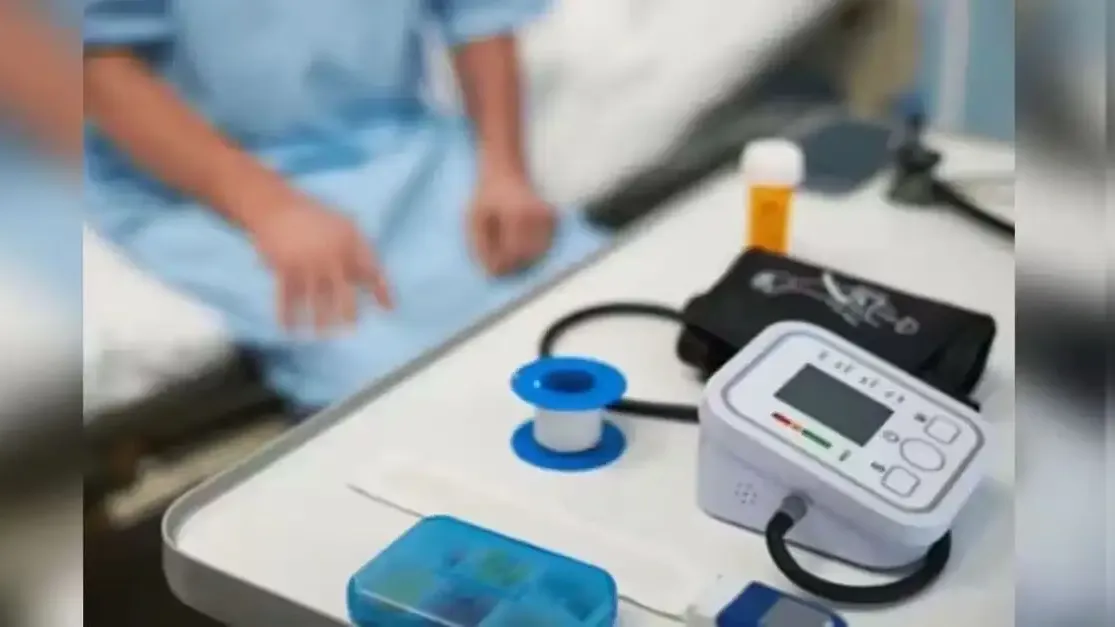
Mumbai: A day after the National Pharmaceutical Pricing Authority (NPPA) approved a cap on the markup of anti-cancer drugs at 30 per cent of their MRP, the Association of Indian Medical Device Industry (AiMeD) has pushed for a similar measure to rationalise markup on medical devices.
AiMeD said that while it has always backed trade margin rationalisation for medical devices, the design of any such cap will decide whether it works.
It cautioned that earlier price interventions, including the 2019 cap on cancer drugs and the caps on a few COVID-critical devices were applied from the price at which products were sold to distributors.
According to AiMeD, “The importer's sale to its distributors became a second point of sale, while the domestic manufacturer's sale to its distributors is the first point of sale.”As a result, the importer’s margin stays outside the capped chain, and the same product ends up with a maximum retail price (MRP) that is about 43 per cent higher than its domestic equivalent.
The medical devices body put forward four suggestions for any rationalisation starting with treating the importer as the first point of sale, with importer margins inside the capped chain as importer is distributor of overseas manufacturer.
It also suggested applying the same margin discipline to domestic and imported products giving parity of Indian manufacturers with overseas manufacturers.
AiMeD added that any rationalisation attempt must be piloted first on selected high-volume consumables, using a rationalised band that avoids shortages and introducing one uniform national framework, designed in consultation with manufacturers.
The association said it is ready to work with the Department of Pharmaceuticals and NPPA on this.
Rajiv Nath, Forum Coordinator, AiMeD said, "AiMeD has been requesting the Department of Pharmaceuticals and the media to bring all stakeholders to the table, so that we reach a consensus that lets every participant in the supply chain earn a fair return, while ensuring no one profits from patients' distress.”"Rationalised, evidence-based, nationally uniform margin bands protect patients and keep supply chains viable."
Related articles
 India · The Hindu — Health · 9 hours ago
Eight-year-old undergoes endoscopic treatment for rare swallowing disorder
The child, diagnosed with Type II achalasia, underwent a minimally invasive procedure at Rela Hospital in Chennai
Read full article India · The Hindu — Health · 10 hours ago
India records 38% drop in TB mortality since 2015: WHO report
World Health Organization’s Global Tuberculosis Report 2026 showed a total of 1.13 million people died from tuberculosis last year
Read full article India · The Hindu — Health · 12 hours ago
A disease rooted in social and economic vulnerability can only be eliminated as underlying systems become stronger: Dhun Davar
Dhun Davar, deputy CEO & chief of programmes, Asian Venture Philanthropy Network spoke to The Hindu about the challenges in the TB elimination programme
Read full article