
How imaging offers a window to treat wake-up strokes
The Hindu — Health · 28 Oct 2026 · 4 min read
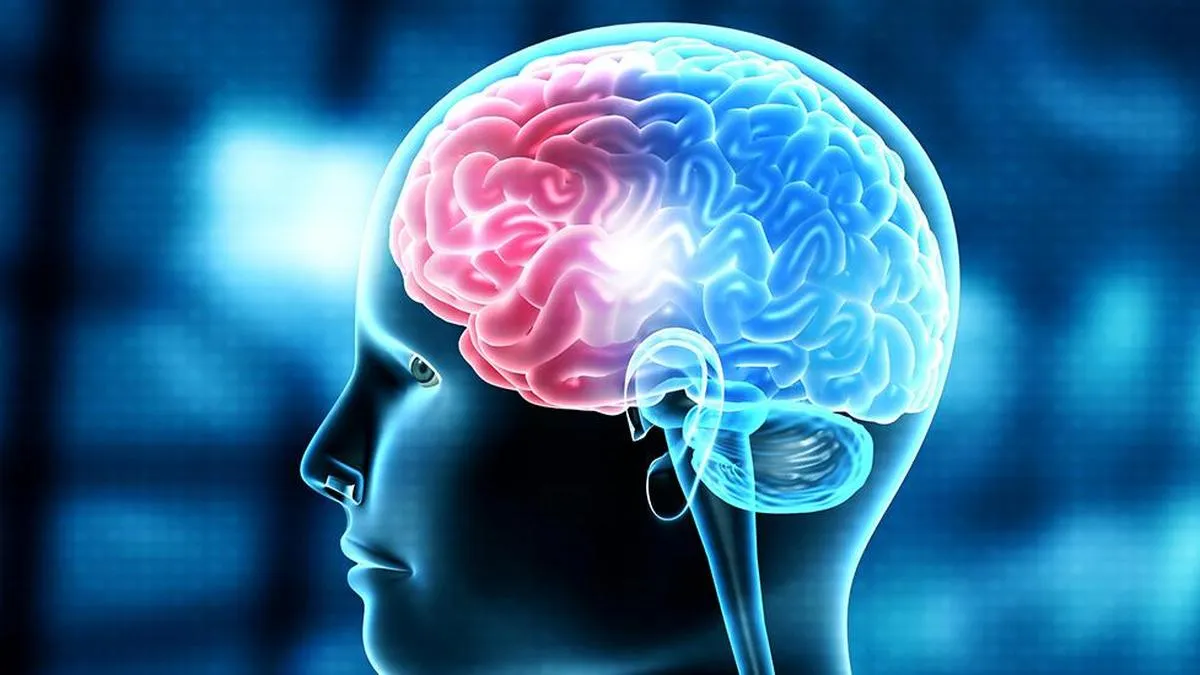
World Stroke Day: October 29 Time is brain, when it comes to in the treatment of strokes.
But a stroke occurring during sleep may go unnoticed until a person wakes up with symptoms, leaving doctors without a clear timeline of its onset.
This is where brain imaging helps doctors identify patients with wake-up strokes and assess the extent of injury to pave the way for prompt treatment.
Neurologists underscore the need to seek medical care immediately to ensure timely treatment.
M.
Radha, head of department and professor of neurology, Government Kilpauk Medical College (KMC) Hospital, Chennai, said that the prevalence of wake-up strokes is 20% - one in five ischaemic strokes is a wake-up stroke. “This means a person wakes up from his/her sleep with symptoms of stroke.
The symptoms include facial drooping, difficulty speaking, sudden vision problems and weakness on one side of the body,” she said.
If a patient arrives at a hospital within 4.5 hours of stroke symptoms, then thrombolysis can be done, she said, adding: “However, in wake-up stroke, we cannot calculate the time of the onset of symptoms.
We do not know the window.
So, acting fast is important.
In case of any symptoms, patients should reach the hospital on time.” The role of imaging In wake-up strokes, imaging helps give a clear picture for the doctors. “An MRI brain scan should be taken immediately.
If it is not available, a CT angiogram should be taken.
The scans help us assess the extent of brain injury and blood flow to different parts of the brain.
They can determine whether there is diffusion-perfusion mismatch.
The difference may represent brain tissue that is still salvageable and can be potentially saved.
Like in regular strokes, ‘time is brain’ in wake-up strokes too, making prompt diagnosis and treatment crucial,” she explained.
Shubha Subramanian, senior consultant - neurology, Kauvery Hospitals, Chennai, said that in ischemic strokes, thrombolysis is used to dissolve the blood clot if a patient presents within 4.5 hours of symptom onset. “In cases involving a large vessel occlusion, mechanical thrombectomy is performed within 24 hours of symptom onset, depending on the patient’s eligibility.
In wake-up strokes, we do not know when the stroke started; it could be at night or early in the morning.
What we do next is crucial.
This is why we rely on imaging techniques,” she added. “MRI has a lot of sequences.
If you compare the diffusion-weighted imaging and FLAIR (Fluid-Attenuated Inversion Recovery) imaging, a mismatch in that shows that the brain tissue is still salvageable.
So even if we do not know the time of onset of stroke, we can still go ahead and thrombolyse the patient.
In the same way, MRI perfusion or CT perfusion studies will also give us a clue regarding salvageable brain tissue.
This will help us in taking crucial decisions regarding thrombolysis or mechanical thrombectomy or whether to go for conservative management,” she elaborated.
Effective coordination Under the Tamil Nadu Accident and Emergency Care Initiative and Stroke Care and Rapid Intervention with Plasminogen activator and Thrombectomy (SCRIPT) programme implemented by the Tamil Nadu government and with facilities available at the new JICA building at KMC, patients with with wake-up strokes are regularly treated, Dr.
Radha noted. “There is effective coordination between the administration, the emergency department, radiology and neurology departments.
We have a green channel in place.
As a result, once the patients with symptoms of stroke enter the Emergency Department, the neurologist is intimated.
Our doctor goes to the radiology department which has significantly reduced the door to needle time,” she said.
Awareness is crucial BE FAST is the acronym to spot the warning signs of stroke, denoting Balance, Eyes, Face, Arm, Speech and Time. “We do see that the awareness of stroke symptoms is increasing and the referral system has also improved,” Dr.
Radha said.
Dr.
Shubha Subramanian said that in wake-up strokes, the person may not realise that he/she has symptoms of stroke when they wake up from sleep. “They may face difficulty in getting up and may also fall as a result.
It is important for family members to identify the symptoms and rush for medical help,” she added.
Related articles
 India · The Hindu — Health · 5 hours ago
India must build a holistic care system
Care is split across multiple Ministries, from women and child development to housing and urban affairs. Each runs valuable programmes, but without a common…
Read full article India · The Hindu — Health · 8 hours ago
India rejects patent bid for treatment of drug-resistant TB
Civil society groups urge U.S.-based Global Alliance for TB Drug Development to withdraw related patent claims in other countries
Read full article India · The Hindu — Health · 10 hours ago
Will the price caps on cancer drugs help bring down the cost of treatment?
For cancer patients in India, the struggle to stay alive is as much about the disease as about the arithmetic of fighting it. Experts…
Read full article