
Will the price caps on cancer drugs help bring down the cost of treatment?
The Hindu — Health · 28 Oct 2026 · 10 min read
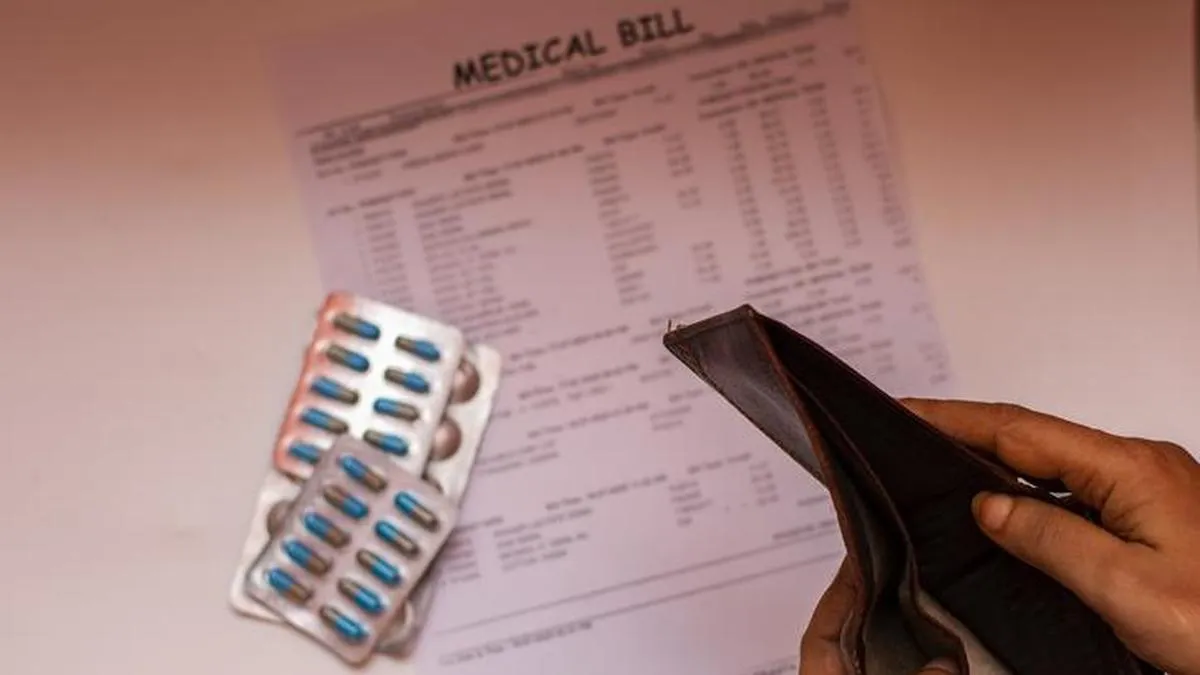
Harsh Kabra When Sarojini Nadimpally was diagnosed with HER2-positive breast cancer in June 2025, the Delhi-based public health researcher was staring at a nother hidden reality as daunting as the tumour.
One dose of the targeted combination drug she had been prescribed would cost around ₹2.7 lakh — and she needed 18 doses.
As someone who works on access to medicines, she closely followed the government’s recent decision to cap trade margins on 137 non-scheduled anti-cancer drugs at 30%, extending a 2019 cap that covered 42.
The government claims that the cap, which takes effect on November 9, can save patients about ₹2,500 crore a year.
Centre to cap trade margins on non-scheduled cancer drugs to 30% of MRP storyline 1 “Any intervention to lower the prices of cancer drugs is a welcome step,” says Ms.
Nadimpally.
Sarojini. “But it remains to be seen how this cap will actually reduce what patients pay.” ₹8,447 crore in medicine overcharging claims remain outstanding as SC seeks wider price controls ₹8,447 crore in medicine overcharging claims remain outstanding as SC seeks wider price controls The outstanding amount is more than five times the amount realised and accounts for about 84% of the cumulative demand ₹8,447 crore in medicine overcharging claims remain outstanding as SC seeks wider price controls storyline 1 Survival versus solvency Cancer is said to be India’s leading cause of catastrophic health spending.
India’s out-of-pocket share for cancer care — estimated by various studies to be 50%-80% per cent of direct treatment costs — is far higher than in most high-income systems, where insurance or tax-funded care generally absorbs the bulk of these expenses.
Data | India’s Cancer Crisis: Rising Prevalence of the Most Expensive Disease to Treat storyline 1 Experts say that drugs make up around over half 50-70 per cent of the costs of cancer care. “High costs of treatments such as like targeted therapies and immunotherapy can lead many patients to defer treatment, opt for cheaper but less effective alternatives or give it up altogether,” says Dr.
Vedant Kabra, principal director, of surgical oncology, at Fortis Memorial Research Institute, Gurugram.
When pills threaten to outrun savings, the standard of care is down to a cruel trade-off between effectiveness and affordability.
For example, at about ₹1.25 lakh a month, a lifetime course of osimertinib, the drug of choice in fighting EGFR-mutated lung cancer while reducing the risk of brain metastases, is beyond the reach of many. “These patients switch to gefitinib, which costs only about ₹2,500 a month, but return with brain secondaries and disease progression,” says Dr.
Narayanankutty Warrier, senior consultant oncologist, at MVR Cancer Centre and Research Institute, Kozhikode. “About 30% per cent of new-generation drugs are really good,” he says. “The rest are mostly claims.
But even a slight improvement in survival means they become monopoly drugs.” Bitter pills: on Court’s intervention, drug pricing editorial 1 Why India needs a smarter healthcare margin policy Why India needs a smarter healthcare margin policy MRP was designed as a ceiling to protect consumers.
In healthcare, it can, however, also conceal how a price is built.
India needs a differential profit and margin strategy Why India needs a smarter healthcare margin policy storyline 1 The pricing conundrum With its latest order, the National Pharmaceutical Pricing Authority (NPPA) is setting a common trade-margin ceiling on a broad range of cancer medicines, including patented, chemotherapy, targeted, immunotherapy, hormonal and blood cancer drugs.
Manufacturers are required to report formulation-level information, including brand name, composition, pack size, PTS (price to stockist) and revised MRP.
Govt. caps trade margins on 137 anti-cancer drugs storyline 1 The order spells out that a drug with a PTS price-to-stockist (PTS) of ₹70 and an MRP of ₹300 can have an MRP of no more than ₹100, excluding GST.
Experts argue that the permitted margin — which amounts to 42.8% of the PTS — is a sizeable mark-up, especially for expensive drugs.
In effect, the government is putting a ceiling on the profit, not the underlying price.
For example, the actual prices at which hospitals buy drugs, often after steep discounts negotiated for bulk purchases, are hidden from sight. “A cap on trade margins means little to patients if hospitals and dealers do not pass those savings on, and there is no way of knowing whether they do,” says Ms.
Nadimpally.
Sarojini. “Patients often buy the drugs directly from dealers recommended by hospitals or doctors, leaving them with no way to compare prices.” On October 28, the NPPA published a revised price list for the 137 non-scheduled anti-cancer drugs based on data submitted by companies.
The MRPs of 37 drugs remain unchanged, offering an early indication of what the final list may look like.
The list also reveals margins that manufacturers, including some Indian generic makers, have had.
For instance, palbociclib’s MRP for one brand is down from about ₹40,421 to ₹2,720 a pack, and thiotepa’s from about ₹80,072 to ₹7,150 a vial — drops of more than 90%.
The latest order also counts the cap from the PTS, not from the ex-factory price or the landed cost (price paid after discounts and freight), leaving out upstream additions.
The mark-up for cancer medicines is unjustified, says Malini Aisola, co-convener, All India Drug Action Network. “With few middlemen involved in the distribution of these high-value, low-volume products, a hospital or distributor gets to keep nearly all the margin.
That legitimises profiteering.” When it comes to patented, mostly imported medicines, we are price-takers, insists Ms.
Aisola. “The government is averse to using its legal powers under the Indian Patent Act and TRIPS (Agreement on Trade-Related Aspects of Intellectual Property Rights) — such as government use and compulsory licensing — to increase competition.” The government, she adds, monitors and controls medicine prices based on a proprietary dataset owned by pharmaceutical companies. “This data,” she argues, “underrepresents or completely excludes institutional sales of cancer medicines because of the way the data are gathered and modelled.” Besides, freebies under patient assistance programmes (PAPs) are now excluded from the calculation. “Including all PAP volumes would expose the true trade mark-ups to hospitals and force a bigger MRP cut,” says Ms.
Aisola. “This seems to be a deal cut by the government with hospitals to minimise their losses.” Can India make cancer care more affordable? | In Focus Podcast Can India make cancer care more affordable? | In Focus Podcast In this episode, OP Jindal Global University’s Dr.
Indranil Mukhopadhyay dissects soaring cancer-drug prices, explores off-patent options, pooled procurement, and value-based pricing to curb costs.
Can India make cancer care more affordable? | In Focus Podcast audio Beyond medicines Medicines are only a part of the bill.
Cut the margin, and the cost could mimic the cancer in finding another site.
Other expensive components of treatment —diagnostic tests, surgery, radiotherapy, hospital accommodation, consumables, consultations, drug administration and associated clinical services — also need to be addressed. “Hospitals have several avenues to recoup the shortfall,” says a healthcare activist.
Running a hospital today is highly capital- and cost-intensive.
Industry estimates suggest that each bed can cost ₹30 lakh to ₹1.5 crore, and a hospital needs around two-thirds of its beds occupied just to break even.
The bills keep coming even when patients are not, says the COO of a Mumbai hospital. “If a nurse breaks an expensive vial, only the hospital bears that cost,” Warrier notes. “Hospitals have long relied on margins because they are legally allowed to,” notes Dr.
Warrier.
SC says ‘economic policy’ cannot take precedence over lives as Centre backs ‘calibrated’ drug-price controls storyline 1 Optimisation, Dr.
Kabra avers, needs to go beyond drugs. “Hospitals and doctors get paid progressively less for the same procedure or disease depending on whether a self-paying patient, an insurer or a government health scheme is footing the bill.
This squeeze can make care financially unviable, especially in complex interventions,” he points out.
He also asks He wonders why caps have not yet been applied to manufacturers. “It seems unfair can’t be that manufacturers profit several times their production costs while everyone else is held to 30%,” per cent,” he says. “Yes, Agreed, manufacturers take greater risks and often only one of the dozens of drugs they research makes it to the market.
But the profits they earn cannot can’t be disproportionate forever.” Significant number of cancer drugs don’t fall within price control mechanisms, says report Significant number of cancer drugs don’t fall within price control mechanisms, says report “This regulatory non-inclusion has led to excessive and often unaffordable pricing, thereby limiting access for a large section of the patient population,” the Committee on Petitions said in its report to Parliament Significant number of cancer drugs don’t fall within price control mechanisms, says report storyline 1 The price of exclusivity Drug patents are another issue, point out experts.
Warrier says that companies often extend expiring patents by registering them anew with slight modifications. “The government should allow Indian companies to make generics, at least for life-saving drugs,” he says. “Countries like Bangladesh, Bhutan and Sri Lanka make their own drugs, at about one-hundredth of the branded price.”While many cancer therapies in India now already have multiple generic manufacturers despite patents, generics in India are required to demonstrate bioequivalence — the degree to which they match the reference drug — before they can be marketed, says S.
Srinivasan, co-founder of LOCOST, a not-for-profit maker of affordable generic medicines. “Affordability of cancer medicines depends not only on patent expiry, but also on whether generic firms can bear the exorbitant costs of bioequivalence testing,” he says.
Medicines Patent Pool deal to make cancer drug cheaper storyline 1 Hospitals can add to their troubles.
For instance, multinational brands of a targeted cancer medication like palbociclib can cost many times more than their generic equivalents, says a healthcare activist, giving hospitals a significantly bigger margin and thereby, an incentive to push the pricier option. “This only undermines affordable generics and entrenches multinationals,” he rues.
Health groups seek regulation of private hospital charges, medicine margins Health groups seek regulation of private hospital charges, medicine margins JSA, Working Group on Access to Medicines and Treatment call for ceilings on hospital charges and trade margins; they say absence of a uniform mechanism to regulate hospital charges had left patients vulnerable to hefty bills Health groups seek regulation of private hospital charges, medicine margins storyline 1 Limits of control Murali Neelakantan, principal lawyer at advisory firm, amicus, calls price controls a “terrible” solution to a demand-supply mismatch. “It has second order, unintended consequences that are difficult to fix,” he says. “Price control can only be an emergency short-term measure to deal with market failure and catastrophic events that cannot be easily mitigated by market interventions.” A recent article in The Lancet Regional Health – Southeast Asia identifies fragmented procurement, market-based pricing and limited public coverage of novel high-cost cancer therapies as key affordability barriers in India.
Further price reductions, especially in drugs with little competition, require other interventions, such as pricing linked more closely to clinical and societal value, competition where feasible, and better public financing of treatment. https://www.thelancet.com/journals/lansea/article/PIIS2772-3682(26)00005-3/fulltext Mr.
Neelakantan suggests treating drugs like food grains — not subject to price controls — and releasing government-procured drug stocks to stabilise prices whenever supplies fall short.
The government, he says, can intervene by building more government hospitals and by procuring goods and services from private healthcare providers in an efficient manner rather than through fragmented schemes.
The government, he says, can intervene by building more government hospitals using the Rs 1.5 lakh crore available in the Employees’ State Insurance Corporation, and by procuring goods and services from private healthcare providers in an efficient manner rather than through fragmented schemes.”According to Neelakantan, The scale of procurement gives the government immense economic power to influence demand and facilitate price discovery and stabilisation, he points out. “Coercive regulation of prices will further distort the market and incentivise unethical practices, including evasive tactics by market participants,” he warns.
According to Srinivasan, Trade margin caps are, at best, tokenistic, says Mr.
Srinivasan.
MRPs of anti-cancer drugs are high even after trade margins. “A better approach,” he suggests, “could be to base the MRP on API (active pharmaceutical ingredient) cost plus manufacturing and marketing expenses, with a 100–200% mark-up to recoup post-manufacturing expenses and trade margins.
Yet, The best solution alternative for poor or middle-class cancer patients in India, however, would be is free medicines provided by the government.” For now, though, a ‘cheaper’ cancer drug is no cure for exorbitant treatment.
Bills, like cells, can’t be left to grow unchecked. (Harsh Kabra is an independent journalist and commentator. harshkabra@gmail.com)
Related articles
 India · The Hindu — Health · 5 hours ago
India must build a holistic care system
Care is split across multiple Ministries, from women and child development to housing and urban affairs. Each runs valuable programmes, but without a common…
Read full article India · The Hindu — Health · 9 hours ago
India rejects patent bid for treatment of drug-resistant TB
Civil society groups urge U.S.-based Global Alliance for TB Drug Development to withdraw related patent claims in other countries
Read full article India · The Hindu — Health · 11 hours ago
How imaging offers a window to treat wake-up strokes
One in five ischaemic strokes is a wake-up stroke. “This means a person wakes up from his/her sleep with symptoms of stroke. The symptoms…
Read full article